Wayground logo

Free Printable Worksheets

Font size

S
M
L
XL
Worksheets

The Solar System, Asteroid Belt, Eclipses and more!

Total questions: 181

Worksheet time: 3hrs 43mins

Name
Class
Date
1.

The slides aren't working for me, so I'll make it a question. My dad and I have made this quiz, with questions/slides that might repeat-don't worry, that's intentional. Are you okay with that?

a)

Yes, of course! I completely understand and will do the quiz as provided

b)

NO, WHY DID YOU HAVE TO MAKE 181 QUESTIONS

(at least I didnt make 200)

c)

probably not

d)

hard pass, I just wont do the test

2.

Alright, then. You should have answered the first one correctly. Best wishes to you.

What is the solar system?

a)

The sun

b)

The planets

c)

The sun and planets ONLY

d)

The sun, planets, and all other objects that orbit the sun

3.

What is the center of our solar system?

a)

The sun

b)

Earth

c)

Jupiter

d)

Saturn

4.

Which planet is the closest to our sun?

a)

Mars

b)

Earth

c)

Mercury

d)

Venus

5.

Which planet is the farthest away from our sun?

a)

Mars

b)

Jupiter

c)

Neptune

d)

Uranus

6.

Why do the planets orbit the sun?

a)

They don't, the planets orbit the Earth

b)

Because Science

c)

The sun is so massive that it has a very large gravitational pull, which causes objects to orbit it

d)

Because they want to

7.

Is Pluto still considered a planet?

a)

Yes, Pluto is still a planet because it still orbits the sun

b)

Yes, Pluto is considered a planet because it is big enough to be a planet

c)

No, pluto is not considered a planet because it is too small, and it its orbit is affected by another star

d)

No, because pluto does not have any moons.

8.

Our Solar System_________

a)

Is an arrangement of 8 planets that are very close together

b)

Has 8 planets, but is mostly empty space

c)

Has 9 planets that are very close together

d)

Has 9 planets and is mostly empty space

9.

One AU stands for Astronomical Unit. An Astronomical Unit (AU) is the distance between The Sun and the Earth, or 150 million meters. If Jupiter is 5 AU away from the Sun, how far way is Jupiter from the sun in Meters?

a)

5 million meters away from the sun

b)

1000 million meters away from the sun

c)

750 million meters away from the sun

d)

7500 million meters away from the sun

10.

T/F: the sun is the biggest star in our galaxy

a)

True, that is why we have the only solar system

b)

False, there are much bigger stars than our sun

11.

T/F: The definition for what a planet is has never changed

a)

True, what makes a planet a planet has always been the same

b)

False, the standards for what makes a planet a planet has changed several times

12.

If Earth is 1 AU away from the sun, and Neptune is 30 AU away from the sun, what does this mean?

a)

Neptune is 30 years older than the Earth

b)

Neptune is 30 times larger than Earth

c)

Neptune is 30 times farther away from the sun than the Earth

13.

Why do scientists use scale to study the Solar System?

a)

The solar system is too large to study without using scale

b)

The solar system is too small to study without using scale

c)

Scientists don't need to use scale because we have satelites

d)

All of the above

14.

What is scale?

a)

When scientists study objects that are really big or really small

b)

When scientists study an object that is made bigger or smaller than the real thing, without changing the mathematical proportions of its measurements

c)

When scientists weigh things

d)

When scientists study distance

15.

What is the terminator on the moon?

a)

The light side of the Moon

b)

The dark side of the Moon

c)

the border between light and dark on the Moon

d)

When the Moon casts a shadow on Earth

16.

What lunar features was Eric Wu asked to photograph for a magazine?

a)

Mountains

b)

Terminator

c)

Mars

d)

Craters

17.

Where does the moon get its light from?

a)

The moon makes its own light

b)

The moon gets light from Earth

c)

The Moon gets light from the sun

d)

None of the above

18.

Why is making a model of the solar system difficult?

a)

Don't have the right materials

b)

The solar system is so big and the objects in it are so small in comparison

c)

There are too many parts in a model

d)

Because the science concepts are too difficult

19.

There's only 10 more days of school until winter break. How are you feeling?

a)

Excited

b)

Nervous

c)

Don't care

d)

None of the above

20.

What is the name of this planet?

a)

EARTH

b)

MERCURY

c)

MARS

d)

VENUS

21.

This planet has rings.

a)

SATURN

b)

MERCURY

c)

MARS

d)

VENUS

22.

The biggest planet is...

a)

JUPITER

b)

EARTH

c)

MARS

d)

VENUS

23.

This planet is also called "The Red Planet"

a)

JUPITER

b)

EARTH

c)

MARS

d)

VENUS

24.

The hottest planet is...

a)

JUPITER

b)

EARTH

c)

MARS

d)

VENUS

25.
The moon is a natural  ______ of Earth.
a)
comet
b)
axis
c)
satellite
d)
space probe
26.
Earth's ________ on its axis causes day and night.
a)
rotation
b)
revolution
c)
phase
d)
comet
27.
One kind of  _______ is the crescent Moon.  
a)
axis
b)
asteroid
c)
phase
d)
space probe
28.
One full orbit of an object around another object is called a ________.
a)
axis
b)
rotation
c)
revolution
d)
satellite
29.
The __________ has planets, moons, comets, and asteroids.
a)
solar system
b)
earth
c)
rotation
d)
United States
30.
One of the main differences between the outer and inner planets is __________.
a)
The inner planets all have water
b)
the inner planets are much bigger than the outer planets
c)
the outer planets are gas planets
d)
the outer planets have rings, and the inner planets don't
31.
Where is the asteroid belt found?
a)
between earth and mars
b)
Between Uranus and Neptune
c)
Between Mercury and Venus
d)
Between Mars and Jupiter
32.
Why does Earth have different seasons? 
a)
because of the distance between Earth and the sun 
b)
because of the speed of Earth as it rotates on its axis 
c)
because of the amount of light blocked by the moon on its axis 
d)
because of the tilt of Earth on its axis as it moves around the sun 
33.

What is a meteoroid that has hit Earth's surface?

a)

Meteor

b)

Asteroid

c)

Comet

d)

Meteorite

34.
 How long does it take the earth to rotate once? 
a)
12 hours
b)
24 hours
c)
20 hours
d)
36 hours
35.
What model of the solar system states the sun is the center
a)
Geocentric Model
b)
Heliocentric model
c)
Biocentric modal
d)
Hydrocentric  model
36.
Put the planets in order from the sun.
a)
Mercury, Venus, Mars Earth, Jupiter, Saturn, Uranus, Neptune, Pluto
b)
Mercury, Venus, Earth, Mars, Jupiter, Sarturn, Neptune, Uranus, Pluto
c)
Mercury, Venus, Earth, Mars, Jupiter, Sarturn,  Uranus, Neptune,Pluto
d)
Mercury, Venus, Earth, Mars, Sarturn, Jupiter, Neptune, Uranus, Pluto
37.

Which planet is NOT one of the

"Gas Giants"?

a)

Uranus

b)

Venus

c)

Neptune

d)

Saturn

38.
When the southern hemisphere has winter, what season does the northern hemisphere have?
a)
winter
b)
spring
c)
summer
d)
fall
39.
It takes the earth one year to make one what?
a)
revolution
b)
rotation
c)
turn
d)
flip 
40.

Which is the closest planet to the Sun?

a)

Earth

b)

Mars

c)

Mercury

d)

Venus

41.

Which is the farthest planet to the Sun?

a)

Uranus

b)

Neptune

c)

Saturn

d)

Jupiter

42.

Which is the smallest planet?

a)

Mars

b)

Venus

c)

Neptune

d)

Mercury

43.

Which is the biggest planet?

a)

Jupiter

b)

Neptune

c)

Saturn

d)

Uranus

44.

Which is the hottest planet?

a)

Mars

b)

Venus

c)

Mercury

d)

Jupiter

45.

Which planet has a big red spot on its surface?

a)

Mars

b)

Neptune

c)

Uranus

d)

Jupiter

46.

Which planet is mainly composed of gas?

a)

Jupiter

b)

Venus

c)

Earth

d)

Mars

47.

Which planet is the fifth planet to the Sun?

a)

Uranus

b)

Neptune

c)

Saturn

d)

Jupiter

48.

Which planet is the brightest planet?

a)

Mars

b)

Saturn

c)

Venus

d)

Jupiter

49.

How many planets are there in our Solar System?

a)

7

b)

8

c)

9

d)

10

50.

A ______________ eclipse is when the moon is further away from the earth and is unable to block the sun completely so the sun looks like a ring.

a)

Penumbral

b)

Annular

c)

Partial

d)

Total

51.

During a solar eclipse, the ______________ is blocked by the moon.

a)

New

b)

Sun

c)

Full

d)

Moon

52.

A solar eclipse can only happen during a ___________ moon.

a)

Day

b)

New

c)

Full

d)

Night

53.

A lunar eclipse happens during the __________.

a)

Day

b)

New

c)

Night

d)

Moon

54.

The ______________ is the sun's atmosphere that is visible during a solar eclipse.

a)

Corona

b)

Umbra

c)

Penumbra

d)

Moon

55.

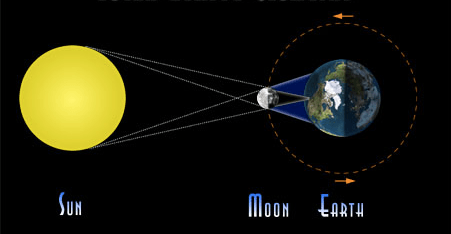
The order during a solar eclipse is:

a)

Sun, Earth, Moon

b)

Sun, Moon, Earth

56.

A lunar eclipse can only happen during a ____________ moon.

a)

Day

b)

Full

c)

New

d)

Night

57.

The _________________ is the lighter shadows during an eclipse.

a)

Partial

b)

Umbra

c)

Penumbra

d)

Corona

58.

A ________________ eclipse is when the sun or moon is fully blocked.

a)

Partial

b)

Penumbral

c)

Total

d)

Annular

59.

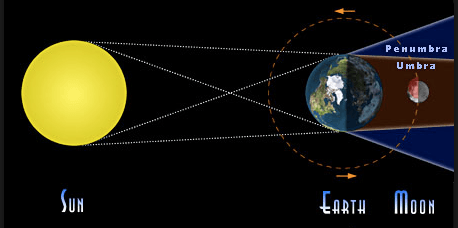
The order during a lunar eclipse is:

a)

Sun, Moon, Earth

b)

Sun, Earth, Moon

60.

The _________________ is the darkest part of the shadows during an eclipse.

a)

Moon

b)

Corona

c)

Penumbra

d)

Umbra

61.

A ______________ eclipse is when only part of the sun or moon is blocked.

a)

Penumbral

b)

Annular

c)

Total

d)

Partial

62.

A ________________ eclipse is when the moon passes through Earth's penumbra and simply gets dimmer.

a)

Penumbral

b)

Partial

c)

Total

d)

Annular

63.

During a lunar eclipse, the _______________ is blocked by the earth's shadow.

a)

Moon

b)

Corona

c)

Umbra

d)

Sun

64.

A solar eclipse happens during the ______________.

a)

Night

b)

Sun

c)

Day

d)

Moon

65.
During a lunar eclipse, what color does the moon appear?
a)
Black
b)
Red-orange
c)
Yellow-green
d)
White
66.
A solar eclipse only happens during a ________ moon.
a)
New
b)
Cresent
c)
Gibbous
d)
Full
67.
A lunar eclipse only happens during a ________ moon.
a)
New
b)
Cresent
c)
Gibbous
d)
Full
68.
Where must you be to see a total solar eclipse?
a)
a corona
b)
an orbit
c)
the moon's shadow
d)
the earth's shadow
69.
In order to have an eclipse, the Moon, Sun and Earth have to be?
a)
Below each other
b)
Above each other
c)
In alignment
70.
Which type of eclipse occurs when the Moon comes directly between Earth and the Sun?
a)
Lunar eclipse
b)
Solar eclipse
71.
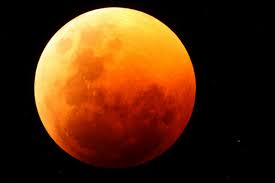
This image is an example of 
a)
Lunar Eclipse
b)
New Moon
c)
Solar Eclipse
d)
Full Moon
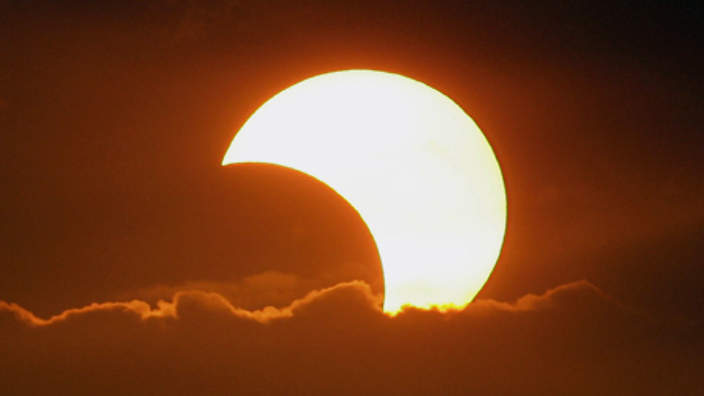
72.
This image is an example of
a)
Lunar Eclipse
b)
Full Moon
c)
New Moon
d)
Solar Eclipse
73.
A solar eclipse only occurs during which moon phase?
a)
1st Quarter
b)
New Moon
c)
Full Moon
d)
3rd Quarter
74.
During a solar eclipse...
a)
The sun is blocked by the moon
b)
The Earth is blocked moon
c)
The moon is blocked by the sun
d)
You are blocked
75.
Which of the following is NOT true about a total solar eclipse?
a)
It can be viewed from every spot on earth
b)
It is dangerous to look at without the proper device
c)
When it happens, the moon blocks all of the sun except the corona
d)
You must be within the moon's umbra to see it
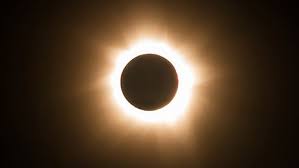
76.
Which type of eclipse is shown in this picture?
a)
Solar Eclipse
b)
Orbit
c)
Lunar Eclipse
d)
Total Eclipse
77.
Which type of eclipse is shown in the diagram?
a)
Solar Eclipse
b)
Lunar Eclipse
c)
Total Eclipse
d)
Partial Eclipse
78.
What word best describes our sun?
a)
Average
b)
Supergiant
c)
Dwarf
d)
Red Giant
79.
What color of star is the hottest?
a)
Blue
b)
Red
c)
Yellow
d)
Orange
80.
What color of star is the coolest?
a)
Red
b)
Yellow
c)
Blue
d)
White
81.
What is the name of the largest stars?
a)
Protostars
b)
Supergiants
c)
Red Giants
d)
Dwarf Stars
82.
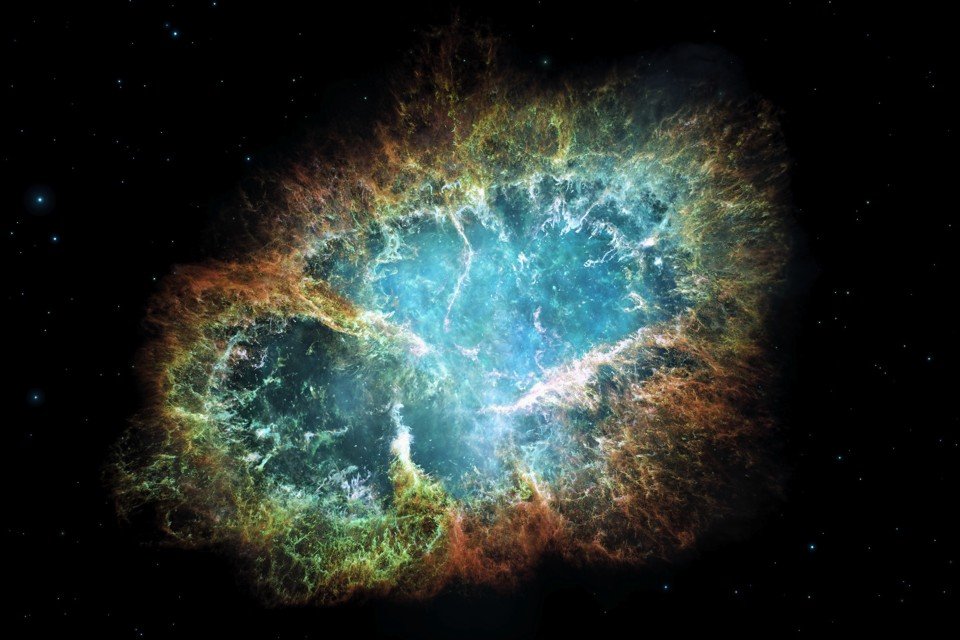
What is the name of the explosion at the death of a massive star?
a)
Supergiant
b)
Supernova
c)
Black Hole
d)
Nebula
83.
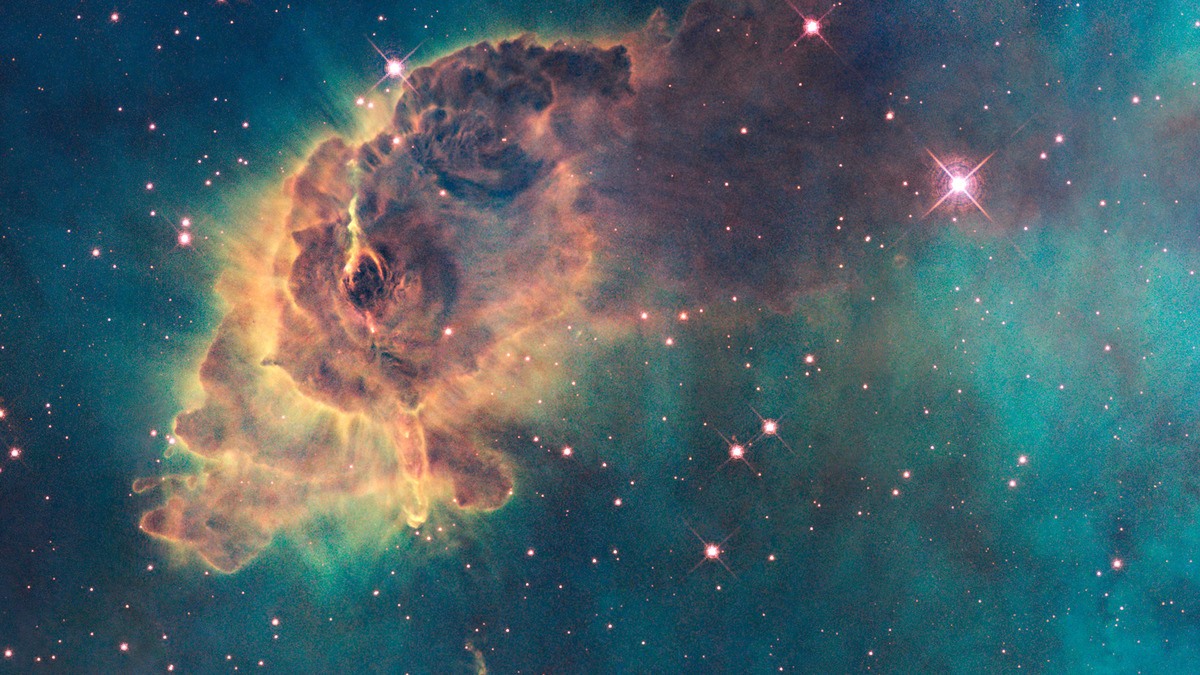
What is the name of the gas/dust clouds that form stars?
a)
Nebulas
b)
Protostars 
c)
Supernova
d)
Neutron Star
84.
Most stars are made of which elements?
a)
Hydrogen only
b)
Hydrogen and Lithium
c)
Hydrogen and Sodium
d)
Hydrogen and Helium
85.

What is a Star?

a)

a large celestial body that is made of plasma and held together by gravity.

b)

a large ball of fire held together by gravity.

86.
A small, hot star near the end of its life is a star called a
a)
white dwarf
b)
red dwarf
c)
supergiant
d)
protostar
87.

Our sun is currently in what star stage?

a)

Protostar

b)

Nebula

c)

Main Sequence

d)

Red Giant

88.
After the main sequence, a low mass star becomes a
a)
black dwarf
b)
protostar
c)
red giant
d)
supergiant
89.

Felix examined several photos of stars. To compare their temperatures, he looked at the colors of the stars. He organized the photos in order from coolest to hottest. Which of these answers shows the correct order?

a)

red, yellow, white, blue

b)

white, blue, yellow, red

c)

yellow, white, blue, red

d)

blue, yellow, white, red

90.
Which of the following is NOT a characteristic used to classify stars?
a)
Color
b)
Temperature
c)
Size
d)
Shape
91.
Which of the following is a name used for stars:
a)
Neutron
b)
Supergiant
c)
White dwarf
d)
All of the above
92.
True or False
The Sun is the biggest star in the sky.
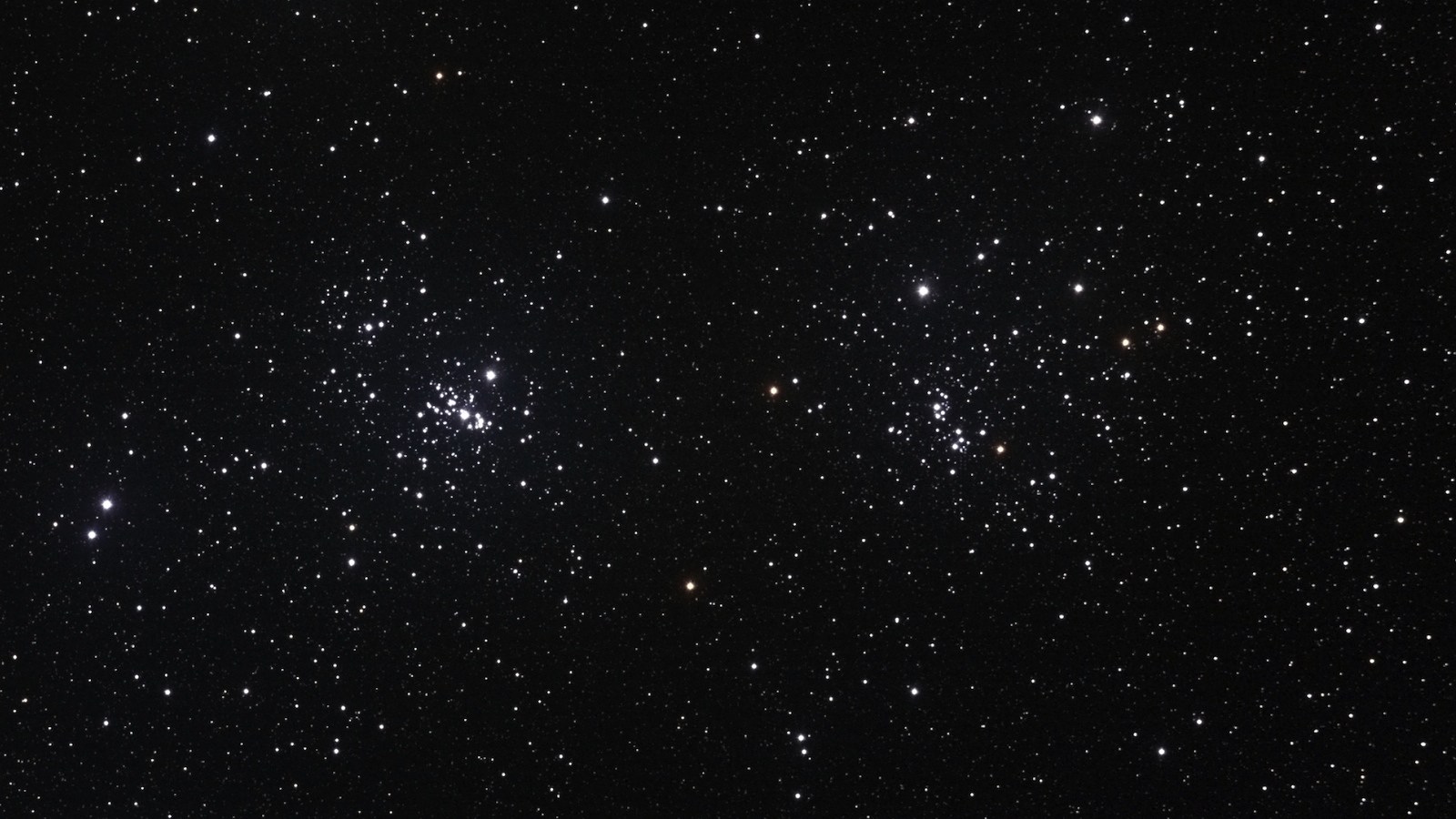
a)
True
b)
False
93.
Why do other stars appear so much smaller than the sun?
a)
They are actually much smaller
b)
They are so far away
c)
They are not as bright
d)
They are dwarf stars
94.
What color of star is the hottest?
a)
Blue
b)
Red
c)
Yellow
d)
Orange
95.
What color of star is the coolest?
a)
Red
b)
Yellow
c)
Blue
d)
White
96.
What is the name of the gas/dust clouds where all stars form?
a)
Nebulas
b)
Protostars 
c)
Supernova
d)
Neutron Star
97.
What are stars?
a)
Rocky bodies
b)
Burning balls of gas
c)
5 pointed shapes
d)
Hollywood actors
98.
True or False
The Sun is the biggest star in the sky.
a)
True
b)
False
99.
Which star is closest to Earth?
a)
Betelgeuse
b)
Orion
c)
the sun
d)
Antares
100.
The color of a star tells us its
a)
magnitude
b)
temperature
c)
size
d)
age
101.
The life cycles of stars are determined by their:
a)
mass (size)
b)
color
c)
distance from Earth
d)
luminosity
102.
Galaxies are composed of 
a)
billions of stars
b)
a star and the planets that orbit around it
c)
all of the bodies and objects in space
103.
Most stars are made of which gases?
a)
Hydrogen only
b)
Hydrogen and Lithium
c)
Hydrogen and Sodium
d)
Hydrogen and Helium
104.
Our sun is currently in what star stage?
a)
Protostar
b)
Nebula
c)
Main Sequence
d)
Red Giant
105.
Which is not an end stage of a star?
a)
black giant
b)
black hole
c)
neutron star
d)
black dwarf
106.
After the main sequence, a low mass star becomes a
a)
black dwarf
b)
protostar
c)
red giant
d)
supergiant
107.
After the main sequence, a high mass star becomes a
a)
black dwarf
b)
protostar
c)
red giant
d)
supergiant
108.
The final stage of a low mass star is a 
a)
neutron star
b)
nebula
c)
black hole
d)
black dwarf
109.
After a supergiant, a high mass star explodes and forms a
a)
supernova
b)
red giant
c)
black hole
d)
planetary nebula
110.
When a nebula heats up, a "baby" star forms in the middle. It is called a
a)
supernova
b)
supergiant
c)
white dwarf
d)
protostar
111.
What color of star is the hottest?
a)
Blue
b)
Red
c)
Yellow
d)
Orange
112.
What color of star is the coolest?
a)
Red
b)
Yellow
c)
Blue
d)
White
113.
What is the name of the largest stars?
a)
Protostars
b)
Supergiants
c)
Red Giants
d)
Dwarf Stars
114.
What is the name of the gas/dust clouds that form stars?
a)
Nebulas
b)
Protostars 
c)
Supernova
d)
Neutron Star
115.
What is the name of the explosion at the death of a massive star?
a)
Supergiant
b)
Supernova
c)
Black Hole
d)
Nebula
116.
What word best describes our sun?
a)
Average
b)
Supergiant
c)
Dwarf
d)
Red Giant
117.
What is the name of the star in our solar system?
a)
Venus
b)
Sun
c)
Jupiter
d)
Mars
118.
The H-R diagram is a graph that shows the relationship between ______________ for stars. 
a)
temperature and color
b)
temperature and brightness
c)
brightness and color
d)
distance and brightness
119.
All stars begin their life in a
a)
Main Sequence
b)
Nebula
c)
Protostar
d)
Black Dwarf
120.
______ is a force that causes dust particles to stick together in a nebula.
a)
nuclear fusion
b)
gravity
c)
hydrogen
d)
friction
121.
Most stars are made of which elements?
a)
Hydrogen only
b)
Hydrogen and Lithium
c)
Hydrogen and Sodium
d)
Hydrogen and Helium
122.
A ________ is an object so dense with so much gravity that even light cannot escape.
a)
neutron star
b)
white dwarf
c)
blackhole
d)
black dwarf
123.
What is a Star?  (pg. 284)
a)
a large celestial body that is composed of gas and emits light
b)
a large ball of fire
124.
A supergiant might explode and become a_____.
a)
main sequence stars
b)
white dwarf
c)
supernova
d)
nebula
125.

The professional who studies the stars is...

a)

an astronaut.

b)

an astrologer.

c)

an astronomer.

126.
Why do stars in the night sky look so small?
a)
stars are small
b)
stars are close
c)
stars are far away
127.
Our galaxy is called the
a)
Earth Nebula
b)
The Hubble Galaxy
c)
The Milky Way
d)
The Snickers
128.

What will be the next stage in our star the sun's life cycle?

a)

supernova

b)

white dwarf

c)

blackhole

d)

red giant

129.
A small, hot star near the end of its life is a star called a
a)
white dwarf
b)
red dwarf
c)
supergiant
d)
protostar
130.
A black hole is an object so dense with so much gravity that even ________ cannot escape.
a)
gravity
b)
galaxies
c)
spaceships
d)
light
131.

What are asteroids?

a)

large rock-like chunks that orbit the sun

b)

pieces of stars

c)

small planets

132.

What is the asteroid belt?

a)

a belt of rocks across a planet

b)

a belt of rocks crossing the sun

c)

an area between Mars and Jupiter where most asteroids are found

133.

Where is the asteroid belt located?

a)

between the orbits of Mars and Jupiter

b)

between the orbits of Earth and Mars

c)

between Mars and the Sun

134.

How big is the largest asteroid?

a)

as big as our moon

b)

one-fourth the size of our moon

c)

as big as Earth

135.

Why are the asteroids there?

a)

They are smaller planets.

b)

They were pieces left over from the planets forming.

c)

They broke off Jupiter and just float there.

136.

There are not very many asteroids in the asteroid belt.

a)

true

b)

false

137.

The asteroid belt is a sort of dividing line between______.

a)

biggest planets and smaller planets

b)

the rocky planets and the gas giants

c)

both A and B

138.

Which four planets are closer to the sun than the asteroid belt?

a)

Jupiter, Saturn, Uranus, and Neptune

b)

Venus, Mars, Jupiter, and Saturn

c)

Mercury, Venus, Earth, and Mars

139.

What are comets made of?

a)

mud, rock, water

b)

ice and rock

c)

ice, dust, water

d)

gas and dust

140.

The _____ is the main body of the comet.

a)

gas tail

b)

coma

c)

nucleus

d)

dust tail

141.

The ____ forms around the nucleus when the sun heats it up.

a)

dust tail

b)

coma

c)

nucleus

d)

gas tail

142.

The comet's tail always flies __________________.

a)

ahead of the comet

b)

toward the sun

c)

ahead of the sun

d)

away from the sun

143.

No two comets are alike.

a)

True

b)

False

144.

From earth, comets look like _______.

a)

fuzzy stars

b)

an airplane

c)

a kite

d)

twinkling stars

145.

Comet tails are a result of __________.

a)

their orbit

b)

solar wind

c)

north winds

d)

the sun

146.

One famous comet......

a)

Galileo

b)

Constellations

c)

Halley's Comet

d)

Charlie's Comet

147.

The coma is an atmosphere of gas that forms around the nucleus.

a)

True

b)

False

148.

Comets do not tend to travel on an orbit.

a)

True

b)

False

149.

Name of The Planet:

a)

Mercury

b)

Mars

c)

Earth

d)

The Moon

150.

Name of The Planet:

a)

Earth

b)

Mars

c)

Venus

d)

Pluto

151.

Name of The Planet:

a)

Venus

b)

Mars

c)

Earth

d)

Jupiter

152.

Name of The Planet:

a)

Mars

b)

Venus

c)

Earth

d)

Jupiter

153.

Name of The Planet:

a)

Earth

b)

Mars

c)

Venus

d)

Jupiter

154.

Name of The Planet:

a)

Saturn

b)

Jupiter

c)

Venus

d)

Mars

155.

Name of The Planet:

a)

Mars

b)

Neptune

c)

Venus

d)

Earth

156.

Name of The Planet:

a)

Uranus

b)

Neptune

c)

Earth

d)

Venus

157.
What are the three steps of the current explanation for the formation of the moon?
a)
impact, ejection, formation
b)
impact, explosion, creation
c)
explosion, ejection, formation
158.
Because of rock samples, scientists found the composition of the moon similar to Earth's ____.
a)
mantle
b)
crust
c)
atmosphere
d)
core
159.
What are natural or artificial bodies that revolve around larger bodies such as planets?
a)
dwarf planets
b)
satellites
c)
moons
160.
All of the ______ have multiple moons.
a)
gas giants
b)
inner planets
161.
Jupiter's four largest moons as known as Galilean _____.
a)
giants
b)
satellites
c)
moons
d)
craters
162.
Pluto has at least ____ moons.
a)
2
b)
3
c)
4
d)
5
163.
Which is Pluto's largest moon that is almost half the size of Pluto?
a)
Charon
b)
Hydra
c)
Nix
164.

Which dwarf planet is this

a)

Pluto

b)

Makemake

c)

Haumea

d)

Eris

e)

Ceres

165.

Ceres lies in the _________________

a)

Asteroid belt

b)

Kuiper belt

c)

Jungle

d)

Ocean

166.

Ceres is the largest object in the Asteroid belt

(True or False)

a)

False

b)

True

167.

How many miles away is Pluto from the sun?

a)

4.7 billion miles away

b)

3.6 billion miles away

c)

5.8 billion miles away

d)

1 trillion miles away

168.

Tombough Regio is in which Dwarf planet?

a)

MakeMake

b)

Haumea

c)

Pluto

d)

Eris

169.

Pluto has 5 moons which is the largest one?

a)

Charon

b)

Nix

c)

Hydra

d)

Kerberos

e)

Styx

170.

What is the brightest object in the Kuiper belt

a)

Pluto

b)

MakeMake

171.

Haumea spins faster than Jupiter, so it has how many hours in a day?

a)

3 hours

b)

1 hour

c)

2 hours

d)

4 hours

172.

What are Haumea's 2 moons?

a)

Namaka

b)

Io

c)

Hi'iaka

d)

Europea

173.

How many Earth years does it take for Eris to orbit the sun

(a)  

174.

The most recent definition of a planet was adopted by the International Astronomical Union in 2006. It says a planet must do three things, one of those things are...

a)

It must orbit a larger planet.

b)

It must orbit a star (in our cosmic neighborhood, the Sun).

c)

It must orbit a moon.

d)

It must orbit the MIlky Way

175.

The most recent definition of a planet was adopted by the International Astronomical Union in 2006. It says a planet must do three things, one of those things are...

a)

It must be big enough to attract comets and asteroids.

b)

It must be big enough to be seen from a telescope.

c)

It must be big enough to have enough gravity to force it into a spherical shape.

d)

It must be big enough to have enough gravity to force a moon into orbit.

176.

The most recent definition of a planet was adopted by the International Astronomical Union in 2006. It says a planet must do three things, one of those things are...

a)

It must have cleared away any other objects of a similar size near its orbit around the Sun.

b)

It must have organic life forms.

c)

It must have an an orbit inside the asteroid belt.

d)

It must have at least one moon.

177.

This is the smallest dwarf planet and is the only dwarf planet to be found in the asteroid belt.

a)

Eris

b)

Ceres

c)

Haumea

d)

Makemake

178.

This dwarf planet has a strange oval shape and is the 3rd dwarf planet from the sun.

a)

Eris

b)

Ceres

c)

Haumea

d)

Makemake

179.

This dwarf planet has a distinctive red color and is the 4th dwarf planet from the sun.

a)

Eris

b)

Ceres

c)

Haumea

d)

Makemake

180.

This dwarf planet is furthest from the Sun and is the second largest dwarf planet.

a)

Eris

b)

Ceres

c)

Haumea

d)

Makemake

181.

Pluto was declassified has a planet because...

a)

it's too small.

b)

it's not a sphere.

c)

it hasn't cleared it's orbit of debris.

d)

it's orbit around the Sun is so strange.