
 Worksheets
DNA Structure and Replication DQQ
Total questions: 25
Worksheet time: 14mins
amino acids
nucleotides
fatty acids
polysaccharides
CAT TCA CTG
ATG TGA CAG
TAC ACT GTC
GTA AGT GAC
CAT TCA CTG
Topoisomerase
DNA Polymerase
Ligase
Primase
DNA is located in the _____ in eukaryotic cells.
nucleus
cytoplasm
mitochondria
ribosome
What is the backbone of DNA made of?
sugar and phosphate
nitrogen bases
sugar and nitrogen bases
phosphate and nitrogen bases
The shape of DNA is arranged as:
a double helix
one strand of nucleotides
squiggly lines
a single nucleotide
What are the correct base pair rules in DNA?
A-T and C-G
A-C and T-G
A-G and C-T
A-A, C-C, G-G, and T-T
How is everyone's DNA different if there are only 4 bases in DNA?
the base are arranged differently in each person
each person has 4 different bases
DNA is NOT different, everyone's is the same
I don't know :(

Why does DNA replicate?
It likes to have a friend around
It needs to have multiple copies of DNA molecules in each cell
It needs to make a copy before the cell divides so each cell has the complete DNA
to make proteins

A gene is...
A segment of DNA with the information necessary to synthesize a protein
A segment of DNA with the information necessary to synthesize carbohydrates
A long chromosome
A segment of DNA that carries out DNA replication
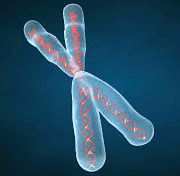
The number of human chromosomes is
23
46
92
64

gene
chromosome
trait
DNA

What is the relationship between DNA and chromosomes? (The image will help you out!)
Chromosomes are made of DNA
DNA is made of chromosomes
DNA and chromosomes are the same thing.
All of the above are correct

Scientists have no idea
Because you get one from your mom and one from your dad
Because pairs can divide easier
Because DNA is awesome
Adenine pairs with:
Cytosine
Thymine
Guanine
Uracil
Guanine pairs with:
Adenine
Cytosine
Thymine
Uracil

sucrose
glucose
deoxyribose
fructose
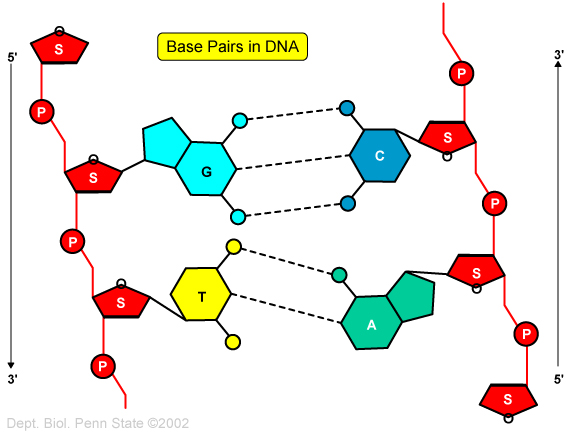
polar bonds
ionic bonds
covalent bonds
hydrogen bonds

Why does DNA stay in the nucleus?
To protect it from becoming damaged.
It is lazy.
It is grounded.
It cannot move.

The DNA Replication diagram is incomplete. Which nucleotide sequence accurately shows the DNA strand that would be produced during DNA replication?
AGGT
ACCT
TAAC
GCCT

