
 Worksheets
Invertabrates and the Origin if Animal Diversity
Total questions: 241
Worksheet time: 12hrs 3mins
There are <1.3 million extant species of animals
True
False
What percentage of animals are invertebrates?
85%
90%
95%
100%
Animals are placed in about how many phyla?
(a)
Most animals are
Terrestrial
Aquatic
Most animals have which of these traits?
Eukaryotic
Multicellular
Heterotrophic
Store Carbohydrates as glycogen
Have muscle and nerve cells
We divide animals using which characteristics
Development
Germ Layers
Reproduction
Body Cavity
Symmetry
What is the succession of mitotic divisions?
(a)
What is a hollow ball of cells?
(a)
Embryonic tissues of the adult body are produced during
(a)
What is the cup shaped embryo?
(a)
What are the three germ layers that form after gastrulation? (innermost to the outermost) (format for answering is xxxxx, xxxxx, xxxxxx)
(a)
What is the outer layer of cells that form skin, sense organs, and nerves?
(a)
What is the inner layer of cells that form the digestive tract and respiratory organs?
(a)
What is the middle layer of cells that form the circulatory, reproductive, and excretory systems?
(a)
Animals with radial symmetry produce which layers?
Endoderm
Ectoderm
Mesoderm
What is it called when animals only produce the endo and ecto derms?
(a)
What is it called when animals produce all three derm layers?
(a)
Animals with bilateral symmetry produce which layers?
Endoderm
Ectoderm
Mesoderm
Animals with bilateral symmetry produce which layers?
Endoderm
Ectoderm
Mesoderm
What is an air/fluid filled space, separating the digestive tract from the outer layer of the body?
(a)
What are animals that have 'solid bodies' without a cavity between the gut and outer body called?
(a)
What is an example of an acoelomate?
Flatworms
Nemotodes
Mammals
What are animals that have a body cavity without a mesoderm tissue called?
(a)
What is an example of an psuedocoelomate?
Flatworms
Nemotodes
Mammals
What are animals that have a true coelom with suspended organs called?
(a)
What is an example of an coelomate?
Flatworms
Nemotodes
Mammals
Which symmetry cannot be divided evenly in any plane?
Asymmetry
Spherical Symmetry
Radial Symmetry
Bilateral Symmetry
Which symmetry is shaped like globes or spheres?
Asymmetry
Spherical Symmetry
Radial Symmetry
Bilateral Symmetry
Which symmetry has a top and a bottom, but no left or right?
Asymmetry
Spherical Symmetry
Radial Symmetry
Bilateral Symmetry
Which symmetry has a dorsal, ventral anterior, and a posterior end and can be divided in half on only one plane?
Asymmetry
Spherical Symmetry
Radial Symmetry
Bilateral Symmetry
What is an example of an asymmetrical animal?
sponges
sea urchin
sea stars
lizards
What is an example of a spherically symmetrical animal?
sponges
sea urchin
sea stars
lizards
What is an example of a radially symmetrical animal?
sponges
sea urchin
sea stars
lizards
What is an example of a bilaterally symmetrical animal?
sponges
sea urchin
sea stars
lizards
What is the concentration of sensory organs toward one end?
(a)
What are the 8 levels of taxonomy? ( answer format is xxxxxx, xxxxxx, xxxxx, xxxxxx, xxxxxx, xxxxxx, xxxxx, xxxxx)
(a)
What is/are the kingdom(s) in the domain Bacteria?
Protista
Eubacteria
Archea (Archeabacteria)
Fungi
Plantae
What is/are the kingdom(s) in the domain Eukarya?
Protista
Animaliae
Archea (Archeabacteria)
Fungi
Plantae
What is/are the kingdom(s) in the domain Archea?
Protista
Eubacteria
Archea (Archeabacteria)
Fungi
Plantae
This phylum means to have holes
(a)
This phylum means to have holes
(a)
Which phylum has eukaryotic cells but does not have tissues?
Phylum Porifera
Phylum Cnidaria
Phylum Ctenophora
Phylum Platyhelminthes
Which phylum has a sessil filter?
Phylum Porifera
Phylum Cnidaria
Phylum Ctenophora
Phylum Platyhelminthes
Which phylum has a endoskeleton made up on spicules?
Phylum Porifera
Phylum Cnidaria
Phylum Ctenophora
Phylum Platyhelminthes
What is the name for spicules made from calcium carbonate?
(a)
What is the name for spicules made from silica(glass)?
(a)
The shape of these determines the type of sponge?
(a)
What protein connects spicules to other spicules?
(a)
What are the three basic forms of Phylum Porifera? (xxxx, xxxx, xxxx)
(a)
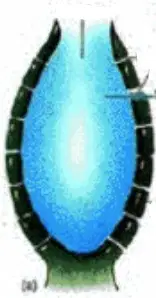
Which basic form of Phylum Porifera is this?
asconoid
Syconoid
Leuconoid
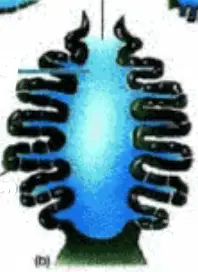
Which basic form of Phylum Porifera is this?
asconoid
Syconoid
Leuconoid
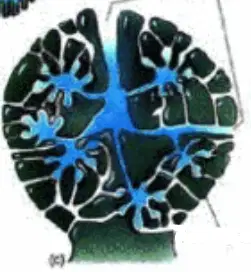
Which basic form of Phylum Porifera is this?
asconoid
Syconoid
Leuconoid
What is the open cavity in the middle of the sponge?
(a)
What are the holes on the sides of sponges that draw water in called?
(a)
What is the top of the sponge where water exits called?
(a)
Phylum Porifera can reproduce sexually and asexually
True
False
Phylum Porifera: What type of asexual reproduction is it when the bud forms from the parent cell?
(a)
Phylum Porifera: What type of asexual reproduction is it when a fragment breaks off and grows into a new sponge?
(a)
Sponges are hermaphrodites
True
False
Phylum Porifera is
Asymmetrical
Spherically Symmetrical
Radially Symmetrical
Bilaterally Symmetrical
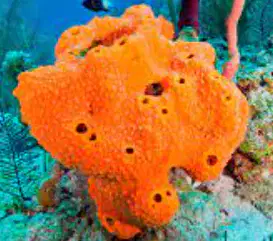
What is this creature? (I am sorry about the photo, I couldn't find a better one)
(a)
Phylum Cnidaria is
Asymmetrical
Spherically Symmetrical
Radially Symmetrical
Bilaterally Symmetrical
Phylum Cnidaria is
diploblastic
triploblastic
In Phylum Cnidaria, the two layers in an adult are
Ectoderm
Epidermis
Mesoderm
Gastrodermis
Endoderm
Polyp's and Medusa's belong to which Phylum?
Porifera
Cnidaria
Ctenophora
Platyhelminthes
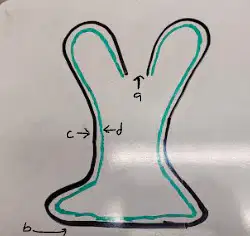
Sessile;vase shaped: adheres to a substrate by aboral end and extends tentacles around oral end to contact prey
Polyp
Medusa
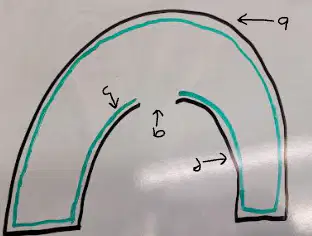
Motile;bell shaped: tentacles dangle downward
Polyp
Medusa
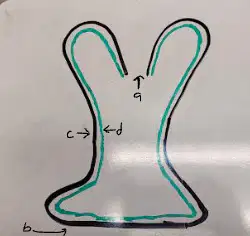
What is label a?
Mouth/oral end
Aboral end
Epidermis
Gastrodermis
Gastrovascular Cavity
What is label b?
Mouth/oral end
Aboral end
Epidermis
Gastrodermis
Gastrovascular Cavity
What is label c?
Mouth/oral end
Aboral end
Epidermis
Gastrodermis
Gastrovascular Cavity
What is label d?
Mouth/oral end
Aboral end
Epidermis
Gastrodermis
Gastrovascular Cavity
What is open area in the center called?
Mouth/oral end
Aboral end
Epidermis
Gastrodermis
Gastrovascular Cavity
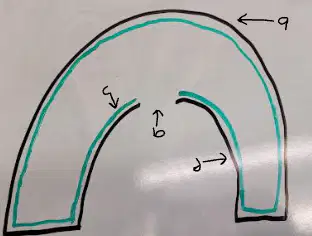
What is label a?
Mouth/oral end
Aboral end
Epidermis
Gastrodermis
Gastrovascular Cavity
What is label b?
Mouth/oral end
Aboral end
Epidermis
Gastrodermis
Gastrovascular Cavity
What is label c?
Mouth/oral end
Aboral end
Epidermis
Gastrodermis
Gastrovascular Cavity
What is label d?
Mouth/oral end
Aboral end
Epidermis
Gastrodermis
Gastrovascular Cavity
Do Phylum Cnidaria function as carnivores?
Yes
No
This receives food from 'mouth' for digestion
(a)
Do Phylum Cnidaria have a complete digestive system?
Yes
No
Doesn't have a brain but has a nerve net
Phylum Porifera
Phylum Cnidaria
Phylum Ctenophora
Phylum Platyhelminthes
Stinging cells in Cnidarians
(a)
Stingers in Cnidarians
(a)
most alternate between polyp and medusa stages
Hydrozoa
Scyphozoa
Cubozoa
Anthozoa
Most diverse class
Hydrozoa
Scyphozoa
Cubozoa
Anthozoa
Obelia
Hydrozoa
Scyphozoa
Cubozoa
Anthozoa
Physalia
Hydrozoa
Scyphozoa
Cubozoa
Anthozoa
Hydra
Hydrozoa
Scyphozoa
Cubozoa
Anthozoa
Colonial polyp with medusa stage
Obelia
Physalia
Hydra
'Portuguese man of war' - tentacles can reach up to 9m
Obelia
Physalia
Hydra
only exist in polyp form; like freshwater ponds and streams
Obelia
Physalia
Hydra
'true' jellyfish
Hydrozoa
Scyphozoa
Cubozoa
Anthozoa
Aurelia
Hydrozoa
Scyphozoa
Cubozoa
Anthozoa
Coastal species alternate forms; open ocean species are only medusa
Hydrozoa
Scyphozoa
Cubozoa
Anthozoa
Tentacles tend to be short, but they have long 'oral arms'
Hydrozoa
Scyphozoa
Cubozoa
Anthozoa
'umbrella' appears to be squared off
Hydrozoa
Scyphozoa
Cubozoa
Anthozoa
better swimmers than true jellies
Hydrozoa
Scyphozoa
Cubozoa
Anthozoa
complex eyes
Hydrozoa
Scyphozoa
Cubozoa
Anthozoa
sea wasp
Hydrozoa
Scyphozoa
Cubozoa
Anthozoa
Sea wasp has poison more potent than cobra venom
True
False
means 'flowering animals'
Hydrozoa
Scyphozoa
Cubozoa
Anthozoa
sea anemones and corals
Hydrozoa
Scyphozoa
Cubozoa
Anthozoa
do not display the medusa stage, only polyp (some colonial)
Hydrozoa
Scyphozoa
Cubozoa
Anthozoa
corals secrete calcium carbonate exoskeleton
Hydrozoa
Scyphozoa
Cubozoa
Anthozoa
Corals fuse to the skeletal remains of past corals
True
False
Coral reefs are concentrated in the
Western Pacific
Eastern Pacific
Caribbean
Western Atlantic
Eastern Atlantic
Coral Reefs: Water averages 23.5 degrees Celsius
True
False
Corals form symbiosis with algae called
(a)
What type of coral reef is close to the coast, often attached to the shore?
(a)
What type of coral reef is further offshore?
(a)
What type of coral reef is atop undersea mountains/volcanos??
(a)
'Comb jellies' - medusa shaped, tend to be small (few cm) (answer is a phylum)
(a)
How many row of cilia does Phylum Ctenophora
(a)
Comb jellies have nemotocyts
True
False
These burst open, covering prey with sticky threads
(a)
Comb jellies have a complete digestive system
True
False
Comb jellies display luminescence at night
True
False
What Phylum do the flatworms belong to?
(a)
Phylum Platyhelminthes is
Asymmetrical
Spherically Symmetrical
Radially Symmetrical
Bilaterally Symmetrical
Phylum Platyhelminthes is
Acoelomates
Psuedocoelomates
Coelomates
Phylum Platyhelminthes display's cephalization
True
False
Phylum Platyhelminthes is triploblastic
True
False
Dugesia species 'planeria'
Class Turbellaria
Class Monogenea
Class Trematoda
Class Cestoda
Freshwater carnivores
Class Turbellaria
Class Monogenea
Class Trematoda
Class Cestoda
Nearly all free-living
Class Turbellaria
Class Monogenea
Class Trematoda
Class Cestoda
Range from 5mm to 50cm in length
Class Turbellaria
Class Monogenea
Class Trematoda
Class Cestoda
Motile because ciliated epidermis and muscle bonds
Class Turbellaria
Class Monogenea
Class Trematoda
Class Cestoda
Pharynx
Class Turbellaria
Class Monogenea
Class Trematoda
Class Cestoda
Respiration done through diffusion
Class Turbellaria
Class Monogenea
Class Trematoda
Class Cestoda
Have an excretory system with flame cells
Class Turbellaria
Class Monogenea
Class Trematoda
Class Cestoda
Have a nervous system - 2 longitudinal nerve cords, nerves connect to eyespots and a simple brain(ganglia)
Class Turbellaria
Class Monogenea
Class Trematoda
Class Cestoda
Reproduction can be sexual or asexual
Class Turbellaria
Class Monogenea
Class Trematoda
Class Cestoda
Usually only has one host
Class Turbellaria
Class Monogenea
Class Trematoda
Class Cestoda
Known as parasitic 'flukes'
Class Turbellaria
Class Monogenea
Class Trematoda
Class Cestoda
External parasites of fish
Class Turbellaria
Class Monogenea
Class Trematoda
Class Cestoda
Commonly infect humans/other vertebrates as part of their lives
Class Turbellaria
Class Monogenea
Class Trematoda
Class Cestoda
typically have multiple hosts
Class Turbellaria
Class Monogenea
Class Trematoda
Class Cestoda
often have hooks/suckers to attach to the host
Class Turbellaria
Class Monogenea
Class Trematoda
Class Cestoda
Fasciola hepatica
Class Turbellaria
Class Monogenea
Class Trematoda
Class Cestoda
Sheep Liver Fluke
Fasciola hepatica
Shistosoma mansoni
Taenia saginata
lives in sheep's liver and gall bladder
Fasciola hepatica
Shistosoma mansoni
Taenia saginata
produces eggs which enter intestines and pass out in feces
Fasciola hepatica
Shistosoma mansoni
Taenia saginata
invade snail (secondary host), grow, leave snail and form cyst
Fasciola hepatica
Shistosoma mansoni
Taenia saginata
Protective covering on a blade of grass
(a)
Blood fluke
Fasciola hepatica
Shistosoma mansoni
Taenia saginata
Infects 200-300 million people per year
Fasciola hepatica
Shistosoma mansoni
Taenia saginata
causes liver damage, internal bleeding
Fasciola hepatica
Shistosoma mansoni
Taenia saginata
humans infected by drinking contaminated water or penetration of skin
Fasciola hepatica
Shistosoma mansoni
Taenia saginata
beef tapeworm
Fasciola hepatica
Shistosoma mansoni
Taenia saginata
pigs and cows acquire eggs on the grass they eat
Fasciola hepatica
Shistosoma mansoni
Taenia saginata
Inside the digestive system, eggs hatch; larvae bore into the muscle where they form a cyst
Fasciola hepatica
Shistosoma mansoni
Taenia saginata
humans acquire them by eating improperly cooked beef/pork
Fasciola hepatica
Shistosoma mansoni
Taenia saginata
Tapeworms
Class Turbellaria
Class Monogenea
Class Trematoda
Class Cestoda
Scolex and Proglottids
Class Turbellaria
Class Monogenea
Class Trematoda
Class Cestoda
May reach 20m in length, block intestines, and rob nutrients from humans
Class Turbellaria
Class Monogenea
Class Trematoda
Class Cestoda
Head, contains hooks to grip hosts intestines
(a)
Body segments, contain sex organs; no digestive system
(a)
What Phylum do ribbon worms or probastic worms belong to?
(a)
900 species - mostly marine
Phylum Porifera
Phylum Cnidaria
Phylum Ctenophora
Phylum Platyhelminthes
Phylum Nemertea
1m - 30m
Phylum Porifera
Phylum Cnidaria
Phylum Ctenophora
Phylum Platyhelminthes
Phylum Nemertea
Phylum Nemertea is
Acoelomates
Psuedocoelomates
Coelomates
Phylum Nemertea has a similar body plan to planerians
True
False
Phylum Nemertea has a complete digestive system
True
False
Phylum Nemertea has a simple circulatory system with blood
True
False
Phylum Nemertea have a proboscis on the anterior end that they can stick out to catch prey
True
False
What Phylum do roundworms belong to?
(a)
Phylum Nematoda is
Acoelomates
Psuedocoelomates
Coelomates
Largest group of psuedocoelomates
Phylum Nemertea
Phylum Nematoda
Phylum Mollusca
Wiggle for digestion because they have no muscles around organs
Phylum Nemertea
Phylum Nematoda
Phylum Mollusca
Phylum Rotifera
Covered by a tough cuticle that is shed periodically
Phylum Nemertea
Phylum Nematoda
Phylum Mollusca
Phylum Rotifera
Ascaris
Phylum Nemertea
Phylum Nematoda
Phylum Mollusca
Phylum Rotifera
Trichinella
Phylum Nemertea
Phylum Nematoda
Phylum Mollusca
Phylum Rotifera
Filariae
Phylum Nemertea
Phylum Nematoda
Phylum Mollusca
Phylum Rotifera
Humans infected by contaminated food, water, or dirt
Ascaris
Trichinella
Filariae
Wander around the body; pneumonia, intestinal blockage, death, my climb out of various orifices
Ascaris
Trichinella
Filariae
Females can give off 200,000 eggs per day
Ascaris
Trichinella
Filariae
Estimated 64% of people in South East U.S have been infected
Ascaris
Trichinella
Filariae
Causes 'trichinosis', humans infected by eating under cooked pork
Ascaris
Trichinella
Filariae
females give birth to live young , which bore into muscle cells and take them over
Ascaris
Trichinella
Filariae
Spread by mosquito
Ascaris
Trichinella
Filariae
Invade human lymphatic system, causing swelling 'elephantiasis'
Ascaris
Trichinella
Filariae
cause heartworm in dogs
Ascaris
Trichinella
Filariae
Hookworms and pin worms are also common parasites
Ascaris
Trichinella
Filariae
Means 'wheel bearer' in Latin
(a)
1800 species, most small, live in freshwater
Phylum Mollusca
Phylum Rotifera
Phylum Nematoda
Phylum Nemertea
Phylum Rotifera is
Acoelomates
Psuedocoelomates
Coelomates
Corona or 'crown' of cilia around head to draw in water into m
Phylum Mollusca
Phylum Rotifera
Phylum Nematoda
Phylum Nemertea
Mastax
Phylum Mollusca
Phylum Rotifera
Phylum Nematoda
Phylum Nemertea
Grinding organ inside mouth, grinds up microscopic food
(a)
Parthenogenesis
Phylum Mollusca
Phylum Rotifera
Phylum Nematoda
Phylum Nemertea
Molluscs
Phylum Mollusca
Phylum Rotifera
Phylum Nematoda
Phylum Nemertea
Second largest phylum (50,000+ species), mostly marine
Phylum Mollusca
Phylum Rotifera
Phylum Nematoda
Phylum Nemertea
Snails, shells, slugs, and squids
Phylum Mollusca
Phylum Rotifera
Phylum Nematoda
Phylum Nemertea
Soft body, most are protected by shell
Phylum Mollusca
Phylum Rotifera
Phylum Nematoda
Phylum Nemertea
Used for movement
Foot
Visceral Mass
Mantle
Contains most of the internal organs
Foot
Visceral Mass
Mantle
Tissue, covers internal structures
Foot
Visceral Mass
Mantle
Phylum Mollusca: Houses respiratory structures
(a)
Tongue-like appendage used to grind up food, found in most molluscs
(a)
Molluscs have a complete digestive system
True
False
Molluscs all reproduce sexually
True
False
An example of an external reproduction in Phylum Mollusca is
(a)
An example of an internal reproduction in Phylum Mollusca is
(a)
First to develop coelom
Phylum Mollusca
Phylum Rotifera
Phylum Nematoda
Phylum Nemertea
Class Polyplacophora
Phylum Mollusca
Phylum Rotifera
Phylum Nematoda
Phylum Nemertea
Class Gastropoda
Phylum Mollusca
Phylum Rotifera
Phylum Nematoda
Phylum Nemertea
Class Bivalvia
Phylum Mollusca
Phylum Rotifera
Phylum Nematoda
Phylum Nemertea
Class Cephalopoda
Phylum Mollusca
Phylum Rotifera
Phylum Nematoda
Phylum Nemertea
Chitons
Class Cephalopoda
Class Bivalvia
Class Gastropoda
Class Polyplacophora
Shell divided into eight overlapping dorsal p
Class Cephalopoda
Class Bivalvia
Class Gastropoda
Class Polyplacophora
Can curl up like armadillo if disturbed
Class Cephalopoda
Class Bivalvia
Class Gastropoda
Class Polyplacophora
Use radula for feeding
Class Cephalopoda
Class Bivalvia
Class Gastropoda
Class Polyplacophora
Mainly intertidal zone
Class Cephalopoda
Class Bivalvia
Class Gastropoda
Class Polyplacophora
Biggest class of molluscs
Class Cephalopoda
Class Bivalvia
Class Gastropoda
Class Polyplacophora
Snails, slugs, nudibranch, and conches
Class Cephalopoda
Class Bivalvia
Class Gastropoda
Class Polyplacophora
Strong cephalization
Class Cephalopoda
Class Bivalvia
Class Gastropoda
Class Polyplacophora
Shell used as home and retreat
Class Cephalopoda
Class Bivalvia
Class Gastropoda
Class Polyplacophora
Torsion
Class Cephalopoda
Class Bivalvia
Class Gastropoda
Class Polyplacophora
Process during development where organs rotate
(a)
Sinistral
Left-handed
Right-handed
Dextral
Left-handed
Right-handed
Right on top of them
Planospiral shells
Conispiral shells
Historic
Planospiral shells
Conispiral shells
Off to the side
Planospiral shells
Conispiral shells
Newer
Planospiral shells
Conispiral shells
Clams, mussels, scallops, oysters
Class Cephalopoda
Class Bivalvia
Class Gastropoda
Class Polyplacophora
Shell divided in two halves, held together by adductor muscles
Class Cephalopoda
Class Bivalvia
Class Gastropoda
Class Polyplacophora
Most filter feeders; water flows in incurrent siphon, over gills which trap food then out the excurrent siphon
Class Cephalopoda
Class Bivalvia
Class Gastropoda
Class Polyplacophora
Most highly developed of all molluscs, built for speed and carnivorous diet
Class Cephalopoda
Class Bivalvia
Class Gastropoda
Class Polyplacophora
Nautilus
Class Cephalopoda
Class Bivalvia
Class Gastropoda
Class Polyplacophora
Cuttlefish and squid
Class Cephalopoda
Class Bivalvia
Class Gastropoda
Class Polyplacophora
Architeuthis
Class Cephalopoda
Class Bivalvia
Class Gastropoda
Class Polyplacophora
Octopus
Class Cephalopoda
Class Bivalvia
Class Gastropoda
Class Polyplacophora
External shell and gas chambers
Nautilus
Cuttlefish
Architeuthis
Octopus
Internal shell
Nautilus
Cuttlefish
Architeuthis
Octopus
Giant squid
Nautilus
Cuttlefish
Architeuthis
Octopus
No shell, closed circulatory system
Nautilus
Cuttlefish
Architeuthis
Octopus
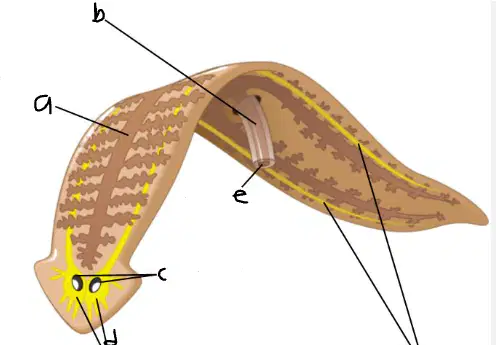
What is a?
(a)
What is b?
(a)
What is c?
(a)
What is d?
(a)
What is e?
(a)

