
 Worksheets
Form 2 Study guide
Total questions: 58
Worksheet time: 35mins
True or false. Divergent boundaries is the movement in which the plates move apart from each other, creating a new crust.
True
False
True or false. Convergent boundaries is the movement in which the plates slide horizontally.
True
False
True or false. Transform boundaries is the movement in which the plates slide horizontally.
True
False
True or false. Convergent boundaries is the movement in which the crust is destroyed when a plate sinks under another.
True
False
Which type of boundaries are usually located underwater, very few of them are on land (like the San Andreas fault)?
Convergent
Transform
Divergent

Select the tectonic plate movement that the image represents.
Convergent
Divergent
Transform

Select the tectonic plate movement that the image represents.
Convergent
Divergent
Transform

Select the tectonic plate movement that the image represents.
Convergent
Divergent
Transform
What is the crust and upper area of the mantle called?
focus
tsunami
epicenter
lithosphere
What is the beginning point of an earthquake?
focus
epicenter
tsunami
lithosphere
What is a scientist who studies the movement of the earth called?
tsunami
magnitude
seismologist
focus
What is the point on Earth's surface directly above the focus?
tsunami
seismic wave
epicenter
focus
The strength of an earthquake's seismic waves...
epicenter
magnitude
tsunami
focus
Giant ocean waves are called?
epicenter
seismic wave
focus
tsunami
The strongest earthquake will be a category _____.
1
5
10
20
The further the seismic waves travel from the center, the ____________ they become.
Stronger
Weaker
How does distance from the epicenter of an earthquake change the earthquake’s effects?
The strongest effects are at the epicenter.
The strongest effects are felt furthest from the epicenter.
The strongest effects are felt in a line extending north and south from the epicenter.
The strongest effects are in a ring surrounding the epicenter with a radius of several miles.

What is the name of the oceanic relief that is indicated in the image?
Continental Slope
Ocean Trenches
Continental Shelf
Ocean Ridges

What is the name of the oceanic relief that is indicated in the image?
Continental Slope
Ocean Trenches
Continental Shelf
Ocean Ridges

What is the name of the oceanic relief that is indicated in the image?
Continental Slope
Ocean Trenches
Continental Shelf
Ocean Ridges

What landform?
Delta
Valley
Mountain
Hills

What landform?
Island
Dune
Hills
Lake

What landform?
Valley
Mountain
Plain
Hills

What landform?
Lake
Delta
Cave
Island

What Landform?
Volcano
Mountain
Canyon
Hill
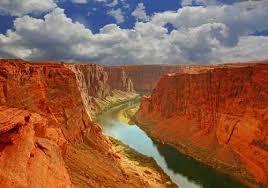

What land form is this?
hill
island
dune
mountain

What land form is this?
hill
mountain
plain
valley
name the main relief features of the earth ?
Plain, desert and mountain
plateau, plain and island
Mountain, plateau and plain
Desert and island
Relatively low-lying areas are known as
Valleys
Plains
Table lands
Mountains

a narrow strip of land that has water on both sides and joins two larger bodies of land

The Alps is located in Europe, just north of Italy, and is famous for skiing


The Appalachians are located in the eastern US


The Andes are located along the western side of South America

The Himalayas are located in Asia & separate India from China. Mt Everest is located here.


The Rockies are located in the western US & Canda

The Ural Mountains are located in Russia & allegedly separate Europe and Asia.


The Atlas Mountains are located at the northwest edge of Africa.

The Great Dividing Range is located on the eastern edge of Australia.

The breaking down of rocks into smaller pieces
weathering
vegetation
erosion
deposition
The weathering and removal of rock and soil
weathering
vegetation
erosion
deposition
What is erosion?
The movement of sediment
The breaking of sediment
The dropping of sediment


This picture shows sea cliffs in Ireland. These cliffs were formed by _________.
plant growth wearing down large rocks
water washing up against large rocks
heat expanding large rocks
rain collecting on large rocks
Wind can carry sand and dust farther than water can.
True
False
Where do you think wind erosion is most common?
Deserts
Jungles
Forests
Cities
The process by which water changes from a liquid to a gas.
evaporation
condensation
sublimation
precipitation
Plants return groundwater to the atmosphere through which process?
evaporation
sublimation
transpiration
condensation
The process in which water vapor in the air is changed into liquid water is called:
evaporation
transpiration
sublimation
condensation
The process where water soaks into soil or porous rock.
runoff
infiltration
sublimation
interfernetiation

