wayground logo

Free Printable Worksheets

NEW

Font size

S
M
L
XL
Worksheets

Signaux et Systèmes

Total questions: 10

Worksheet time: 5mins

Name
Class
Date
1.

Quels systèmes sont linéaires et invariants dans le temps ?

a)

x2(t)dx(t)dt=0x^2\left(t\right)-\frac{\text{d}x\left(t\right)}{\text{d}t}=0

b)

x(t)tdx(t)dt=0x\left(t\right)-t\frac{\text{d}x\left(t\right)}{\text{d}t}=0

c)

x(t)5d2x(t)dt2=0x\left(t\right)-5\frac{\text{d}^2x\left(t\right)}{\text{d}t^2}=0

d)

x(t)×dx(t)dt=0x\left(t\right)\times\frac{\text{d}x\left(t\right)}{\text{d}t}=0

2.

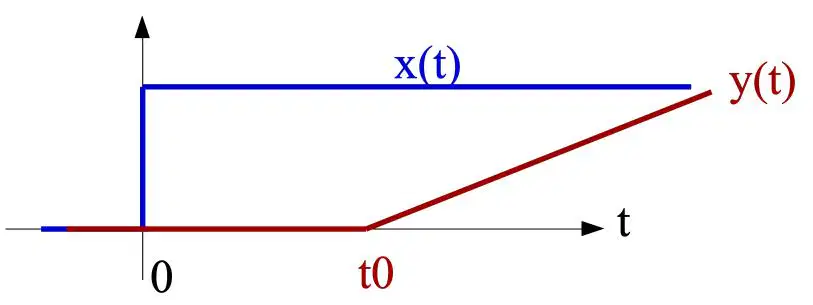
La figure représente le signal échelon Γ(t)\Gamma\left(t\right) .

a)

Vrai

b)

Faux

3.

Le signal x(t) est en retard sur le signal y(t).

a)

Vrai

b)

Faux

4.

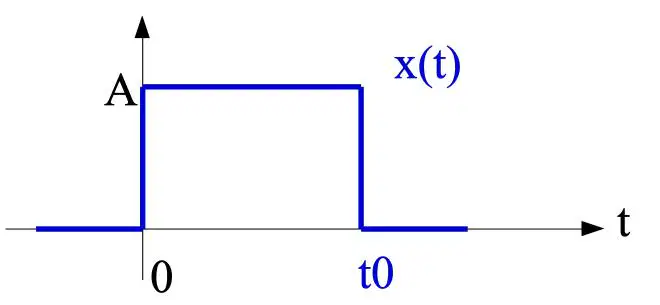
L'expression du signal x(t) est :

a)

x(t)=Γ(t)Γ(tt0)x\left(t\right)=\Gamma\left(t\right)-\Gamma\left(t-t_0\right)

b)

x(t)=A(Γ(t)Γ(tt0))x\left(t\right)=A\left(\Gamma\left(t\right)-\Gamma\left(t-t_0\right)\right)

c)

x(t)=AΓ(t)×Γ(tt0)x\left(t\right)=A\Gamma\left(t\right)\times\Gamma\left(t-t_0\right)

d)

x(t)=A×Γ(tt0)x\left(t\right)=A\times\Gamma\left(t-t_0\right)

5.

L'ordre du système d3y(t)dt3+y(t)+d2u(t)dt2=0\frac{\text{d}^3y\left(t\right)}{\text{d}t^3}+y\left(t\right)+\frac{\text{d}^2u\left(t\right)}{\text{d}t^2}=0 est :

a)

Ordre 5

b)

Ordre 2

c)

Ordre 3

d)

Ordre 1

6.

L'équation caractéristique de 5d2y(t)dt2+3dy(t)dt+y(t)=05\frac{\text{d}^2y\left(t\right)}{\text{d}t^2}+3\frac{\text{d}y\left(t\right)}{\text{d}t}+y\left(t\right)=0 est :

a)

r2+3r+5=0r^2+3r+5=0

b)

3r2+5r+1=03r^2+5r+1=0

c)

3r2+r+5=03r^2+r+5=0

d)

5r2+3r+1=05r^2+3r+1=0

7.

Le signal d'entrée d'un système linéaire est u(t)=5Γ(t). En régime permanent, le signal de sortie y(t) est de la forme :

a)

y(t)=AΓ(t)y\left(t\right)=A\Gamma\left(t\right)

b)

y(t)=Aty\left(t\right)=At

c)

y(t)=Beaty\left(t\right)=Be^{-at}

d)

y(t)=Beat×Γ(t)y\left(t\right)=Be^{-at}\times\Gamma\left(t\right)

8.

Le signal d'entrée d'un système linéaire est u(t)=5sin(3t). En régime permanent, le signal de sortie y(t) est :

a)

y(t)=3sin(5t)y\left(t\right)=3\sin\left(5t\right)

b)

y(t)=Asin(5t)y\left(t\right)=A\sin\left(5t\right)

c)

y(t)=Asin(3t+Ψ)y\left(t\right)=A\sin\left(3t+\Psi\right)

d)

y(t)=5sin(5t)y\left(t\right)=5\sin\left(5t\right)

9.

La solution homogène de dy(t)dt+ay(t)=bu(t)\frac{\text{d}y\left(t\right)}{\text{d}t}+ay\left(t\right)=bu\left(t\right) est y1(t)=Keaty_1\left(t\right)=Ke^{-at}

a)

Vrai

b)

Faux

10.

Les racines de l'équation caractéristique d'un système du 2ème ordre sont : r1=0.1+3jr_1=-0.1+3j et r2=0.13jr_2=-0.1-3j

Quelle est la nature du régime transitoire ?

a)

Apériodique

b)

Critique

c)

Pseudo-périodique

d)

Aucune idée