
 Worksheets
Ancient China- 7.1 & 7.2
Total questions: 40
Worksheet time: 23mins
Civilization in Ancient China settled and started cultivating rice along what river?
Indus River
Tigris River
Nile River
Huang He / Yellow River
Pick the two main philosophies that developed in ancient china?
Judaism and merit
Sikhism and Koellerism
Confucianism and Taoism
Hinduism and Buddhism
Confucianism focused on
Following the vedas of hinduism
The yin and yang
worshipping more than one god
Respecting rulers and elders
The ancient Chinese were able to flourish independently, and without much interference from outsiders due to...
their reputation and strength as a military power
the outsiders not wanting what the Chinese had
their geography providing many natural barriers
their rivers being very difficult to navigate


Which seas touch China?
Yellow Sea
East China Sea
South China Sea
North China Sea

The last 200 years of the Zhou Dynasty is know as the...
Period of Warring States
The Revolutionary War
The Emperors Rebelion
Period of Warring Snakes


What barrier separates China from India?
The Gobi Desert
The Taklamakan Desert
The Himalaya Mountains
The Great Wall

Asking for advice from the gods and ancestors

What Chinese philosophy says people should live in harmony with nature?
Legalism
Buddhism
Daoism
Christianity
What famous teacher was the founder of Confucianism?
Lu Bang
Hanfeizi
Confucius
This should be easy. It is named after the guy who started it!


What geographic barrier is north of China?
Plateau of Tibet
Sierra Mountains
Sahara Desert
Gobi Desert
What does Daoism and Confucianism have in common?
Order and Stability
Yin and Yang
Learning
Gods
Which is an important relationship in Confucianism.
teacher and student
father and son
ancestors and the living
parents and grandparents
The Chinese first settled in a river valley. What other civilizations also settled near river valleys?
Phoenicians & Sumerians
Sumerians & Egyptians
Phoenicians & Canaanites
Babylonians only

What is a NATURAL BARRIER?
A Man made wall that separates people
A wall or a door that separates you from others
a desert, mountain, or ocean that separates pieces of land
None of the above
Which of the following is NOT one of China's natural barriers?
The Himalayan Mountains
The Pacific Ocean
The Rocky Mountains
The Gobi Desert
How is Ancient China's government SIMILAR to Ancient Egypt's?
They both have governments
They both use dynasties to rule.
They both were developed near a great river
They both are civilizations
This belief stressed that people were bad by nature, and needed to be controlled and punished.
Confucianism
Daoism
Legalism
Mandate of Heaven
Which of the following is the longest river in China used for travel?
The Yangtze River
The Euphrates River
The Nile River
The Indus River
Which was not an accomplishment of the Shang Dynasty?
writing
12 month calendar
1st to produce bronze
Built roads
Which of these is not a major philosophy of Ancient China?
Daoism/Taoism
Legalism
Confucianism
Karate
The Dao is the __________ _____________ that permeates nature.
good rules
eternal force
wrong answer
six B
This river is called the River of Sorrow
Wei River
Huang He
Luo River
Chang Jiang
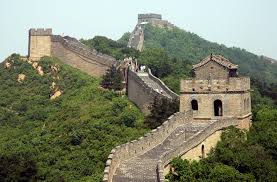
What was the primary purpose of the Great Wall of China?
To mark the boundary of the empire
To protect against invasions
To serve as a tourist attraction
To promote trade
Which philosophy emphasized strict laws and harsh punishments in Ancient China?
Buddhism
Confucianism
Daoism
Legalism
Which river is often referred to as the cradle of Chinese civilization?
Ganges River
Yangtze River
Amazon River
Huang He / Yellow River
What was the primary purpose of the Silk Road in Ancient China?
To isolate China from other civilizations
To connect China with Europe for trade
To transport water across the desert
To serve as a military route
What was the main material used in the construction of the Terracotta Army?
Wood
Bronze
Clay
Stone

