
Font size
 Worksheets
Chemical Reactions and Changes
Total questions: 33
Worksheet time: 46mins
The Law of Conservation of Matter
tells how many atoms of an element are contained in one molecule or formula unit.
the starting materials in a chemical reaction
the new substances that are formed in a chemical reaction
A law stating that atoms are not created or destroyed during a chemical reaction.
Is the equation balanced?: 2H2O + O2 --> 4MgO + 3Fe
yes
no
The coefficient in 3H2O is
6
5
2
3

2H2 + O2 --> 2H2O
2H2 + O2 --> 2H2O
Example: H2
Al + O2 --> 2Al2O3
Ex: 2H2 + O2 --> 2H2O
2C2H2 + 5O2 --> 4CO2 + 2H2O
4Fe + 3O2 --> 2Fe2O3
NaHCO3 --> Na2CO3 + H2O + CO2
Balance this equation (a) N2 + (b) H2 --> (c) NH3
Balance this equation
(a) Al + (b) HCl --> (c) H2 + (d) AlCl3
Balance this equation. (a) CF4 + (b) Br2 -- (c) CBr4 + (d) F2
Balance this equation. (a) SnO2 + (b) H2--> (c) Sn + (d) H2O
(Check ALL answers)
What happens to the atoms in substances when a chemical reaction occurs?
They are rearranged to form new products.
They are destroyed.
New atoms are created to form new products.
Nothing happens.



Label the parts of the equation.
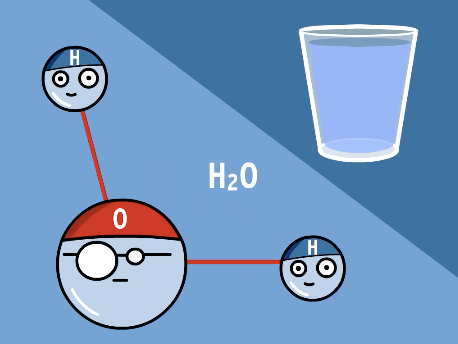
4 grams of hydrogen and 32 grams of oxygen will combine to form:
36 grams of water
28 grams of hydroxide
32 grams of oxygen
36 grams of deuterium
If 20g of reactant form 15g of product, how much gas was produced?
15g
5g
20g
0g

