wayground logo

Free Printable Worksheets

NEW

Font size

S
M
L
XL
Worksheets

Natural Selection and Evolution

Total questions: 24

Worksheet time: 16mins
Name
Class
Date
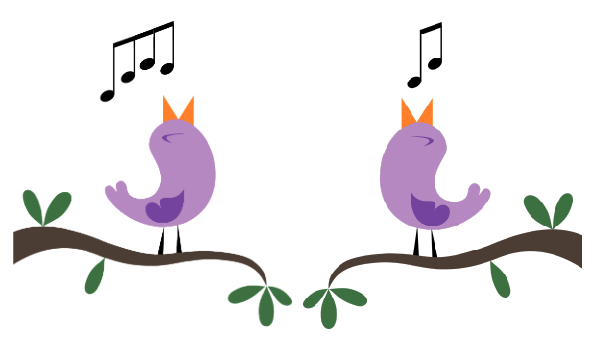
1.

Two populations of the same species do not have the same mating rituals or signals.

a)

geographical isolation

b)

temporal isolation

c)

adaptive ratiation

d)

behavioral isolaton

2.

Refer to the picture. This is representing

a)

Directional selection

b)

Disruptive selection

c)

Stabilizing selection

d)

Artificial selection

3.

Refer to the picture. This is representing

a)

Directional selection

b)

Disruptive selection

c)

Stabilizing selection

d)

Artificial selection

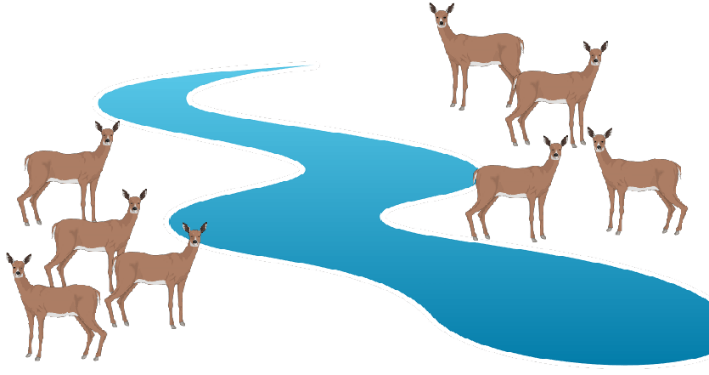
4.

Two populations of the same species are separated by land barriers like rivers or mountains.

a)

geographical isolation

b)

temporal isolation

c)

adaptive ratiation

d)

behavioral isolaton

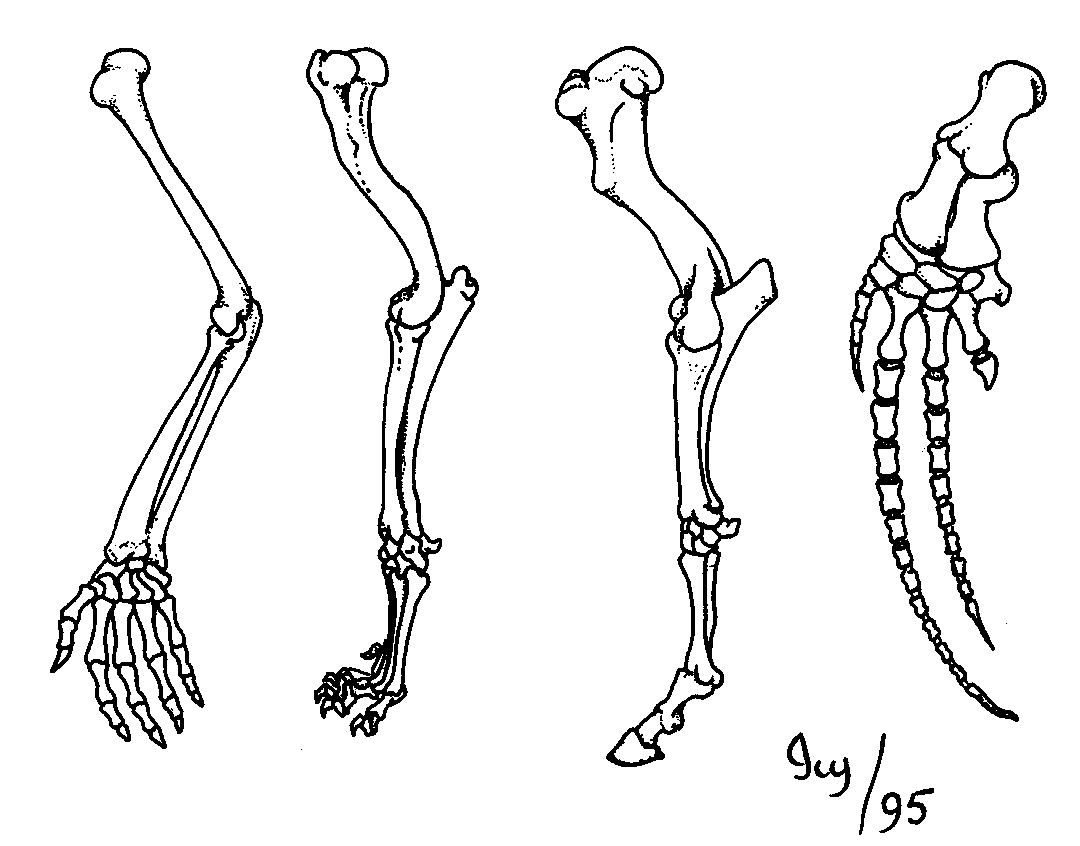
5.
Structures with the same parts have different functions; suggests that organisms share a common ancestry
a)
vestigial structures
b)
homologous structures
c)
adaptive radiation
d)
fossil
6.

Refer to the picture. This is representing

a)

Directional selection

b)

Disruptive selection

c)

Stabilizing selection

d)

Artificial selection

7.
Study of embryos of various organisms to show a common ancestor because of similarities in development
a)
natural selection
b)
embryology
c)
speciation
d)
evolution
8.
the hind leg bones in a whale are examples of
a)
homologous structures
b)
analogous structures
c)
fossils
d)
vestigals
9.
The changes an organism make to its behavior or body structure to be better suited for survival in an environment. 
a)
Adaptation
b)
Behavior
c)
Fossil
d)
Nutrient
10.

A completely random event that changes the genes of a population.

a)

Genetic Flow

b)

Genetic Drift

c)

Genetic Alleles

d)

Gene Pool

11.

The type of genetic drift seen when a small subgroup of a population leaves, effecting the allele frequencies

a)

Gene Flow

b)

Founder effect

c)

Bottleneck effect

d)

Speciation

12.
Body parts that have lost their original function.
a)
embryos
b)
homologous structures
c)
analogous structures
d)
vestigial structures
13.
____ is when members of a species that are best suited for their environment survive and reproduce at a higher rate than other members of the species
a)
natural selection
b)
artificial selection
c)
speciation
d)
adaptation
14.
Natural selection can also be referred to as:
a)
Survival of the weakest
b)
Survival
c)
Survival of the fittest
d)
Artificial selection
15.

The type of genetic drift that would occur after a natural disaster, resulting in a dramatic decrease in population size and allele frequency.

a)

Gene Flow

b)

Founder effect

c)

Bottleneck effect

d)

Speciation

16.
Where humans have bred organisms together based on traits we like.
a)
Evolution
b)
Natural Selection
c)
Extinction 
d)
Artificial Selection
17.
Survival of the Fittest and Evolution were proposed by what scientist?
a)
Charles Darwin
b)
Albert Einstein
c)
Steven Hawking
d)
Isaac Newton
18.
What characteristic did Darwin observe about the finches on the Galapagos Islands?
a)
Their feathers 
b)
Genotypes 
c)
Their beaks
d)
Their body sizes
19.

Who believed organisms could develop (or acquire) traits simply by using them?

a)

Jean Baptiste Lamarck

b)

Charles Darwin

c)

Charles Lyell

d)

James Hutton

20.
Body parts that function like each other, but are different in structure.
a)
embryos
b)
homologous structures
c)
analogous structures
d)
vestigial structures
21.

Speciation that caused by breeding occurring at different time of the day is called

a)

behavioral isolation

b)

temporal isolation

c)

ecological isolation

d)

habitat isolation

22.
Which statement best describes the process of evolution?
a)
Populations can survive in different locations on earth
b)
Environmental conditions limit the number of species on Earth
c)
Populations grow when resources are abundant
d)
The traits of a species can change over time
23.
Organisms with the most beneficial traits will survive.  This is commonly known as ___.
a)
theory of evolution
b)
variations
c)
survival of the fittest
d)
ecosystems
24.

Which of the following is an example of natural selection?

a)

Breeding horses, humans selecting which traits make the fastest race horses

b)

Giraffes with the longer necks will be most likely to survive, reproduce, and pass that trait to their offspring.

c)

Giraffes stretching their necks to reach leaves and passing that trait to their offspring.

d)

Cropping the ears of a boxer dog