
Font size
 Worksheets
Unit 5 - The Civil War and Reconstruction
Total questions: 25
Worksheet time: 47mins
Organize the following Pre-Civil War events in chronological order
Missouri Compromise
Mexican-American War
Compromise of 1850
Kansas-Nebraska Act
Bleeding Kansas

What was the name of the provision in the Compromise of 1850 that led to the creation of this poster?
(a)

After the 15th Amendment was ratified, many state governments tried to prevent newly freedmen from voting by making them pass a
(a) and pay a (b) . The loophole to allow white men to vote was called the (c) .
Early in his Presidency, Abraham Lincoln declared that his primary goal as President was to
enforce the Emancipation Proclamation
preserve the union
end slavery throughout the entire country
encourage sectionalism
In the period between 1820 and 1860, Southerners wanted slavery extended to the Western territories so that the South could
continue to elect Southern Presidents
continue to dominate the Supreme Court
keep enough strength in the Senate to protect Southern interests
use slave labor to expand Southern industries

Which issue is reflected in this headlines?
status of slavery in the territories and new states
growth of agriculture on the Great Plains
clash of federal and state powers
conflicts with foreign nations over the West
Abolitionists in the pre-Civil War period were most likely to support the
removal of Cherokee from Georgia
passage of the Fugitive Slave Act
activities of the Underground Railroad
use of popular sovereignty in the territories

The election results shown on this map most clearly reflect the influence of
nationalist motives
sectional differences
political stability
ethnic conflicts

The "divided house" referred to in this speech was caused primarily by
expansionism
war with Mexico
slavery
the suffrage movement
Which problem did the Missouri Compromise, the Compromise of 1850, and then Kansas-Nebraska Act attempt to solve?
extension of slavery into the western territories
equitable distribution of frontier lands to the owners of small farms
placement of protective tariffs on foreign imports
need for international improvements in transportation
Which event was the immediate cause of the secession of several Southern states from the Union in 1860?
the Dred Scott decision, which declared that all prior compromises on the extension of slavery into the territories were unconstitutional
the Missouri Compromise, which kept an even balance between the number of free and slave states
the raid on the Federal arsenal at Harpers Ferry, which was led by militant abolitionist John Brown
the election of President Abraham Lincoln, who opposed the spread of slavery into the territories
Which term refers to the idea that settlers had the right to decide whether slavery would be legal in their territory?
nullification
sectionalism
popular sovereignty
southern secession

The purpose of this 1863 poster was to recruit African Americans to help
defeat the Confederacy in the Civil War
assist in the efforts of the Underground Railroad
settle land in the South and border states
enforce the terms of the Fugitive Slave Act
What was an important advantage the Union had during the Civil War?
superior military leadership
economic aid from Great Britain and France
more human resources and war materials
"home court" advantage
The institution of slavery was formally abolished in the United States by the
Compromise of 1850
Emancipation Proclamation of 1863
creation of the Freedmen's Bureau in 1865
ratification of 13th amendment of 1865

The data shown in the graphs best support the conclusion that the North
was better prepared economically to fight the Civil War
lagged behind the South in bank deposits
produced more agricultural products than the South
lacked several important resources to fight the war
True or False: One of President Lincoln's goals in issuing the Emancipation Proclamation was to keep the border states from seceding from the Union
True
False
One way that "Bleeding Kansas," the Dred Scott decision and John Brown's raid on Harpers Ferry had a similar effect on the United States was that these events
ended conflict over slavery in the territories
eased tensions between the North and the South
contributed to the formation of the Whig Party
increased sectionalism and made compromise between the free and slave states more difficult
Match each Reconstruction Amendments with its intended goal.
Abolished slavery, except as a punishment for a crime
13th Amendment, 1865
Defined citizenship and the rights of citizens
14th Amendment, 1868
Prohibited voting discrimination based on "race, color, or previous condition of servitude"
15th Amendment, 1870
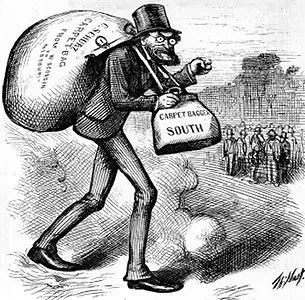
During Reconstruction, (a) were Southerners to aided Republicans create new state governments. They were seen as traitors to the South! (b) were Northerners to travelled to the South to aid in Reconstruction and were seen as infiltrators.
Match the person to his plan for Reconstruction
President Abraham Lincoln
10% plan - Heal the nation's wounds & move on. Federal protection for formerly enslaved people
President Andrew Johnson
protect the former Confederates. Do little to help the formerly enslaved people
Thaddeus Stevens and the Radical Republicans in Congress
Do the most to punish the South and protect and aid the formerly enslaved people
Match the following positive outcomes of Reconstruction to its purpose
Formation of HBCUs
Provide higher education for formerly enslaved people
Reconstruction Amendments
Abolished slavery, gave formerly enslaved people citizenship, and gave Black men the right to vote
Freedmen's Bureau
Provided social services to newly freed people
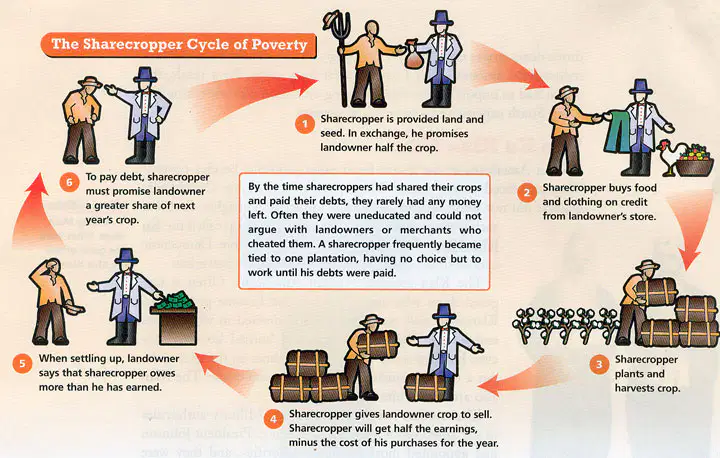
What was sharecropping?
a work system that replaced slavery after the Civil War that helped plantation owners rebuild their labor force
a job on a farm only freedmen could hold
a paid position working on a farm that was difficult to get after the Civil War
a system of labor that offered many economic opportunities to freedmen and their families
What was the effect of the Supreme Court's decision in Plessy v. Ferguson, 1896?
Jim Crow laws were deemed constitutional, and states were legally allowed to segregate facilities and institutions. This established the separate but equal precedent.
The decision awarded African Americans new political freedoms such as the right to hold office.
The court ordered southern states to enforce the Fourteenth and Fifteenth Amendments.
The court overturned a previous decision that had ruled Jim Crow laws to be unconstitutional as it was a violation of the Fourteenth Amendment.
Match the following pre-Civil War compromises to the correct decision.
Missouri Compromise, 1820
Missouri = Slave State
Maine = Free State
Any state north of 36 30 Latitude was closed to slavery
Compromise of 1850
Cali = Free State
Strong Fugitive Slave Act
Popular Sovereignty in Utah and New Mexico Territories
Kansas-Nebraska Act, 1854
Overturned Missouri Compromise and introduced popular sovereignty in Kansas and Nebraska Territores

