
NEW
Font size
 Worksheets
Unit 1 - Plant Origins, Identification, and Reproduction
Total questions: 18
Worksheet time: 9mins
Who developed Binomial Nomenclature?
(¿Quién desarrolló la nomenclatura binomial?)
Hooke
Linnaeus
Theophrastus
Shakespeare
What does a Paleobotanist do?
(¿Qué hace un paleobotanista?)
Study ecology of plants
Study the anatomy of plants
Study ancient plant fossils
Study the geographic location of plants

What kind of leaves are these?
(¿Qué tipo de hojas son estas?)
Simple
Compound - Pinnate
Compound - Bipinnate
Compound - Tripinnate
Which of the following is NOT a characteristic of Gymnosperms?
(¿Cuál de las siguientes NO es una característica de las gimnospermas?)
Produces Fruit
Needle-like Leaves
Seeds contained in cones
Soft wood

Which of the two plants is a dicot?
(¿Cuál de las dos plantas es una dicotiledónea?)
The plant on the left
The plant on the right
Neither
Both are dicots
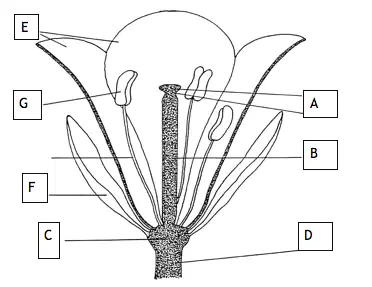
Which letter represents the receptacle?
C
D
A
G
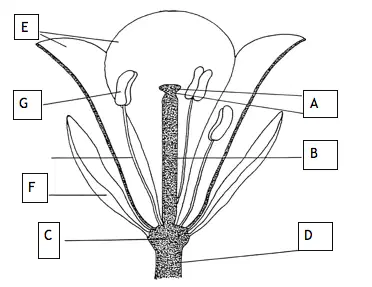
Which letter represents the style?
G
A
B
E
Monocots have flower petals grouped into _______
Two's
Five's
Four's
Three's
Dicots have flowers grouped into ________
Fours or Fives
Twos or Threes
Sevens
Nobody Knows for sure
Which of the following is NOT a simple fruit?
Pome
Drupe
Balausta
Aggregate
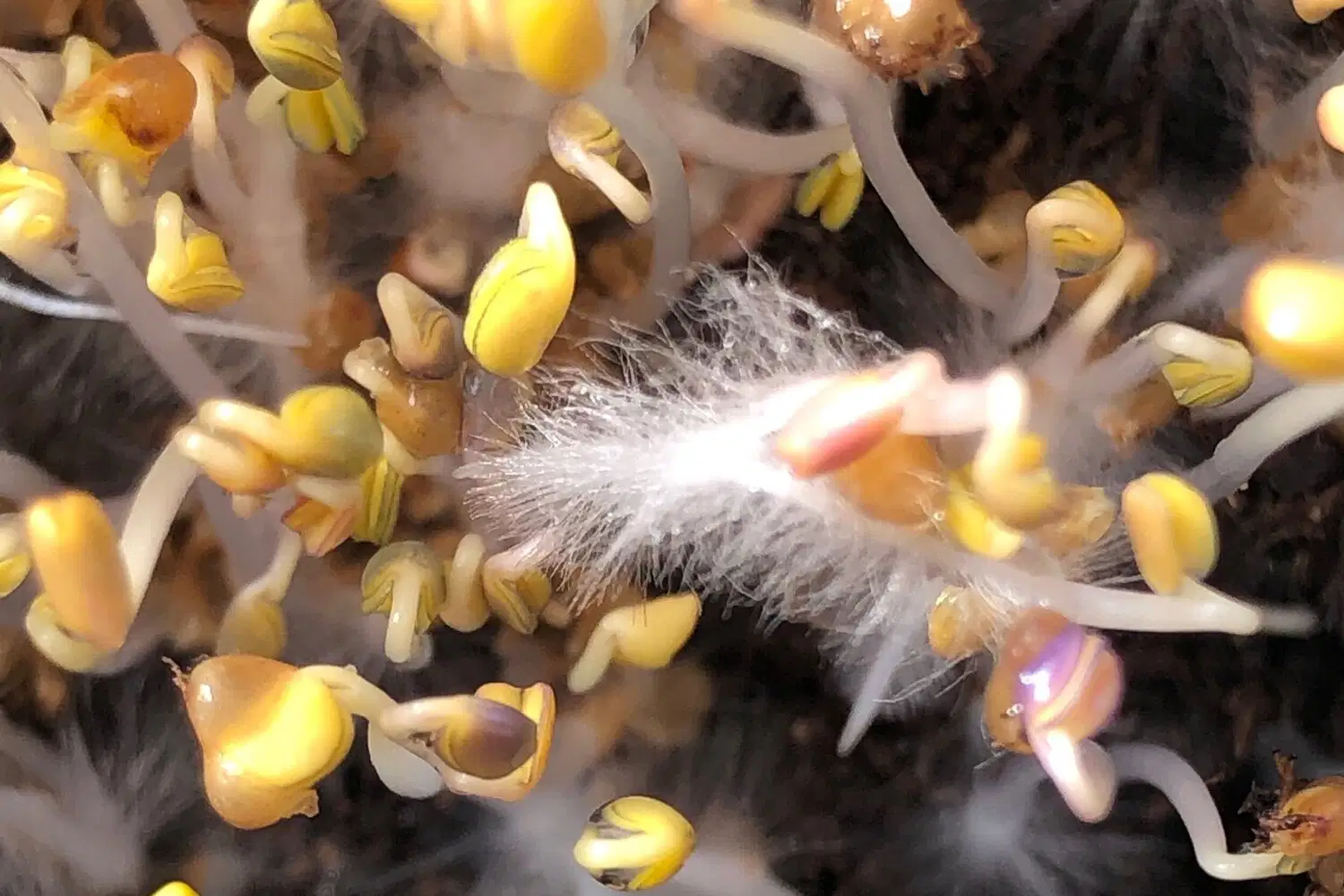
What is the fuzzy material on this little plant shoot?
(¿Cuál es el material borroso en este pequeño brote de planta?)
Mold
Root Hairs
Primary Roots
Tap Roots
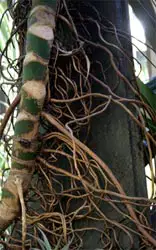
What kind of root system is this?
(¿Qué tipo de sistema raíz es este?)
Tap Root
Fibrous Roots
Aerial Roots
Cling-ons

Why is there water droplets on this leaf?
(¿Por qué hay gotas de agua en esta hoja?)
The plant is Transpiring
The plant is crying
The plant just came out of the shower
The plant is photosynthesizing
Axillary buds can turn into all of the following, except_____
A new plant
Fruit
New leaf
Flower
Which of the following is NOT part of the Pistil of a flower?
(¿Cuál de los siguientes NO es parte del pistilo de una flor?)
Stigma
Ovary
Style
Filament
Fertilization in a plant takes place once ___________
(La fertilización en una planta tiene lugar una vez)
Before the Pollen grain lands on the stigma
When the Pollen Tubes have started to germinate from the pollen grains
The pollen grain lands on the stigma
When the male gamete has made it through the micropyle
A flower's ovary that has the petals and sepals on the top of it is called
(El ovario de una flor que tiene los pétalos y los sépalos en la parte superior se llama)
An Inferior Ovary
A Superior Ovary
Half-Inferior Ovary
Abnormal
All of the following are Abiotic factors, except ____
(Todos los siguientes son factores abióticos, excepto ____)
Rock
Tree
Water
Mud

