
 Worksheets
Agriculture Sections 1-2
Total questions: 16
Worksheet time: 8mins
Which of these statements is FALSE about the beginnings of Agriculture?
The 1st Agricultural Revolution happened about 10,000 years ago
Environmental and Cultural factors both influenced early agriculture
The earliest hunter-gatherers changed their farming practices each time they moved
There is evidence that agriculture started in multiple hearths around the same time
Which of these DID originally come from the Americas?
Maize (corn)
chickens
chocolate
pigs
The FIRST important historic event in the diffusion (spread) of agricultural plants, animals, and practices was __.
The 1st Agricultural Revolution about 10,000 years ago
The Columbian Exchange
The 2nd Agricultural Revolution about 300 years ago
The Silk Road connecting Europe, Africa, and Asia
The most important changes that came with the 2nd Agricultural Revolution were related to __.
knowledge about plants and animals from other parts of the world
improvements in mechanization and transportation that did work faster and added more variety to diets
improvements in science and genetics that maximized seeds and introduced chemical fertilizers
knowledge about how to grow food and raise animals, which led to humans living in larger settlements
Probably the most important consequence of the 1st Agricultural Revolution 10,000 years ago was __.
People began living in large settlements, and entire civilizations began
People began polluting rivers and water sources with chemicals
People began to move to big cities, where all of the machinery and jobs were
People started trading their products with other regions of the world
The most significant consequence of the 2nd Agricultural Revolution that happened 300 years ago was __.
New chemical fertilizers allowed for 3x the food production
People were able to produce their own food for the first time, so civilizations started
With all the food production, more people moved to the countryside to grow crops
A surplus of food improved life expectancy, and many people moved to the cities
Norman Borlaug's work accompanied the __.
2nd Agricultural Revolution
1st Agricultural Revolution
Columbian Exchange
3rd Agricultural Revolution
Borlaug's work with wheat in __ helped win him the Nobel Prize.
Mexico and India
China and Africa
Brazil and Italy
Ethiopia and Australia
Which of these pairs is CORRECT?
2nd Agricultural Revolution and Normal Borlaug
Green Revolution and GMOs
2nd Agricultural Revolution and chemical fertilizers
1st Agricultural Revolution and mechanization and machinery
Which of these is NOT one of the ways we learned how to tell the difference between commercial and subsistence farming?
the percentage of people in a country that work in agriculture
if a country has any undernourisment or not
how much technology and science is used in agriculture in a country
the size of the average farm in a country

Globally, the more people have to spend on their food, ___.
the smaller the country they live in
the more cereal grains they have available in their diet to make sure they're healthy
the more food insecurity there is in a country since many can't get what they need.
the less food insecurity there is in a country, since they can spend so much money
Which of these statements is NOT TRUE about food deserts?
They are more often found in developing countries in desert conditions
They are areas where at least 1/3 of the people live in poverty and live at least a mile from a grocery store
They are areas where most people don't have access to their own transportation
More than 5% (16 million) live in a food desert
Today about ____ of the cereal grains grown in the United States are genetically modified
54%
81%
100%
97%
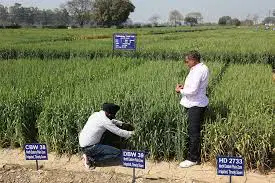
Which of these is NOT one of the negative consequences of the 3rd Agricultural Revolution (also called the "Green" Revolution?
run-off from chemical fertilizers and some herbicides or pesticides has damaged the ecosystem and water supples
many countries focus on only growing 1 type of species of crop (monoculture) to maximize profit, decreasing biodiversity
increased need for irrigation has led to desertification in some areas
there has been a loss of jobs in agriculture in most of the world's countries

Based on what we've learned, the countries in darker purple on the map that have more people involved in agriculture ___.
produce the most cereal grains in the world
are countries that have almost no undernourishment because of all the farmers
do not produce as much food as the lighter countries because they lack science and technology
only practice commercial farming for a profit

Food Insecurity ___
is mot common in the regions of South Asia and Sub-Saharan Africa
affects about 10% of the world's population today
is an issue for approximately 800 million people around the world
is true for all of these statements

