
 Worksheets
Enzymes and biochemical pathways
Total questions: 15
Worksheet time: 17mins
A (a) is a substance that increases the speed of a chemical reaction without being used up or changed in the process.
An (a) is a special type of catalyst that is made by a living organism. We sometimes call them biological catalysts.
What is the name of the special region of an enzyme that binds to the substrate?
Active area
Unique site
Complementary region
Active site
Enzymes are examples of
biological catalysts
proteins
biomacromolecules
all of these are true
Any substance that is acted upon by an enzyme is called a:
Coenzyme
Substrate
Vitamin
Polypeptide
Each enzyme only has one substrate that will fit its active site. What is this called?
reusablility
denaturation
specificity
fragility
Pancreatic amylase is a digestive enzyme found in the small intestine. It helps break down large starch molecules later in the digestive process. Pancreatic amylase is unable to break down proteins.
Which of the following best explains why pancreatic amylase is able to break down starches, but not proteins?
Enzymes are specific to their substrates
Proteins are too large to be affected by enzymes
Enzymes and proteins cannot break down other proteins
Proteins are able to easily denture enzymes
At first, scientists thought that in order for an enzyme to catalyse a reaction, the substrate had to fit perfectly into the active site.
What was the name for this model of enzyme action?
The original model
The lock and key model
The induced fit model
The induced key model
We now know that in order for an enzyme to catalyse a reaction, the enzymes active site actually changes shape slightly as it binds to the substrate.
What do we call this model of enzyme action?
The new model
The lock and key model
The induced fit model
The induced key model

An enzyme speeds up a reaction by:
lowering the activation energy
raising the activation energy
releasing energy
absorbing energy
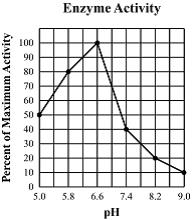
What effect does extremely high pH have on enzymes?
Denatures them
Inactivates them
Destroys them
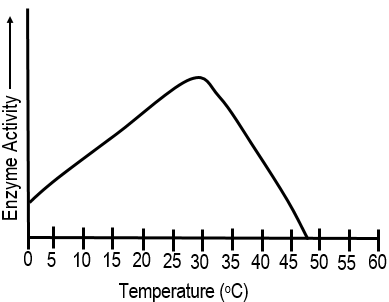
Explain how increasing the temperature can cause an enzyme to denature.

