
 Worksheets
PTRP KINETICS
Total questions: 80
Worksheet time: 42mins
• The displacement of a body or one of its segments from one point to another
(a)
What are determinants of motion?
Type of motion;
Magnitude of the motion;
Location of the motion;
Direction of the motion
Rate of motion or rate of change at which the motion occurs
what are the TYPES OF MOTION?
Linear
Rectilinear
Curvilinear
Translatory
the motion occurs along or parallel to an axis
Rotating Motion
Angular Motion
Translatory motion
all points on the moving object travel the same distance, in the same direction with the same velocity, and at the same time
Rotating Motion
Angular Motion
Translatory Motion
When translation occur in a curved line is called?
Rectilinear
Curvilinear
Multilinear
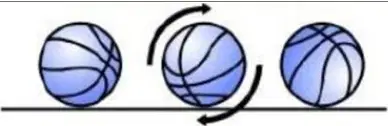
What this picture called?
Translatory motion
Rotatory motion
Rotation
Translation and rotation
body motion occurs around the axes within their planes of motion
location of the motion
magnitude of the motion
direction of the motion
rate of motion
When translation occur in a straight line is called?
Rectilinear
Curvilinear
Multilinear
The motion occurs in a circle around an axis
Straight Motion
Angular Motion
Translatory Motion
Individual points on the object move at different velocities, and the velocity of each point is related to its distance from the axis of motion Pivot Point (Axis of Rotation)
No motion at all
Rotary Motion
Translatory motion
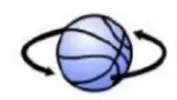
What this picture called?
Translatory motion
Rotatory motion
Rotation
Translation and rotation
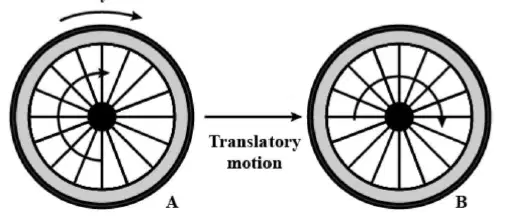
What this picture called? (A)
Translatory motion
Rotatory motion
Rotation
Translation and rotation
a plane of motion is perpendicular to the axis of motion around which it rotates
location of the motion
magnitude of the motion
direction of the motion
rate of motion
how far a force moves a body and the magnitude a body or is displaced
location of the motion
Distance
direction of the motion
Force
measured in meters or feet
Rotary distance
Distance
Linear distance
Force
positive and negative components
location of the motion
magnitude of the motion
direction of the motion
rate of motion
movement on the Z-axis (anterior-posterior axis)
occurs in the frontal planes
occurs in the transverse
occurs in the sagittal plane
movement on the Y-axis (superior-inferior or vertical axis)
occurs in the frontal planes
occurs in the transverse
occurs in the sagittal plane
measured in degrees
Rotary distance
Distance
Linear distance
Force
movement on the X-axis (medial- lateral axis)
occurs in the frontal planes
occurs in the transverse
occurs in the sagittal plane
movement on the Y-axis (superior-inferior or vertical axis)
abduction and adduction
flexion and extension
rotation motions
movement on the X-axis (medial- lateral axis)
abduction and adduction
flexion and extension
rotation motions
movement on the Z-axis (anterior-posterior axis)
abduction and adduction
flexion and extension
rotation motions
rate at which a body or segment moves
Torque
Acceleration
Velocity
Displacement
rate at which a change in velocity occurs
Torque
Acceleration
Velocity
Displacement
translatory motion- meters or feet per second (m/s, ft/s)
rotary notion- degrees per second (o/s)
Velocity
Torque
Acceleration
Force
motion occurring around an axis
Torque
Acceleration
Velocity
Displacement
translatory motion- m/s per second or ft/s per second
rotary notion- o/s per second (o/s2)
Velocity
Torque
Acceleration
Force
it is merely force applied in an arc of motion around an axis
Velocity
Torque
Acceleration
Force
the state of a balanced system both forces are equal
Force
Equilibrium
Displacement
Mass
the motion of a body or segment that occurs when force is applied
Force
Equilibrium
Displacement
Mass
is the amount of matter contained within an object
Weight
Equilibrium
Displacement
Mass
is the force of gravity acting on the object
Weight
Equilibrium
Displacement
Mass
- a push or a pull that produces displacement
- Dimensions: Magnitude and direction
Force
Equilibrium
Displacement
Mass
Results of force acting at a distance from point of motion (axis) (M= d x F)
Moment arm
Newtons
Lever arm
Moment
Perpendicular distance from the force vector to the joint's axis of motion (Rotational forces)
Moment arm
Newtons
Lever arm
Moment
Perpendicular distance from the force vector to the center of motion (Translational forces)
Moment arm
Newtons
Lever arm
Moment
Measure of force (kgf)
Moment arm
Newtons
Lever arm
Moment
FOUR Primary sources of force affect body movement
gravity
muscles
externally applied resistance
Moment
friction
the resistance to movement between two objects that are in contact with each other
gravity
muscles
externally applied resistance
friction
- it provides motion of body segments and of the entire body
gravity
muscles
externally applied resistance
friction
- whatever the muscles must work against to produce motion
gravity
muscles
externally applied resistance
friction
- the most prevalent force that all structures encounter
- GRAVITATIONAL FORCE is commonly referred to as "weight" of an object, body, or body segment
gravity
muscles
externally applied resistance
friction
if a body is at rest, it will remain at rest , and if a body is in uniform motion , it will remain in motion until an outside force acts upon it
Second Law of Motion:
Acceleration
Third Law of Motion:
Action-Reaction
First Law of Motion:
Inertia
for every action force there is an equal and opposite reaction force
Second Law of Motion:
Acceleration
Third Law of Motion:
Action-Reaction
First Law of Motion:
Inertia
the (a) of a body proportionate to the magnitude of the net forces (F) acting on it and inversely proportionate to the mass (m) of the body
Second Law of Motion:
Acceleration
Third Law of Motion:
Action-Reaction
First Law of Motion:
Inertia
two dimensions of forces
gravity
magnitude
direction
friction
is a quantity that is completely specified by its magnitude and its direction
gravity
vector
direction
resultant vector
Vector forces can be combined when______________ is applied to a body or segment.
more than one force
vector
direction
resultant vector
The combination of these vectors will result in a new vector, called the?
more than one force
vector
direction
resultant vector
a simple machine that consists of a rigid bar that rotates around an axis (fulcrum)
Levers
Axis
Resistance force
Moving force
THREE ELEMENTS OF MECHANICAL LEVERS
Axis (A)
Resistance force (R)
Moving force (F)
Distance (D)
the perpendicular distance from the axis to the line of action of the resistance
Levers
Axis
Force arm
Resistance force
the perpendicular distance from the moving force to the axis
Levers
Axis
Force arm
Resistance force
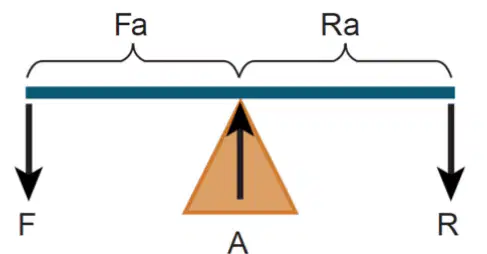
has its axis of rotation positioned between the opposing force
-Balance
First Class Lever
Second Class Lever
Third Class Lever
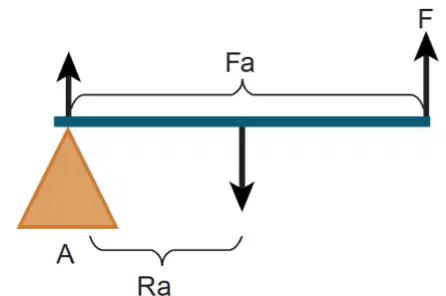
- point of resistance application lies between the force and the axis
- Power
First Class Lever
Second Class Lever
Third Class Lever
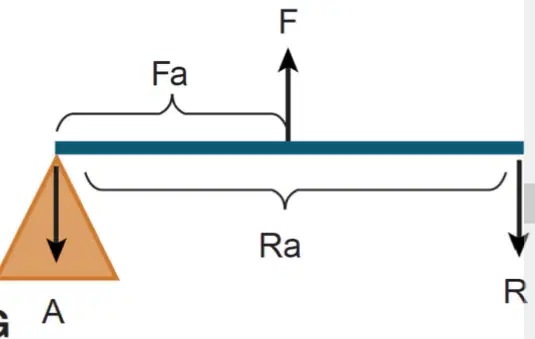
- point of force application located between the resistance and the axis
- Speed
First Class Lever
Second Class Lever
Third Class Lever
the forces whose combined magnitudes and directions produce a single vector known as the resultant vector
Moment arm
Mechanical Advantage
Resolution of force
Component vectors
is the division of a vector into two or more component vectors
Moment arm
Mechanical Advantage
Resolution of force
Component vectors
the ratio between the length of the force arm and the length of the resistance arm
Moment arm
Mechanical Advantage
Resolution of force
Component vectors
- is the theoretical point around which the mass of the object is balanced
COG of the HAT
COG of the ADULT BODY
Center of Gravity (COG)
Line of Gravity (LOG)
- it is around this center that gravity acts
COG of the HAT
COG of the ADULT BODY
Center of Mass (COM)
Line of Gravity (LOG)
- line of force
COG of the HAT
COG of the ADULT BODY
Center of Mass (COM)
Line of Gravity (LOG)
- anterior to T11 and just below the xiphoid process of the sternum
COG of the HAT
COG of the ADULT BODY
Center of Mass (COM)
Line of Gravity (LOG)
- slightly anterior to S2 (55% of a person's height)
COG of the HAT
COG of the ADULT BODY
Center of Mass (COM)
Line of Gravity (LOG)
- these pulley systems may change the course of a tendon or improve a muscle's mechanical advantage by increasing its force arm distance from the joint
Anatomic Pulleys
Muscle action
Base of Support (BOS)
Line of Gravity (LOG)
- the area within the points of contact of the body and any object the individual relies on for support
Anatomic Pulleys
Muscle action
Base of Support (BOS)
Line of Gravity (LOG)
- the potential for a muscle to cause a torque in a particular rotation direction and plane
Anatomic Pulleys
Muscle action
Base of Support (BOS)
Line of Gravity (LOG)
Which of the following types of muscle activation
Concentric
Eccentric
Isometric
Isotonic
Isokinetic
the muscle lengthens during activation
Concentric
Eccentric
Isometric
Isotonic
Isokinetic
a shortening of the muscle
Concentric
Eccentric
Isometric
Isotonic
Isokinetic
refers to the contraction of a muscle detached from the body and lifting a load vertically against gravity
Concentric
Eccentric
Isometric
Isotonic
Isokinetic
when a muscle produces force no apparent change in the joint angle
Concentric
Eccentric
Isometric
Isotonic
Isokinetic
occurs when the rate of movement is constant
Concentric
Eccentric
Isometric
Isotonic
Isokinetic
MUSCLE FUNTIONAL ACTIVITY
Agonist
Eccentric
Antagonist
Isotonic
Synergist
sometimes referred to as PRIME MOVERS
Agonist
Eccentric
Antagonist
Isotonic
Synergist
a muscle or a muscle group that provides the opposite anatomic action of the agonist
Agonist
Eccentric
Antagonist
Isotonic
Synergist
a muscle that contracts at the same time as the agonist
Agonist
Eccentric
Antagonist
Isotonic
Synergist
occur when two or more forces are pulling in different directions on an object, causing the object to rotate about its axis
Agonist
Eccentric
Antagonist
Force Couples
Synergist

