
 Worksheets
Evolution, Taxonomy, Cells, Viruses Reteach 22-23
Total questions: 20
Worksheet time: 12mins

Giraffes that were tall enough to reach the leaves on trees were able to survive and reproduce. This is an example of which of the following terms?
natural selection
mutation
genetics
ecosystem
a change by which an organism or species becomes better suited to its environment
adaptation
mutation
variation
biodiversity

A random change in allele frequencies in a population due to chance events
gene flow
genetic drift
genetic equilibrium
adaptation

Movement of alleles from one population to another
genetic drift
gene flow
genetic equilibrium
camouflage

The forelimbs of mammals have similar anatomy because these groups descended from a recent common ancestor. Their bone structure is an example of a(n) ______________ structure.
vestigial
analogous
homologous
Which of the following is an accurate description of the characteristics of prokaryotic cells?
Contains DNA, ribosomes, and cytoplasm
Has a membrane-bound organelles and ribosomes
Cells are complex with membrane-bound organelles
Contains DNA, nucleus, and ribosomes

A virus's genetic material is surrounded by
a protein capsid
a membrane-bound nucleus
cytoplasm
nothing
viruses are non-living because
they cannot reproduce on their own (independently)
they do not evolve (change over time)
they have both DNA and RNA
they can metabolize nutrients
Scientists around the world use a standardized taxonomic system. Why would scientists want to use a taxonomic system that is standardized?
In order to avoid confusion with the identification of organisms
Because Linnaeus established the system
So that Latin names can be applied for a practical purpose
In order to place organisms in different groups
Suppose you are interested in the scientific classification of wolves. You look up the scientific name for a wolf and discover that it is Canis lupus. Which animal below is the MOST closely related to this wolf?
Felis sylvestris
Alopex Lagopus
Canis latrans
Ursa americanus

structures are anatomically similar, but have different functions
homologous structures
vestigial structures
analogous structures
camouflage

the frog is most closely related to the
tuna
salamander
human
turtle

which color dot represents the ancestral species
pink
red
grey
yellow
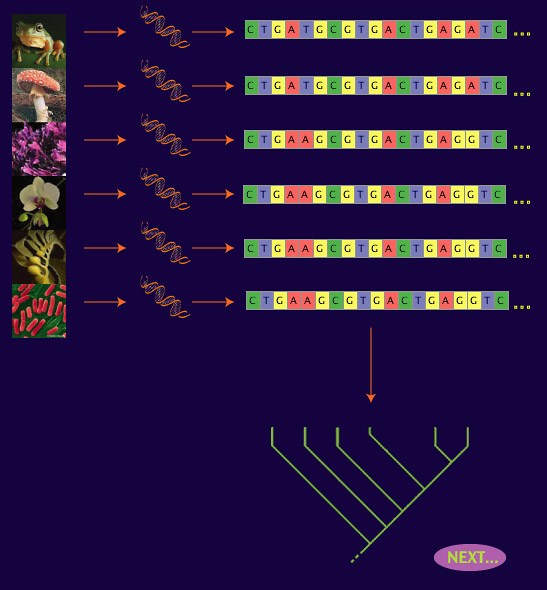
Two organisms that are closely related would have
very similar DNA sequences
exactly the same DNA sequences
no proteins in common
completely different DNA sequence
What is the primary difference between a prokaryote and a eukaryote?
ribosomes
membrane-bound organelles
cell walls
plasma membrane
Viruses differ from cells in which of the following ways?
Cells contain proteins, abut viruses do not
Cells contain genetic information in the form of DNA, but viruses do not carry their own genetic information
Viruses are larger than cells
Viruses cannot reproduce themselves, but cells can
The __________ cycle is quick. It takes only 2-7 days for the symptoms to show.
lysogenic
both lytic and lysogenic
lytic
cell cycle

Individuals that have been infected with the HIV virus can remain without symptoms for a period of weeks to years. Which cycle does HIV use to reproduce?
lysogenic cycle
lytic cycle
cell cycle
replication cycle

What are viruses mostly made of?
DNA and RNA
Genetic material (DNA or RNA)
Proteins such as protein capsid and tail fibers
Proteins and genetic material (DNA or RNA)

