
Font size
 Worksheets
RMA TV Production: Intro to Journalism
Total questions: 13
Worksheet time: 7mins

What is TV Production?
A film
The process of creating video content to be broadcast on television.
The process of creating audio content to be broadcast on television.
The process of creating video and audio content to be broadcast on television.

TV Production can be (mark all that apply):
Live with a studio audience
Pre-Taped with a studio audience
Live with no audience
Imaginary

What are some types of videos that RMA's TV Production class creates? (Mark all that apply)
News packages
Skits
School safety videos
Horror films
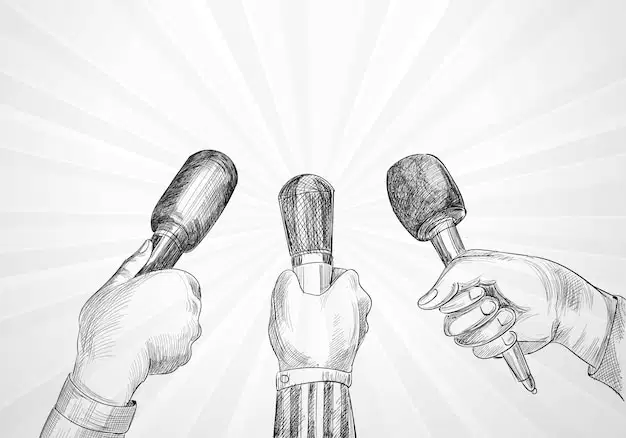
What is journalism?
Writing a really good journal
A video journal
Gathering, assessing, creating, and presenting news and information with accuracy.
Filming the news

Why is journalism important?
It informs people.
It not only informs people, it empowers those who are informed.
It is a fun way to create entertainment.
It is exciting to investigate a story.

What is the #1 Rule in Journalism
Is it true?
Is it fun?
Is it entertaining?
Is it boring?
What is the name of the introduction to a news story?
First or Fyrst
Lege or Legg
Front or Fronte
Lead or Lede

What is it that a Lead must include?
A ladder
A hook
A verb
A simile
What must a news story's Lead include?
The 6 W's
The Simple 7's
The 5 W's and 1 H
A wink and a prayer
What type of graphic organizer is often used to help journalists organize the information for their news stories?
A pineapple pyramid
An inverted pyramid
A tiered triangle
An upside-down triangle
In writing a news story, what is an angle ?
The way the camera is framed on the reporter.
The specific point of view or perspective from which the writer tells the story.
How a reporter can see themselves in the monitor.
The viewpoint that your editor has.
In journalism, what is a Call to Action?
When the director calls "Action" to start the scene.
The call the production assistant makes to order lunch for the crew.
The way the reporter should sign-off.
Where you tell your audience the next step that you want them to take.

What is a sign-off?
How the reporter ends their package by usually stating their name and the channel's name.
Your call to action at the end of your story.
When you begin the story with a hook.
When the director signs-off on the reporter's expense report.

