
 Worksheets
AP Bio Ecology 12 Qs
Total questions: 12
Worksheet time: 8mins
Name
Class
Date
1.
Which of the following is an environmental influence on populations? (Select all that apply)
a)
density
b)
distribution
c)
age structure
2.
Which of the following best explains why there are seldom more than five trophic levels in a food chain?
a)
Most carnivores function at more than one trophic level
b)
Trophic levels about this numbers contain too many individuals
c)
Energy is lost from each trophic level
d)
The ecosystem contains too much biomass
3.
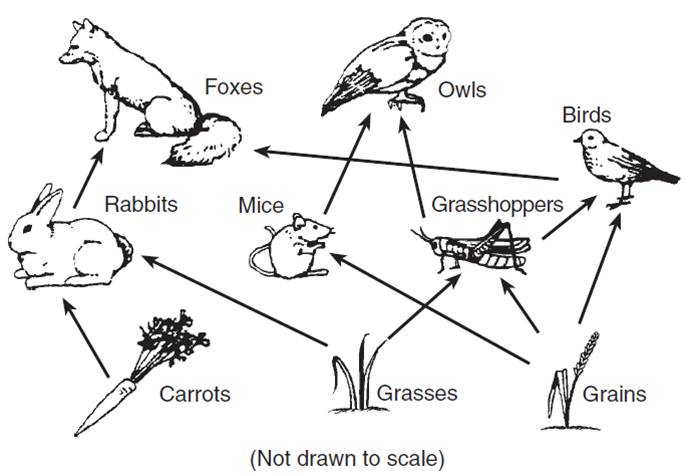
Which of the following is a primary consumer in this food web?
a)
Foxes
b)
Carrots
c)
Mice
d)
Owls
4.
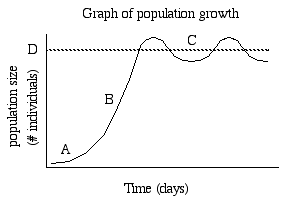
Which point on the graph represents carrying capacity?
a)
A
b)
B
c)
C
d)
D
5.
What types of organisms indicate primary succession is taking place?
a)
Trees and flowering plants
b)
Bears, deer, and rabbits
c)
moss, lichens, and insects
d)
grasses, shrubs, and birds
6.
What do decomposers (bacteria and fungi) do in an ecosystem?
a)
They return nutrients to the soil
b)
They take nutrients OUT of the soil
c)
They return energy to the soil
d)
They make energy
7.
Nitrogen Fixation is carried out by
a)
bacteria
b)
plants
c)
herbivores
d)
mushrooms
8.
Since wind, water, and temperature are NOT living they are considered
a)
Abiotic Factors
b)
Biotic Factors
9.
If the larvae of a particular species of mosquito are to survive to the adult stage, the eggs must be laid in the trapped pool of water of the northern pitcher plant. The mosquito larvae provide no apparent benefit or harm to the pitcher plant. This type of interaction is an example of
a)
commensalism
b)
mutualism
c)
parasitism
d)
competition
10.
A group of interbreeding individuals occupying the same area is best called
a)
community
b)
population
c)
ecosystem
d)
symbiotic relationship
11.
A species that exerts a large, positive impaction on its ecosystem is known as a:
a)
Keystone species
b)
Invasive species
c)
Indicator species
d)
Poached species
12.

Organisms with low birthrates and increased care of young, would follow which of the following survivorship curves?
a)
Type I
b)
Type II
c)
Type III
100 %

