
 Worksheets
AP HW: Unit 4 Political Geo
Total questions: 90
Worksheet time: 58mins
The eastern part of the border between the United States and Mexico is created by which physical boundary?
A man made wall
Rocky Mountains
Rio Grande River
English and Spanish speakers
Apartheid
What two states does the Basque nation exist within?
Northern Spain and France
Southern Spain and Morocco
Catalonia and Spain
Western Spain and Portugal
Hong Kong is a ....
Nation-State
Autonomous Region
Semi-Autonomous Region
Multistate Nation
Taiwan can be considered a sovereign state because
the Nationalist party rules both China and Taiwan.
China recognizes its sovereignty.
its government carries on diplomatic relations with many other countries.
its size meets the minimum geographic requirement for independence.
An act of terrorism is different that an act of war because
Act of war targets governments and political organization
terrorism targets civilians and non combatants
neither is provoked.
An ethnic group or nation that does not possess its own state and is not the majority population in any nation state.
Examples:
The Kurds
Palestinians
Catalans and Basque?
multinational state
semi-autonomous region
stateless nation
nation-state
Area where a group has some type of political autonomy. These regions have a degree of power and self-determination, but not fully like the autonomous regions.
Examples:
Native American Reservations
Hong Kong
Basque & Catalonia
Kurdistan
autonomous region
semi-autonomous region
sovereignty
self determination
Political independence or the ability of a government to determine their own course, of their own free will. Sovereignty. A government free from external control. State.
Examples:
The desire for a larger Serb state that led to WWI.
Decolonization of Africa
Catalonia
Kurdistan
South Sudan
Barbs
colonialism
self determination
nation state
imperialism
The transfer of power from one central government to many local or regional governments. This can either lead to greater autonomy at the local level or can lead to balkanization if the country splits up.
Common causes are ethnic separatism, terrorism, irredentism, nationalism or self-determination movements.
supranationalism
shatterbelt
devolution
balkanization
An economic, cultural, political or military alliance involving 3 or more countries for their mutual benefit. Member states surrender some measure of sovereignty.
Examples:
United Nations
European Union
North Atlantic Treaty Organization
Association of Southeast Asian Nations
African Union
Arctic Council
supranationalism
devolution
shatterbelt
balkanization
The economic, social, cultural or political control or influence of other countries, especially former dependencies / colonies, without directly possessing them.
Examples:
LDCs relying on MDCs
Foreign ownership of land, businesses and resources
Use of former colonial occupiers language or currency.
Belgium in Congo
European countries in Africa
U.S. influence on global stage
Chinese influence in Africa and Asia
shatterbelt
neocolonialism
imperialism
self-determination
An area of instability situated between regions with opposing cultural or political values.
Examples:
Vietnam
Korean
Iraq
Sudan
Balkans (Yugoslavia)
Ukraine
devolution
chokepoint
multistate nation
shatterbelt
A strategic strait or canal which could be closed or blocked to stop sea traffic (especially oil). This type of aggression could surely cause an international incident.
Examples:
Strait of Hormuz (Persian Gulf & Arabian Sea)
Suez Canal (Red Sea & Mediterranean)
Strait of Gibraltar (Mediterranean & Atlantic Ocean)
Turkish Straits (Black Sea & Mediterranean)
United Nations Convention of the Law of the Sea (UNCLOS)
chokepoint
Right of Innocent Passage
Right of Transit Passage
A political movement in which its members claim, reclaim, and seek to occupy territory which they consider “lost,” based on history or legend.
Examples:
Germany between WWI and WWII
China claiming Taiwan and Tibet
Ethnic cleansing
Irredentism
Supranationalism
Colonialism
A political entity characterized by a union of partially self-governing provinces, states, or other regions under a central federal government. In other words, there are levels of government at the national level and state (regional) level. These often occur in more diverse or multinational states and benefit minority cultural groups by allowing for local governance.
Example:
The U.S.
Gerrymandering
Unitary state
Multi-ethnic state
Federal states
A system of political organization in which most or all of the governing power resides in a centralized government, in contrast to a federal state. These often occur in nation states and they typically favor the dominant cultural group.
Examples:
France
China
Japan
UK
Neocolonialism
Federalism
Unitary states
Supranationalism
The drawing of political boundaries to favor one political party when redistricting occurs following the census that occurs every 10 years. Redistricting occurs to account for population changes and population increase or decreases in different parts of the state.
Examples:
All across the U.S.
Manipulation of internal boundaries
Cracking districts - splitting like voters across multiple districts so they cannot have a majority.
Packing districts - packing like voters into a single district so they cannot influence other districts.
Centripetal forces
Gerrymandering
Centrifugal forces
Redistricting
An area in which treaties or agreements between nations, military powers or contending groups forbid military installations, activities or personnel.
Examples:
The 38th parallel separating North and South Korea
Shatterbelt
Relic boundary
Demilitarized Zone
Chicken taco
The Kurds and Catalans are an example of _____ because they share a common history
A nation
A state
A Nation State
None of the others
Belgium and Nigeria are examples of
Nations
States
Nation States
None of these
Hungarians live in Hungary, but also in Romania. This is an example of
A multistate nation
A multi national state
A country
A state
Argentina has both a national legislature and 23 provincial legislatures. This is an example of
Federal
Municipal
Confederate
Unitary
Which of the following is an example of supranationalism?
The United Nations
The National Security Agency
The Legislative Branch
Airlines traveling over seas
Which supranational organization focuses on the production of oil?
OPEC
ASEAN
EU
NAFTA

Identify the state shape
compact
elongated
perforated
fragmented

Identify the state shape
compact
fragmented
protruded
perforated

Identify the state shape
compact
protruded
perforated
fragmented

Identify the state shape (South Africa)
protruded
perforated
elongated
compact
10 states in Southeast Asia create a trade agreement to compete against China
ASEAN
United Nations
European Union
African Union
Definition: a line that marks the limits of an area; a dividing line between two or more areas, not necessarily countries/states.
Boundary
Territory
Border
Disputed territory/border
Definition: independence, self-rule, or the authority to govern your own state
Tribal Sovereignty
Colony
Sovereignty
Colonialism
Definition: Control over a territory by an outside power (a country), occupying another country with settlers, and taking advantage of it economically.
Sovereignty
Colony
Colonialism
Nationalism
Definition: country or area under full or partial political control of another country, typically a distant one, and occupied by settlers from that country.
Colony
Colonialism
Nation
Nationalism
These are a characteristic of _____________.
-has a specific territory with defined boundaries
-has a permanent population
-is recognized as a state by other states
-has a sovereign government, with its own laws and clear, geographic boundaries.
Colony
State
Stateless nation
Nation
Definition: A large population that shares the same culture, language, traditions and history. They often share the same goals and connection to a particular territory.
Tribal Sovereignty
Nation
Nationalism
Stateless nation
Nation-state
Which group of people is an example of a stateless nation?
Hmong
American
Korean
Canadian
Definition: A state whose population has a shared political identity that sees the nation (people) and state (country) as the same.
Stateless nation
Nationalism
Nationality
Nation-state
______________ is based on the country in which you have citizenship.
Nationalism
Nationality
Territory
Stateless nation
Definition: organized part of a country that is not yet admitted to the full rights of a state, OR the region associated with a particular group of people.
Territory
Nation
Boundary
Border
Which is NOT one of the four ways of how borders are created?
War- Fight for it
Buy it
Political Agreement
Discovering it
Steal it- Claim it
Which is an example of a physical boundary?

A line with no obvious natural features.


Africans created their own borders after the Europeans left.
True
False

How was this border created? (Based on the information given)
Buying
Stealing
War: Fighting
Political Agreement
This group of people are able to govern themselves on their own land. Also known as tribal sovereignty.
Hmong
African Americans
Minnesotans
Native American
Which country is an example of nation-state?
Japan
America
Canada
White Earth Reservaiton
The most heavily militarized border in the world is between...
Ukrain and Russia
North Vietnam and South Vietnam
United States and Mexico
North Korea and South Korea
The European Union is the only union that allows for people within the countries to move freely across borders.
True
False

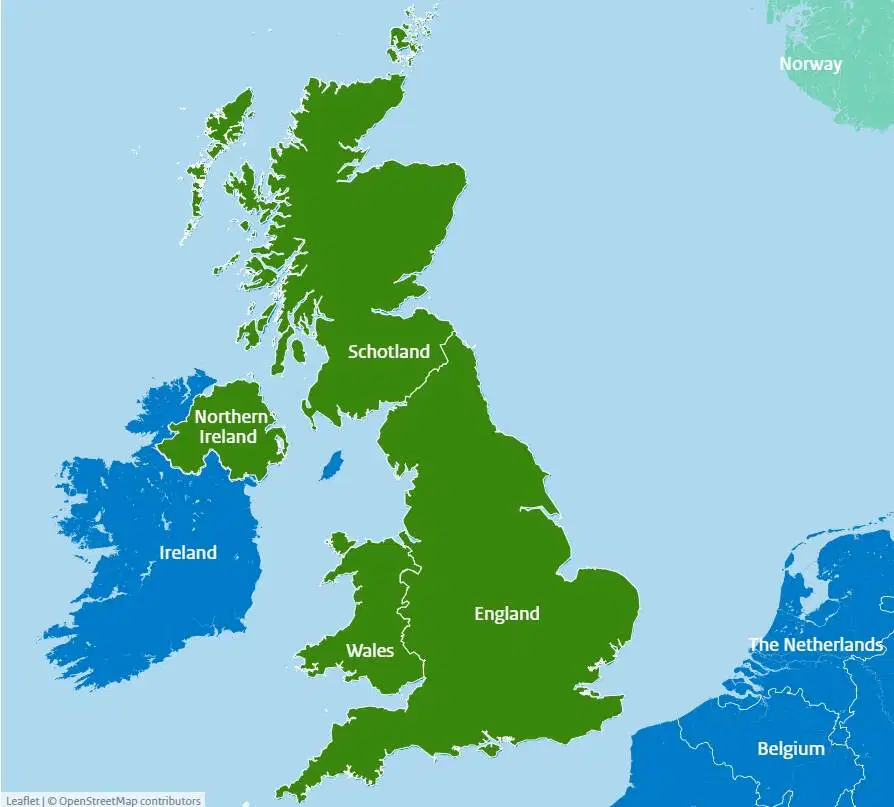
Based on the map, which of the following can be identified as a true statement about Northern Ireland?
It is united with the rest of the island to form a sovereign nation-state.
It forms its own sovereign nation-state predominately made up of the Irish ethnic group.
It is a frontier that is not formally part of a state, but the United Kingdom claims the area.
It is physically separate from the rest of the United Kingdom, a multinational state.

What Is a Stateless Nation?
A group of people with a common identity through shared cultural traits such as language, religion, and or ethnicity
The boarders of a nation match the borders of the state
Nations of people without a state to occupy
A nation of people that live in more than one state

Which of the following terms identifies the type of regions shown in the dark gray-shaded areas on the map?
Functional regions
Urban regions
Semiautonomous regions
Vernacular regions

What Is a Multistate Nation?
A group of people with a common identity through shared cultural traits such as language, religion, and or ethnicity
The boarders of a nation match the borders of the state
Nations of people without a state to occupy
A nation of people that live in more than one state
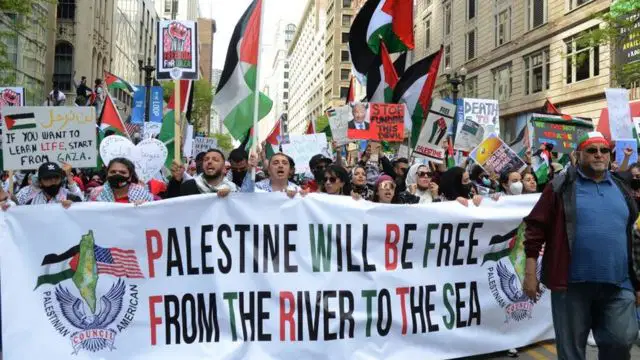
What are some examples of Stateless Nations?
The Kurds in South Asia
The Basaque in Spain
Palestinians in Israel
Germans in Germany
Which of the following best explains the effect of French language and culture on the federal state of Canada’s political power?
French language and culture act as a centripetal force throughout Canada as the majority of Canadians have English as a first language and the government uses both languages in official communications.
As an expression of political power, the Canadian federal government restricts French language and culture from media and government proceedings.
French language and culture act as centripetal forces and unify all of Canada’s people and government into a single nation.
French language and culture act as a centrifugal force in Canada because independence movements in Quebec have attempted to secede the province from Canada.
Which of the following explains why Korea and Vietnam were viewed as shatterbelts during the Cold War?
Korea and Vietnam were politically controlled by regional powers.
Korea and Vietnam kept two political adversaries geographically separated.
Korea and Vietnam fragmented into new states due to internal tensions.
Korea and Vietnam experienced conflict due to a dispute between global powers.
Which of the following describes an example of a consequent boundary?
The Berlin Wall between East and West Germany no longer exists, but the location is still evident.
European powers divided Africa at the Berlin Conference and drew boundaries across the continent.
The United States–Canadian boundary was set at the 49th parallel by a treaty before the area was settled.
Canada created the province of Nunavut to provide greater autonomy for the First Nations.
The former international border between East Germany and West Germany is best described as
an open border
a demilitarized zone
a relict boundary
an antecedent boundary
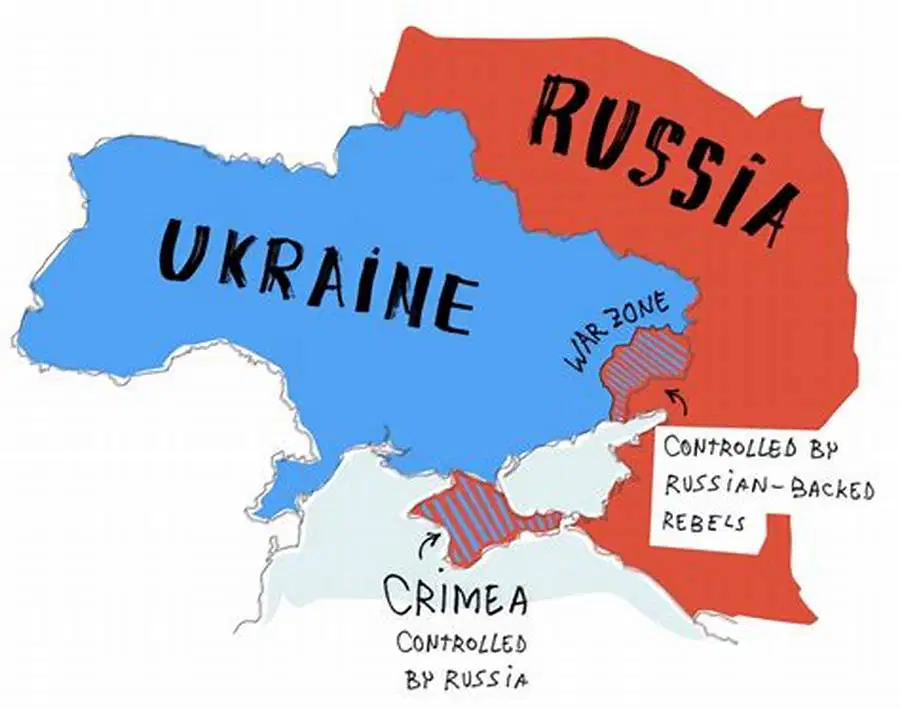
What are Shatterbelts?
A region that is geographically located between states with overlapping territoriality and political power
A strategic strait of canal which is narrow, hard to pass through and has competition for use
Borders that are established before there has been major settlement by people in a territory
Borders that are drawn in areas that have been settled by people, typically due to changes that have occurred over time
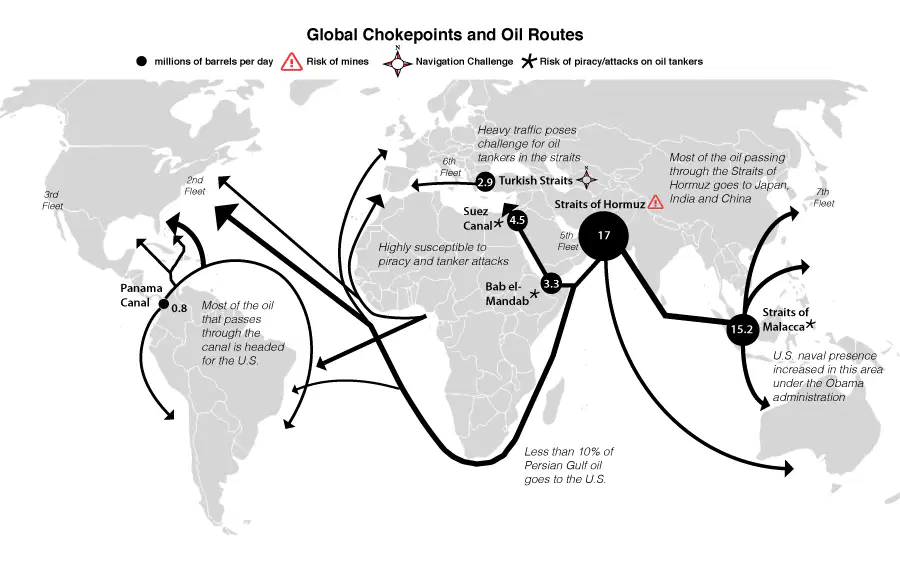
True or False: A choke point is a strategic strait or canal which is narrow, hard to pass through and has competition for use
True
False

Based on the information in the map, what is the most likely outcome of the possible establishment of an independent Kurdistan for the Kurdish people?
The state of Turkey, seeking to connect areas with a substantial Kurdish population into an independent state, might take action against neighboring states.
The Kurdish people, seeking a state of their own with a majority Kurdish population, might secede from or rebel against the states labeled on the map.
The Kurdish people would have to migrate into a single country to gain a population majority and would struggle for control of the government.
In areas with a Kurdish majority population, Kurdish people are politically active among Turks, Iranians, Iraqis, and Syrians and would be able to win an election on a national vote to secede.
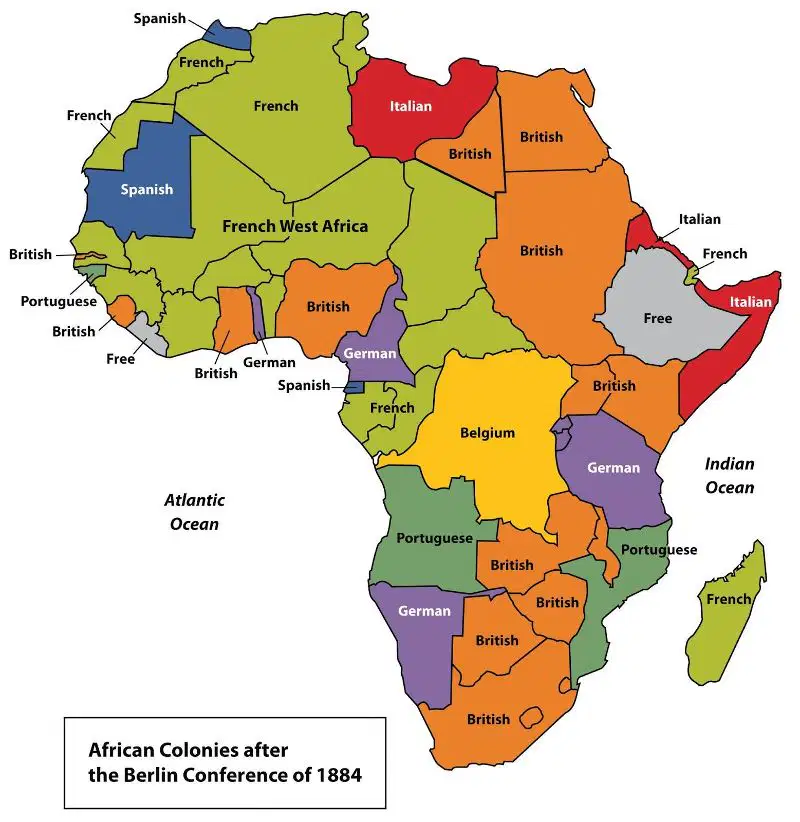
What is a Superimposed Boundary?
Borders that are established before there has been major settlement by people in a territory
Borders that are drawn in areas that have been settled by people, typically due to changes that have occurred over time
Type of Subsequent boundary that takes into account the existing cultural distribution of the people in the territory and redevelops boundary lines to align with cultural boundaries
Border that is drawn over existing and accepted borders by a outside force
What is a Geometric Boundary?
Borders that are established on straight lines of latitude and longitude instead of physical or cultural boundaries
Borders that are drawn in areas that have been settled by people, typically due to changes that have occurred over time
Type of Subsequent boundary that takes into account the existing cultural distribution of the people in the territory and redevelops boundary lines to align with cultural boundaries
Border that is drawn over existing and accepted borders by a outside force

What is Considered International Waters?
12 nautical miles from the coastline
200 nautical miles from the coastline
200+ nautical miles from the coastline

What is a Federal Government?
A style of government in which power is shared between central, regional, and local government
A style of government in which the power is located centrally and the purpose of regional or local units is to carry out policy
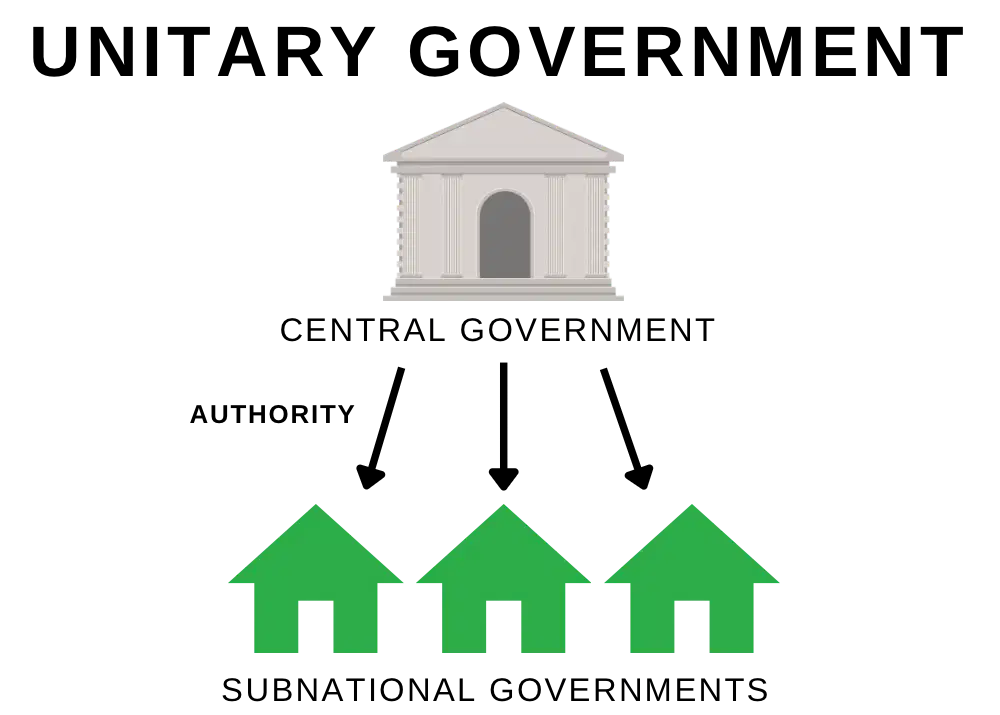
What is a Unitary Government?
A style of government in which power is shared between central, regional, and local government
A style of government in which the power is located centrally and the purpose of regional or local units is to carry out policy
True or False: In Federal power is diffused to state and local government on multiple levels.
True
False
What are some Positives for Unitary Government?
Reduction of conflict around specific issues because each substate can legislate differently
Local issues resolved more quickly by regional/local governments
Efficiency in the creation and implementation of laws
Change happens quickly-only has to go through the central government
What are some negatives for Federal Government?
Slow to enact change
Conflicts between national, state, and local level governmental units can cause confusion and stall progress
More vulnerable to corruption or authoritarianism
Central government may not be in touch with local issues
What are some negatives for Unitary Government?
Slow to enact change
Conflicts between national, state, and local level governmental units can cause confusion and stall progress
More vulnerable to corruption or authoritarianism
Central government may not be in touch with local issues

What is Reapportionment?
Process in which U.S house of representatives seats, are re-allocated to different states, based off population change
Organization that utilizes the popular vote to then vote for president.
State's internal political boundaries that determine voting districts for the U.S house of reps and the state legislature. Redrawn to accurately reflect the new census
A geographic term used by state and local governments to organize elections

What is Redistricting?
Process in which U.S house of representatives seats, are re-allocated to different states, based off population change
Organization that utilizes the popular vote to then vote for president.
State's internal political boundaries that determine voting districts for the U.S house of reps and the state legislature. Redrawn to accurately reflect the new census
A geographic term used by state and local governments to organize elections
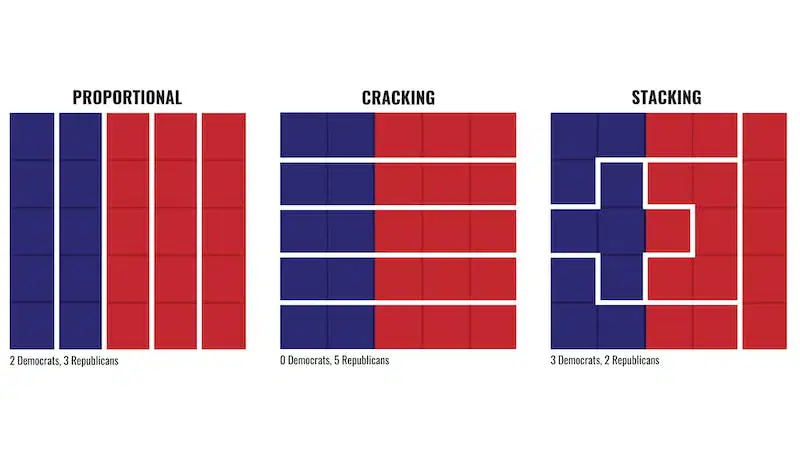
What is Gerrymandering?
Process in which U.S house of representatives seats, are re-allocated to different states, based off population change
Organization that utilizes the popular vote to then vote for president.
State's internal political boundaries that determine voting districts for the U.S house of reps and the state legislature. Redrawn to accurately reflect the new census
Redistricting for a political advantage, when the political party that controls a majority of seats in the state legislature draws political district boundaries to maintain or extend their political power
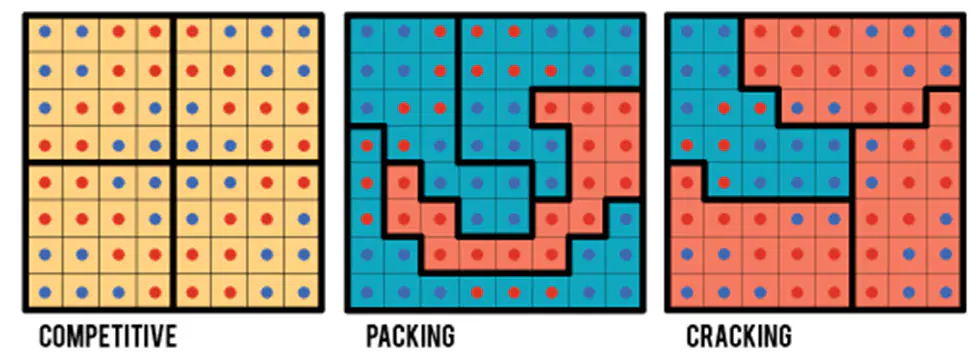
What is Packing?
Clustering like minded voters in a single district, thereby allowing the other party to win the remaining districts
Dispersing like minded voters among multiple districts in order to minimize their impact and prevent them from gaining a majority
What is Cracking?
Clustering like minded voters in a single district, thereby allowing the other party to win the remaining districts
Dispersing like minded voters among multiple districts in order to minimize their impact and prevent them from gaining a majority

