
NEW
Font size
 Worksheets
1st 9 Weeks Review
Total questions: 30
Worksheet time: 51mins
Which of these atomic models is the oldest?


This model discovered that atoms have a very tiny, positively charged center where most of the mass is found. Which one is it?
Fluorine is atomic number 9 and has a mass of 19. How many neutrons would it have?
9
6
19
10
A substance has a pH of 4. This should be classified as ___.
an acid
a base
a reactive matter
an inorganic compound
Which of these descriptions is a chemical property of a substance?
Acidic
Soluble in water
Boils at 212oF
Reddish in color
Helium is a gas at room temperature. This is an example of a —
physical property
chemical property
mixture
compound
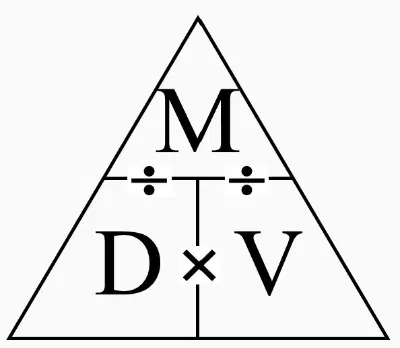
Which solution has a density greater than 1.0 g/mL?
Mass = 2.3g Volume = 1.1mL
Mass = 15g Volume = 20mL
Mass = 7.8g Volume = 8.7mL
Mass = 600g Volume = 715mL
Chemical Change: the chemical make-up remains the same.
Physical Change: the chemical make-up remains the same.
Which of these is a chemical change?
A pan rusting
Bending a paper clip
Chopping carrots
Ice cubes melting
Campfire
Baking a cake
Popping popcorn
Grilling chicken

This number on the left represents how many molecules there are in a chemical formula.
What are the reactants in this equation?
4Al + 3O2 → 2Al2O3
4Al
3O2
2Al2O3
4Al + 3O2
Is this balanced?
2Al + 3O2 → 2Al2O3
Yes, all the elements are balanced.
No, O is not balanced.
No, Al is not balanced.

Which of the following is true for sodium (Na)?
Its atomic number is 11, its atomic weight is 22.99, and it is in the same family as magnesium (Mg).
Its atomic number is 22.99, its atomic weight is 11, and it is in the same family as potassium (K).
Its atomic number is 11, its atomic weight is 22.99, and it is in the same family as potassium (K).
Its atomic number is 22.99, its atomic weight is 11, and it is in the same family as magnesium (Mg).

Which of the following is an ionic bond?
KBr
CH4
SO
NI3

At which point does a roller-coaster have the greatest potential energy?
At the top of the tallest hill
At the bottom of the tallest hill
As it is climbing up the tallest hill
Potential energy never changes

If the boy in the picture jumps off the diving board, what energy conversion will take place?
Potential to kinetic
Kinetic to potential
Electrical to light
Thermal to kinetic
Which of the following converts chemical energy to light and thermal energy?
Car
Fireplace
Car
Fireplace

The volume of water in the pot decreases during this investigation. Water droplets form on the mirror when positioned over the pot. In this setup, water —
condenses and then vaporizes
vaporizes and then condenses
freezes and then vaporizes
vaporizes and then freezes

In which state of matter do atoms have so much kinetic energy the electrons strip away from positive nuclei, creating ions?


On very cold nights, a family builds a fire in the fireplace to help warm their cabin. Sam, who sits by the fire, feels the heat first, while Steven, who is upstairs, feels the heat after a couple of hours. Which statement is true?
Sam feels the heat by radiation, and Steven feels the heat by convection.
Sam feels the heat by conduction, and Steven feels the heat by radiation.
Sam feels the heat by convection, and Steven feels the heat by conduction.
Sam feels the heat by radiation, and Steven feels the heat by conduction.
Which of these uses conduction to transfer thermal energy?

electric toaster

steam iron

hairdryer

deep fryer

