
 Worksheets
pathogen & disease
Total questions: 19
Worksheet time: 10mins
Organisms that cause diseases are called?
Pathogens
Hosts
Phagocytes
Toxins
Which requires a host cell in order to reproduce?
Algae
Bacterium
Protist
Virus
Which type of pathogen is responsible for causing the flu, chicken pox, and yellow fever?
viruses
parasites
fungi
bacteria
Which pathogen is treated with antibiotics?
virus
bacteria
parasite
fungi
What is the smallest pathogen?
bacteria
virus
fungus
protozoa
Bacteria is bigger than virus.
True
False
Ignaz Semmelweis is known for
He discovered that hand washing reduced germs.
He discovered influenza virus
He discovered that bacteria can produce toxins
Name the group of cells in your blood that is involved in destroying pathogens.
Red blood cells
White blood cells
Plasma
What is on the surface of pathogens that allows white blood cells to detect and recognise them?
antibodies
antigens
antitoxin
What are produced by white blood cells to neutralise poisons released by pathogens?
antigens
antitoxins
antibodies
What is the name of the proteins that are made to fight of pathogens. They can be produced quickly when the pathogen enters the body a second time.
antitoxins
antigen
antibodies

The image shows the processes in the immune system, namely...
Pinocytosis
Pathogenesis
Phagocytosis
Name the acid in your stomach that can destroy pathogens.
H2SO4
H2O
HCl
Which feature does your nose have to prevent pathogens from entering the body?
mucus
cilia
saliva
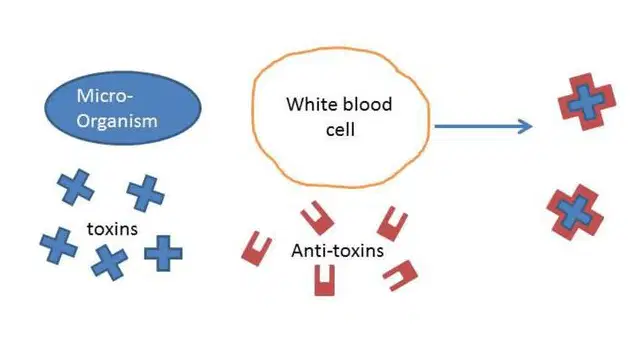
What process is being shown in the diagram?
production of antibodies
production of antitoxins
production of antigens
Vaccines contain weakened or dead parts of antigens.
true
false
Vaccines work because the immune system saves the information in the:
memory cells
red blood cells
stem cells
The vaccines trigger the immune system creating specific ______________ for the pathogen.
antigens
antibodies
antitoxins
MMR vaccine protects against
measles
mumps
malaria
polio

