
 Worksheets
AP BIOLOGY CED Units 1, 2, 3 Midterm Review
Total questions: 76
Worksheet time: 44mins
All chemical reactions must break or form _____________.
Bonds
Energy
Products
Reactants
Which provides chemical energy for most cell functions
ADP --> ATP + P
ADP + P --> ATP
ATP + P --> ADP
ATP --> ADP + P
Two or more types of tissues that perform a function.
Organ
Cells
Organism

Based on the information in the diagram, which of the following statements is true?
The diagram shows active transport because chemical energy is not needed to drive the process.
The diagram shows passive transport because chemical energy is needed to drive the process.
The diagram shows passive transport because chemical energy is not needed to drive the process.
How is DNA/RNA synthesis directionally oriented?
new nucleotides are added to 5' phosphate
new nucleotides are added to 3' phosphate
new nucleotides are added to 5' hydroxyl
new nucleotides are added to 3' hydroxyl
The substance that fills the space inside a cell.
Cytoplasm
DNA
Plasma membrane

An example of a reaction that absorbs more energy than it releases is ___________.
Photosynthesis
Cellular Respiration
Product
Reactions
Which phrase best describes an exothermic chemical reaction?
Does not absorb any energy.
Forms products with higher bond energy than reactants.
Is in a state of equilibrium.
Releases more energy than it absorbs.
Substances that are made by a chemical reaction
Endothermic
Exothermic
Reactants
Products
What are some ways to change the rate of a chemical reaction
Increase temperature & add a catalyst
pH & shake it
Place in a dark area & add competitive inhibitor
Substrate concentrations & add water

How many electrons does silicon have?
28
14
0
10

Read the image. Is the circled portion of text the claim, evidence, or reasoning?
claim
evidence
reasoning
What is a negative ion called?
anion
cation
covalent
isotope

Read the image. Is the circled portion of text the claim, evidence, or reasoning?
claim
evidence
reasoning
What is the monomer for Lipids?
Monosaccarides
Fatty Acids
Amino Acids
Nucleotides
Which of the below situations would decrease how much photosynthesis a plant could perform?
Low availability of glucose
High availability of glucose
Low availability of sunlight
High availability of sunlight
What are the products of the light-dependent reactions of photosynthesis?
ATP & NADH
CO2 & H2O
NADPH & ATP
Organic Compounds & O2
Chemical reactions change _________and make ____________.
products, reactants
exothermic, endothermic
reactants, products
endothermic, exothermic
Cells, like plant and animals, that have a membrane-bound nucleus and other organelles.
Prokaryotes
Eukaryotes

The organelle that organizes cell division:
Nucleus
Centrioles
Cytoskeleton
Ribosome
During a chemical reaction: Breaking a bond requires energy to be ______
Absorbed
Released

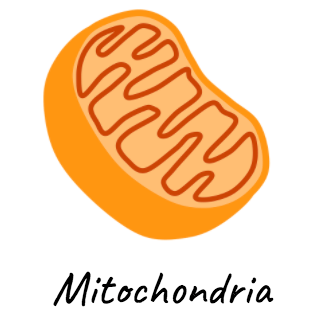
Name this organelle
Cell Wall
Mitochondria
Nucleus
Vacuole
3. Which biomolecules act as energy storage for the cell and also cushions and insulates organs?
Carbohyrdates
Lipids
Proteins
Nucleic Acids
Which of the following is NOT in the monomer of a nucleic acid?
pentose sugar
nitrogenous base
phosphate
amino acid

Which solution, when viewed under a microscope , would contain red blood cells that were wrinkled and reduced in volume?
Solution A
Solution B
Solution C
Because they speed up reactions, ___________ are substances that speed up reactions without being permanently altered
Enzymes
Catalysts
Reactants
Products
9. Amino Acids are the monomers of __________.
Nucleic Acids
Proteins
Carbohydrates
Lipids
5. Which biomolecules provide quick energy for the cell and also provide materials to build the cell membrane/wall?
Carbohydrates
Proteins
Lipids
Nucleic Acids
Macromolecules that perform structural and regulatory functions for cells.
Carbohydrates
Lipids
Proteins
Nucleic Acids
Type of a reaction that absorbs energy (in the form of heat or light)
Endothermic
Exothermic
Reactants
Products
Which of the following will increase the rate of the reaction?
increase product
increase substrate
increase inhibitor
increase enzyme
Which of the following is the organelle that performs cellular respiration?
Golgi Body
Ribosome
Mitochondria

Which cell studied (in the table above) is a prokaryote?
Cell 1
Cell 2
Cell 3
Cell 4
What is an example of something the energy released from ATP is used for?
Cell processes
Make food
Growth & Repair
To start the process of photosynthesis

Which organelle produces the energy a cell needs to carry out its function
Mitochondria
Golgi Bodies
Cytoplasm
Nucleus
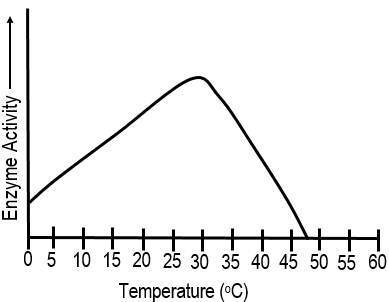
Which environmental conditions can cause denaturation of the enzyme?
slight increase in temperature
extreme increase in temperature
decrease in temperature
extreme increase in temperature and pH changes
Describe the orientation of the phospholipids in the membrane.
Phospholipids orient in bilayer with hydrophilic heads on exterior
Phospholipids orient in monolayer with hydrophilic head on extracellular
Phospholipids orient in bilayer with hydrophobic tails on exterior
Phospholipids orient in monolayer with hydrophobic tails on extracellular

Which letter on the graph above indicates the products of the reaction?
A
B
C
D
E
Chemical reactions can be classified as _________or ________.
Cellular Respiration, Photosynthesis
Products, reactants
Endothermic, exothermic
Bonds, energy
Which part of the cell membrane allows small uncharged molecules such as oxygen and carbon dioxide to diffuse into and out of the cell?
Proteins
Cholesterol
Phospholipids
A class of chemical called a neurotransmitter is important in the transmission of nerve impulses. Neurotransmitters are packaged by the cell into small, membrane-bound sacs called vesicles. Upon receiving a chemical signal, the vesicles move toward the plasma membrane and fuse with it, releasing the enclosed neurotransmitters from the terminal end of the nerve cell. Which organelle is most likely responsible for packing neurotransmitters into a vesicle?
Mitochondria
Ribosome
Nucleus
Golgi body/ apparatus
An organelle that forms a maze of passageways in which proteins and other materials are carried from one part of the cell to another
Cell Wall
Endoplasmic Reticulum
Golgi Appartus
Cytoplasm
Organelle that creates proteins for the cell.
Carbohydrates
Ribosomes
Prokaryotes
An organism made up of a single cell, such as bacteria
Unicellular
Multicellular
Noncellular

Using the diagram as a reference, how many electrons does lithium have in its OUTER shell?
1
3
8
2
The smallest living unit of any organism.
Tissue
Heart
Cell
What do bacteria (prokaryotes) lack?
cellular membrane
nucleus
genetic information
Which of the below is a role of proteins?
Quick Energy
Stored Energy
Building structures in bodily tissues
Removing waste from cells

Electrons and neutrons
Protons and neutrons
Neutrinos and positrons
DNA and RNA
Adenosine Triphosphate is
ATP
ADP
APT
APD
Which macromolecule(s) have sulfur?
Carbohydrates
Proteins
Nucleic Acids
Fats
Describes the breaking of a bond within a polymer using water.
Hydrolysis
Dehydration
Specialized proteins that speed up chemical reactions.
Enzymes
Carbohydrates
Sterols

What is the function of the Vacuoles
Store food, water and waste
Receive proteins
Assembles amino acids
Found inside the nucleus
All of the chemical reactions within each cell of an organism
Chemical Reaction
Metabolism
Catabolic
Anabolic
The amount of energy needed to make a chemical reaction start
Chemical Reaction
Reaction
Metabolism Energy
Activation Energy
What is the main role of lipids?
Quick Energy
Stored Energy
DNA protection
Waste removal
Biochemical reactions: Break down larger molecules into simpler compounds --> a release in energy = exergonic
Chemical Reaction
Metabolism
Catabolic
Anabolic
Proteins that speed up biochemical reactions by lowering the activation energy
Enzyme
Catalyst
Endothermic
Ecothermic
Which of the following is NOT in the monomer of a protein?
Amine Group
R Group
Carboxyl Group
Nitrogenous Base
Substances that are changed during a chemical reaction
Endothermic
Exothermic
Reactants
Products
6. The monomer of carbohydrates is known as _______.
Amino Acid
Fatty Acid
Nucleotide
Saccharide
A group of organs, like the digestive system, that work together to perform a function.
Organ
Tissue
Organ system
Nucleic Acids are made up of chains of
Monosaccharides
Nucleotides
Amino Acids
Fatty Acids
A neutron has _________ charge or is ________.
negative ... neutral
positive .... neutral
no .... negative
no ... neutral

What is the LARGE blue circular organelle named?
Nucleus
Golgi Body
Cell Wall
Vacuole
Which is a plant or animal cell?
Prokaryote
eukaryote
Describe the difference between competitive and noncompetitive inhibitors.
noncompetitive binds to active site and competitive binds to other site
competitive binds to active site and noncompetitive binds to other site
competitive is irreversible and noncompetitive is reversible binding
noncompetitive is irreversible and competitive is reversible binding
In the egg osmosis lab, the egg in corn syrup had a higher concentration outside the cell than inside the cell. What happened to this egg?
Water left the egg and it got smaller
Water entered the egg and it got larger
The egg remained the same size
Organelle that creates materials like fatty acids and lipids for the cell. Some have ribosomes and some don't.
ER
Golgi
Nucleus
Transports materials OUTSIDE of the cell
Golgi Body
Cell Wall
Nucleolus
Ribosomes
What are the four groups of organic compounds (macromolecules) found in living things
Proteins, Lipids, Carbohydrates, Nucleic Acids
Enzymes, phospholipids, cellulose, proteins
Proteins, RNA, DNA, fats
DNA, proteins, enzymes, fats

