
 Worksheets
ART HIS 2303: EXAM 1
Total questions: 62
Worksheet time: 1hrs 2mins
- Italian; short for milletrecento
- 14th - 17th c
- middle ages
- cultural revival “Re-birth” in art, architecture, lit, music, philosophy, science, and even technology that developed and spread across Europe
renaissance
tromp l'oiel
sfumato
trecento
europe became rich through connections between _____ and ______
mediterranean ports
hanseatic league
northern europe naval fleets
british ports
wealth created in city states were dependent on ____
king george iv
king ferdinand of spain
vatican city/rome
british merchants
- italy 15th c.
- intellectuals believed they were in the new age
- world is improved by reviving the best of the CLASSICAL WORLD and ancient Greece/Rome
- "rebirth"
- ____ humanism
trecento
sfumato
renaissance
contrapposto
relative size, shape, and position of objects are determined by drawn or imagined lines converging at the point on the horizon
reserve persepctive
linear perspective
trompe l'oeil
contrapposto
largest individuals in the back and smallest in the front
predella
linear perspective
relative perspective
reverse perspective
"trick of the eye"
predella
fresco
refectory
trompe l'oeil
smoky outlines; images of haze
shadow
predella
refectory
sfumato
counterpoise; a human figure standing with most of its weight on one foot, so the shoulders and arms twists off-axis from the hips and legs in the axial plane
contrapposto
tryptich
mandorla
sfumato
a picture of three panels hinged together and used as an altarpiece.
tempura
fresco
triptych
sequence
a work of art set above an altar
portrait
altarpiece
predella
mandorla
base of an altarpiece
structure
refectory
predella
tempura
cafeteria in a religious building
predella
mandorla
memonto mori
refectory
Painting done rapidly in watercolor on wet lime-plaster on a wall or ceiling, so that the colors penetrate the plaster and become fixed as it dries
tempura
wet fresco
dry fresco
oil paint
Painting done on dry plaster
- chips easily
- does not stay preserved
dry fresco
wet fresco
oil paint
tempera
pigments mixed with water or egg yolk
fresco
gold leaf
silverpoint
tempera
gilding; gold that has been beat into a thin sheet
silverpoint
gold leaf
gold plate
mandorla
T/F: jan van eyck reintroduced oil painting
true
false
what was oil paint made of?
pigments
linseed oil
flower petals
salt
made by dragging silver wire or rod across a surface prepared with gesso
gold leaf
mandorlas
lost wax casting
silverpoint
pouring molten metal into a hollow mold to create a positive sculpture or object
sculpturing
lost wax casting
memonto mori
silverpoint
almond shaped halo placed around the body of jesus
mandorla
predella
refectory
triptych
"i was as you are, and what i am you will soon be"
lettering at the bottom of jan van eyck's 'man with a red turban'
memento mori
humanism
inscription on michelangelo's 'pieta'
- concerned with unified space with linear perspective
- attention to anatomy of the human body
finnish renaissance naturalism
italian renaissance naturalism
northern europe naturalism
all of these
characteristics of flemish naturalism
not concerned w governing space or anatomy
express atmospheric perspective
close observation of details
layers of symbolism
concerned with unified space and anatomy
which of the following are inventions that changed the world in the 15th c?
roads
printing press
mass production
oil paint
which of the following are inventions that impacted how painters paint?
oil paint
new form of naturalism with detail and texture
brushes made from human hair instead of horse hair
acrylic paint
T/F: the eucharist is the lord's supper, in which the bread is consecrated and consumed
true
false
Belief in the self, human worth, and individual dignity
confidence
individualism
humanism
how the renaissance influenced identity
characteristics of crusade trade routes
hanseatic trade routes
mercantile middle class that has a voice, can purchase art, and is literate
italy is divided between political sectors
use medieval trade routes for import/export
which of the following were patrons of the arts?
kings/princes
popes/cardinals
poets/humanists
cathedrals/convents/monasteries
peasants
- brancacci wealthy silk merchant (brancacci chapel and 'tribute money')
- palla strozzi humanist and banker (adoration of the magi)
- cosimo de medici banker (the annunciation)
famous artists of the renassaince
famous poets of the renaissance
famous patrons of the renaissance
famous politicians of the renaissance
- michelangelo
- 18 ft tall
- commissioned to go on florence cathedral
- 1501
david
pieta
the fall of man and expulsion from the garden of eden
sistine chapel paintings
- donatello
- 1425-30
- bronze; lost wax casting
- 5 ft tall
- portrayed as an after shot
- criticized for sensual nature
david
goliath
jesus
mother mary
T/F: brunelleschi won the battle of the baptistery doors
false
true
the north doors of ghiberti's baptistery focused on...
wooden background
high budget
sculpture and imagery
dramaticism
the right doors (second set) on ghiberti's baptistery focused on...
depth and dimension
"highlight" of the scene
drama
backstory of the scene
T/F: brunelleschi and ghiberti competed using the depiction of 'the sacrifice of isaac' to see who did the baptistery doors
true
false
ghiberti focused on _____
brunelleschi focused on ______
structure; message
message; image
beauty; drama
god; isaac
reasons why ghiberti won:
incorporated multiple scenes into one
cast as one piece
less bronze
worked with goldsmiths
how did leo da vinci use linear perspective in an expressive way?
focused the viewer's eye on the cross
focused judas as the betrayer
brought attention to jesus at the center of the table
leo did not use linear perspective
- patron of Flanders (Belgium) and N. Netherlands (Holland)
- son commissioned 'Moses Well' for burial site
king ferdinand
king george
duke philip the good
christopher colombus
- trecento period
- arena chapel (commissioned by enrico scrovegni; paduan banker, scared of damnation)
- christ entering jerusalem
masaccio
duccio
giotto
fra angelico
- trecento period
- madonna enthroned (1310)
masaccio
duccio
giotto
ghiberti
- early ren
- holy trinity and tribute money
- ancient greek and roman influences
- work was for the public (tramezzo divided public from holy area of church)
- memento mori
duccio
masaccio
giotto
fran angelico
- winner of the baptistery doors contest
- 'sacrifice of isaac' and 'jacob and esau'
- had donatello as a student
ghiberti
brunelleschi
giotto
masaccio
- revolutionized art with linear perspective
- used mirrors to rediscover LP
- competed in baptistery doors competition
ghiberti
brunelleschi
fra angelic
masaccio
- true renaissance man
- believed artists must know rules of perspective AND laws of nature
- EYES = perfect way of gaining knowledge
- famous for paintings and notebooks
- vitruvian man (correct human body proportions using math)
leonardo da vinci
donatello
michelangelo
ghiberti
- high renaissance
- archetype of true genius
- sculptor, painter, poet, architect
- lover of scultpure
- more popular in n. europe than italy
leonardo da vinci
donatello
michelangelo
raphael
- crucified in rome under nero
- first leader of early christian church
- christ gives keys to ____ = papal authority
judas
peter
mark
matthew
- betrayed jesus
- typically depicted sitting on opposite side of table from jesus
peter
judas
mark
matthew

(the mourning of christ)
giotto's 'lamentation'
giotto's 'deposition'
giotto's 'entombment'
giotto's 'resurrection'
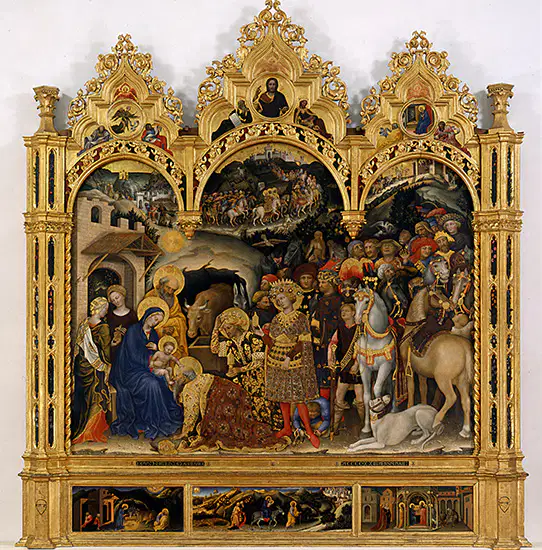
- tempera on panel
- 1423
- predella
- nativity = first night scene in art history
- patron: palla strozzi (banker, diplomat, humanist)
gentile de fabriano's 'adoration of the magi'
michelangelo's 'nativity'
fra angelico's
'annunciation'
giotto's 'madonna enthroned'

- inside brancacci chapel
- "continuous narrative": Peter in 3 scenes
- attention to anatomical anatomy
- chiaroscuro and contrapposto
- patron: brancacci (wealthy silk merchant)
giotto's 'madonna enthroned'
perugino's 'christ giving the keys to peter'
masaccio's 'tribute money'
masaccio's 'holy trinity'
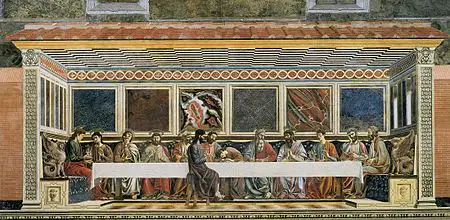
- tempera on plaster
- 1445-1450
- painted on women's convent wall (refectory)
- jesus's betrayal
castagno's 'last supper'
leonardo da vinci's 'the last supper'
donatello's 'communion'
michelangelo's 'pieta'

- standard motif: god, holy spirit, and christ
- throne of mercy
- mary, st. john, and patrons kneeling
- absence of mandorla (replaced with classical architecture)
- for the public; in front of tramezzo (divider)
- memento mori
giotto's 'madonna enthroned'
perugino's 'christ giving the keys to peter'
masaccio's 'tribute money'
masaccio's 'holy trinity'
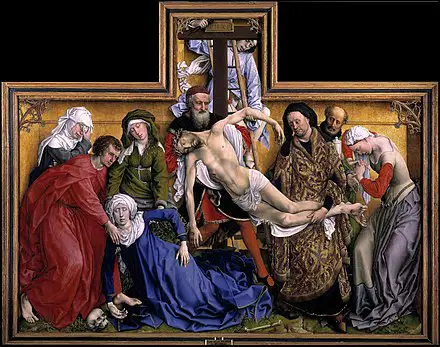
- mary looks as dead as jesus
- depiction of living v. dead
- adam's original skull at base
- flemish
- 1435
- italy --> spain
fra angelico's 'annuciation'
michelangelo's 'pieta'
rogier van der weyden's 'descent from the cross (deposition)'
hugo van der goes' 'portinari altarpiece'

- altarpiece of arena chapel
- patron: enrico scrovegni paduan banker
- sin: lending money w high interest rates
- 1305-1306
masaccio's 'tribute money'
giotto's 'madonna enthroned'
giotto's 'last judgement'
giotto's 'christ entering jerusalem'
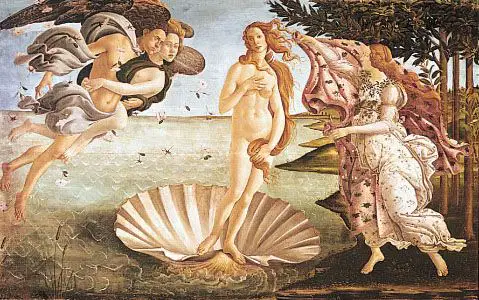
- medici villa; tempura
- life size almost nude painting of venus
- flat composition
- zephyr (west wind) and aura (chloris/spring?)
- 1430
sandra botticelli's 'birth of venus'
michelangelo's 'pieta'
donatello's 'virgin mary'
T/F: sicily was the financial center and eleveated level of knowledge/culture that induced the desire to discover and explore the classical world (humanistic scholars)
true
false
T/F: mercantile governing class was built by the aristocratic system of middle ages
true
false
_____ created rich trade routes between n. italy and levant
merchants
crusades
naval fleets
the working class

