
 Worksheets
IGCSE 2e) human nutrition
Total questions: 26
Worksheet time: 10mins
which of the following is the main function of bile
to emulsify protein
to provide enzyme
to neutralize alkaline condition of foods that entering duodenum
to increase the surface area for lipid digestion
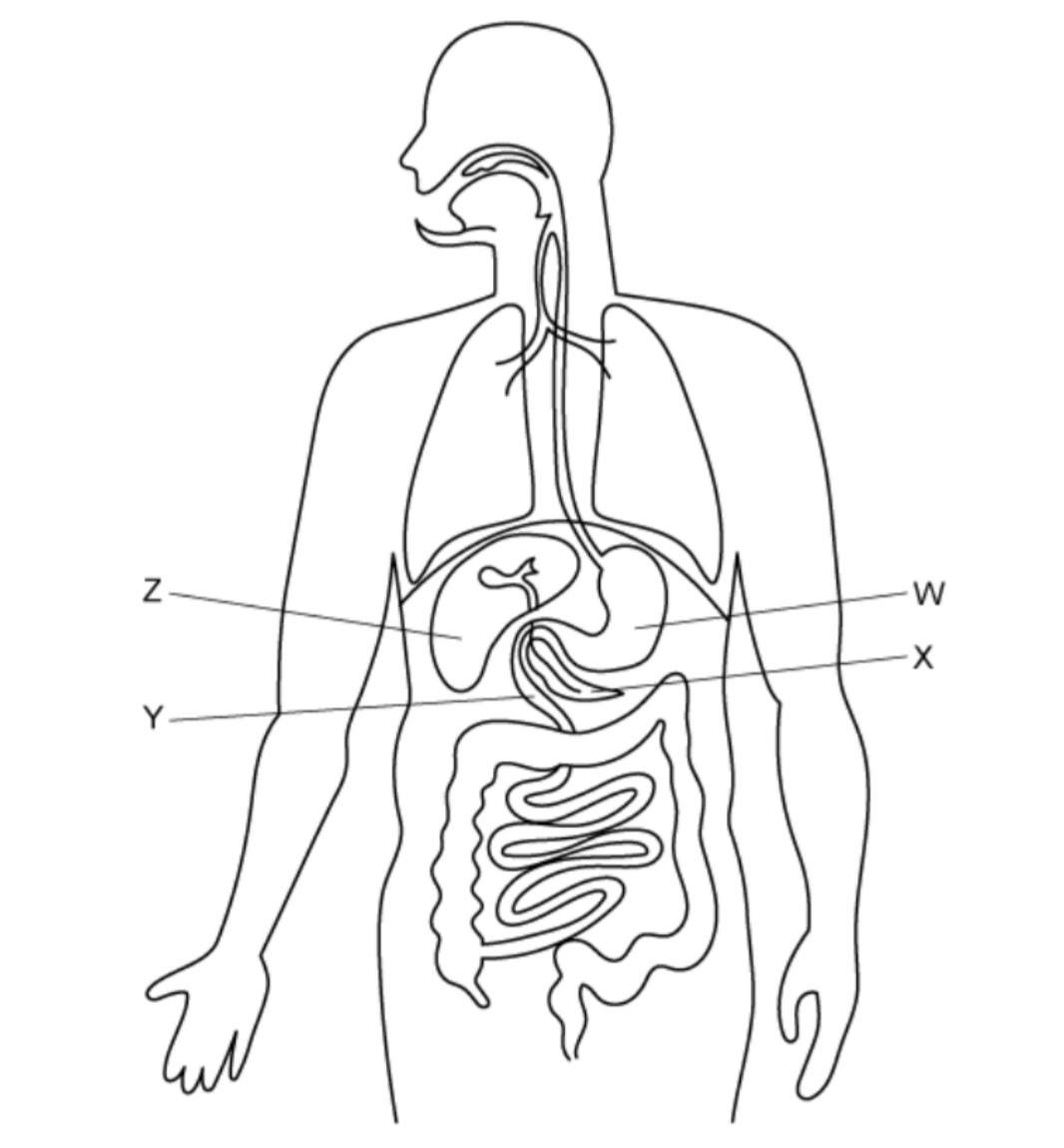
in which organs does digestion of protein take place
w and y
w only
x and z
y and x

Which of the organs are related to digestion of carbohydrates?
R and T only
P and Q only
S and T only
Q, R, S, and T

What is the function of the gall bladder?
absorption of fat
digestion of fat
production of bile
storage of bile
Where does most of the digestive process take place?
Small intestine
Stomach
Large intestine
Fats are digested by bile into fatty acids and glycerol
True
False
Bile is produced by ____, stored in ____, released by _____
liver; duodenum; bile duct
liver; gall bladder; bile duct
gall bladder; liver; bile duct
gall bladder; duodenum; bile duct
Which of the following enzymes digests proteins?
Trypsin
Lipase
Peptidases
Amylase
Where does ingestion begin?
duodenum
stomach
mouth
colon
What part of the small intestine are nutrients absorbed into the blood?
Ilium
Duodenum
Gall Bladder
Liver
What is the acid produced in the stomach?
Sulphuric acid
Nitric acid
Hydrochloric acid
Acetic acid

Which term describes the movement of food down the oesophagus by a wave of muscular contraction
Diffusion
Peristalsis
Chyme
Bolus
Define the term chemical digestion
The breaking down of large food molecules by the use of enzymes.
The physical break down of food done by the teeth or the muscles in the stomach.
Define the term egestion
The movement of nutrients from the digestive system into the blood
The removal of undigested food from the body
The breaking down of large insoluble molecules into small soluble molecules
The taking in of nutrients.
What are the five processes in human nutrition (in order)?
ingestion,digestion,egestion,absorption,assimilation
ingestion,digestion,absorption,egestion,assimilation
ingestion,digestion,absorption,assimilation,egestion
absorption,ingestion,digestion,egestion,assimilation
Chewing cuts food into smaller pieces which is a form of chemical digestion
True
False
Salivary amylase digests starch into glucose
True
False
You can find protein in...
dairy products.
fruit.
oil.
Oils and butter are rich in...
proteins.
fats.
carbohydrates.
Where does most of the absorption process take place?
Small intestine
Stomach
Large intestine

The correct order of parts labelled 2,3,7,8
Oesophagus,stomach,pancreas,liver
Oesophagus,stomach,liver,pancreas
Oesophagus,pancreas,stomach,liver
Oesophagus,pancreas,liver,stomach
In which part of the digestive system are most of the nutrients absorbed into the bloodstream?
Stomach
Oesophagus
Small Intestine
Large Intestine
What is the function of dietary fibre in the human body?
Provides energy
Fights infection and disease
Keeps the digestive system healthy
Promotes healthy hair and nails
What is a function of protein?
Repair and build muscle
Keep the body warm
Help with the digestive system
Cures asthma
Maltose is digested into glucose by maltase
True
False
Absorption of digested food molecules occur at the villi
True
False

