
 Worksheets
homeostasis and stimuli
Total questions: 28
Worksheet time: 28mins
Which of the following describes homeostasis?
keeps variables exactly at the set point
organism's ability to maintain steady(stable) internal conditions
acts to keep values outside of a desired range
operates through positive feedback
A change inside of the organism caused by the initiation event is the ...
response
effector
control center
stimulus
Identify the initiation event.
Scenario: A person begins to exercise which causes their body temperature to increase. The temperature change is noticed and the person begins to sweat and their body temperature decreases.
temperature change is noticed
person begins to sweat
body temperature decreases
person begins to exercise
Identify the stimulus that restores homeostasis.
Scenario: A person begins to exercise which causes their body temperature to increase. The temperature change is noticed (sensed) and the person begins to sweat and their body temperature decreases.
temperature changes is noticed
a person begins to exercise
body temperature increases
body temperature decreases
Which of the following animals has a body temperature that doesn't change depending on the weather outside?
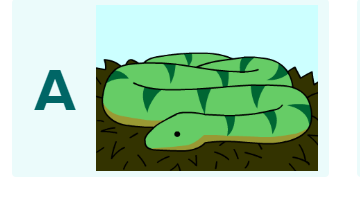
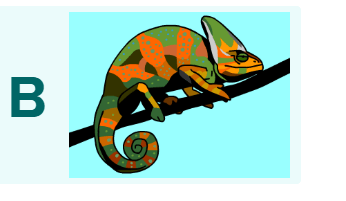
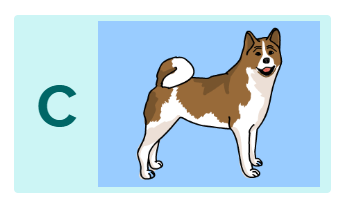
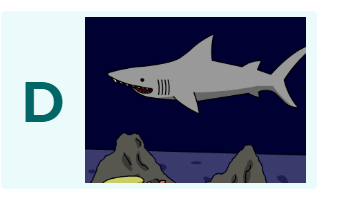
You are growing a tomato plant in your house. Which of the following would the plant probably do to help maintain homeostasis?
Grow away from the light coming from the window
Grow toward the light coming from the window
Growth is not affected by the light coming from the window
Why does your heart beat faster when you exercise?
To provide your muscle cells extra oxygen
To provide your muscle cells extra carbon dioxide
To heat your body up
To make you feel more tired
The group of organisms that use the process of homeostasis includes
mammals, only
animals, only
plants and animals
all living things
A change of conditions inside of the organism is the ...
response
effector
control center
stimulus
Homeostasis
Stable inside
Metabolism
Energy
Organism
Any living thing

Frog
Match the following characteristics of life

Homeostasis

Cells

Reproduction

Response to Stimuli

Growth and Development
What is turgor pressure and what happens without it?
pressure exerted by water inside the cell pushing against the cell wall
pressure of the outside of the cell wall
no pressure at all
pressure exerted by gravity
Leaves and stems growing towards the sunlight exhibits what kind of tropism?
geotropism
phototropism
gravitropism
autotropism
The roots of a plant growing downwards exhibits what kind of tropism?
Phototropism
Negative geotropism
Positive geotropism
autotropism
How is the turgor pressure force exerted on the inside of a seed to split it open so it can emerge into a seedling?
Water within the seed pushes out against the seed coat
Gravity pushes up on the seed coat
Gravity pulls down on the seed coat
Water from the soil pushes in through the seed coat
In a germinating seed, the downward growth of roots and the upward growth of leaves and stems are the plant's response to what?
water
osmosis
sunlight
gravity
What is the internal stimulus that would cause a plant to wilt?
Exposure to too much sunlight
Exposure to very little sunlight
A lack of water in the stem
An abundance of water in the stem
What internal and external conditions would most likely cause the stomata in a plant to be open?
There is a lack of water in the plant, and it is daytime.
There is a lack of water in the plant, and it is nighttime.
There is plenty of water in the plant, and it is daytime.
There is plenty of water in the plant, and it is nighttime.
What stimulus is most likely to cause the stomata to close?
Carbon dioxide concentration decreasing in the atmosphere
Carbon dioxide concentration increasing in the atmosphere
Water volume decreasing in the soil
Water volume increasing in the soil
On a leaf surface, guard cells that open and close in response to the amount of water available to keep everything balanced is an example of what?
phototropism
homeostasis
respiration
constructive feedback
Responses in plants that result in movement away from or toward a stimulus are called -
tropisms
differentiation
adaptations
yield

Stem has
negative phototropism
positive gravitropism
Positive Phototropism
no answer


Venus Flytrap flower reacts to a bug.
Thermotropism
Negative Geotropism
Thigmotropism
Hydrotropism

Roots of a tree growing towards the water line of a house.
Geotropism
Phototropism
Thigmotropism
Hydrotropism

The shoot of a plant growing up.
Positive geotropism
Negative geotropism
Thigmotropism
Hydrotropism
A fox spots a rabbit in a field. The fox begins to chase the rabbit, and the rabbit runs away. Which best describes the rabbit's behavior in response to the stimulus of being chased?
It is a tropism.
It is a fight-or-flight response.
It is a response caused by hunger.
It is a response caused by an internal stimulus.

The diagram shows the cell of a plant. What can you infer about the plant this cell came from by observing the plant cell?
The plant needs sunlight.
The plant is healthy.
The plant is wilting.
The plant is photosynthesizing.

