
 Worksheets
Civics and Citizenship
Total questions: 70
Worksheet time: 42mins
“rule by __________ .”
the premier
the monarch
the president
the prime minister
In our democracy the people vote ________________.
directly for the laws we want
for how long we want the prime minister to be in power
for the rules in the classroom
for the people we want to represent us in government
The citizens choose leaders to make decisions on our behalf. Which type of government is this?
Direct Democracy
United Democracy
Republic Democracy
Representative Democracy
What are the two types of democracy?
republican/democratic
representative/direct
representative/democracy
fair/unfair
The teacher chooses 4 students to decide which lollies she will bring in next week, this is a form of __________________.
Representative Democracy
Direct Democracy
Students in humanities class get to vote on which days they will play a class game; this is a form of ______________.
Representative Democracy
Direct Democracy
A value is a quality, characteristic or idea that we feel strongly about.
True
False
Which one is the example of values?
empathy
tolerance
responsibility
all of the above
Where does a person get their values from?
parents
friends
media
all of the above
What is the name of the document that creates our Government ?
The Constitution
The Declaration of Independence
The Magna Carta
The Treaty of Paris
What is the Constitution?
A set of rules that outlines how the country is to be run
A set of expectations for the government
A set of guidelines that the people have to follow
A legal document that gives power to a different country
Which of the following is the federal government responsible for? (You can select more than one)
Taxation
Roads
Defence
Education
Which of the following are the state government responsible for? (You can select more than one)
Taxation
Roads
Housing
Education
Which of the following are the federal and state governments responsible for? (You can select more than one)
Health
Indigenous peoples' welfare
Environmental Protection
Education
All parts of the government work together, under the Constitution, to run a democratic society.
True
False
How do you change the Constitution?
The parliament votes and if the majority agree then the Constitution will change
After the parliament passes a bill, the decision is put to the Australian people who either vote 'yes' or 'no' in a referendum
You can't change it
A plebiscite is conducted by the government
What happened in Australia on 1 January 1901?
The Australian Constitution was changed by a referendum
The separate colonies were united into a federation of states called the Commonwealth of Australia
he Australian and New Zealand Army Corps was formed
Which of these is an example of freedom of speech?
People can peacefully protest against a government action
Men and women are treated equally in a court of law
Australians are free to not follow a religion
What is the name of the legal document that sets out the basic rules for the government of Australia?
The Australian Commonwealth
The Australian Federation
The Australian Constitution
What is a referendum?
A vote to change the government
A vote to change the Australian Constitution
A vote to change the Prime Minister
What did the colonies of Australia become after Federation?
Territories
A.C.T.
States
Areas
In what year did Australia Federate?
1910
1901
1899
1911
A benefit of Federation to Australia is....
No cars on roads
No passports between states
No free speech
No tax on income
In which city did the new Parliament Of Australia meet in 1901?
Canberra
Sydney
Geelong
Melbourne
The Australian Constitution can be changed by what type of vote?
Democracy
Preferential voting
Referendum
Ballot
How many states does Australia have?
5
7
6
4
Who made the laws for Australia before federation?
The Prime Minister
The Governor-General
The Queen of England
Each colony (subject to law making power of the British Parliament)
1 in 2 Australian people have a parent who was born overseas.
TRUE
FALSE
What event caused an increase in Vietnamese migration to Australia?
WWII
Cold War
Boer War
Vietnam War
What year was the 'White Australia' policy taken out of Australian Law?
1970
1979
1980
1973

A policy in Australia which values the diversity of cultures is:
Racism
Multiculturalism
Multi-racism
Someone who has a connection to a place is said to:
Belong
Be an outcast
Be isolated
The movement of people and goods is:
Migration
Scary
Transport
Discrimination is where people are accepting of differences in other cultures.
True
False
The customs, beliefs, and habits of groups of people is known as culture.
True
False
A multicultural society is a country where
different cultural groups live together.
homogeneous cultural groups live together.
people must speak different languages.
What is a refugee?
A group of people of a different area from the main group of a country.
A person that causes a social group to join in society as a whole.
A person from a foreign country who may stay and work in a county for their personal safety.
Define 'Multicultural'.
A word to describe a society of people from different cultures and races where all the cultures are respected.
A society of people from different cultures and races that merge into a homogeneous society.
A person from a foreign country who may stay and work in a county for their personal safety.


How many stars are on the Australian flag?
4
5
6
7
In what year were the Olympics held in Sydney?
1995
2000
2005
2010

Which one is the correct definition of citizenship?
the act or status of being a citizen of a society or country
the study of the rights and responsibilities of citizens within a society or country
the entitlements and obligations associated with citizenship
the attitudes, values or beliefs that represent the system of democracy
Which one is the correct definition of rights and responsibilities?
the act or status of being a citizen of a society or country
the entitlements and obligations of citizens within a society or country, which are the cornerstone of modern democracies
the entitlements and obligations associated with citizenship
the attitudes, values or beliefs that represent the system of democracy

What is a sense of a united nation, made up of a country's shared history, values and culture?
Westminster system
democratic values
democracy
national identity
Name the national animal of Australia?
Koala and Giraffe
Kangaroo and Emu
Tiger and Bear
Skunk and Platypus

who is this ?
Lucy Turnbull
Kylie Minoghue
Debra Mailman
Cathy Freeman
What is the Australian Anthem?
Waltzing Matilda
Advance Australia Fair
We Are One
The Nutbush
What is the date of Australia Day?
26/1
14/2
30/6
25/12
Why do we celebrate Australia Day?
It was the first day the Australia Flag was flown
It is the anniversary of the 1788 arrival of the First Fleet
It is the date Australia was colonised
It is the date that Steve Irwin was born
Why do people think we should change the date of Australia Day?
Because we have just come off Christmas Holidays
Because it is not inclusive to our First People
Because it is too hot
Because the public holidays aren't evenly spread throughout the year
In what year did Prime Minister Kevin Rudd apologise to Australia's Indigenous peoples?
2007
2008
2009
2019
What does January 26 represent to Australia's Indigenous Peoples?
Australia Day: a celebration of the arrival of the First Fleet to Australia.
Survival Day: a celebration of the survival of Aboriginal and Torres Strait Islander cultures.
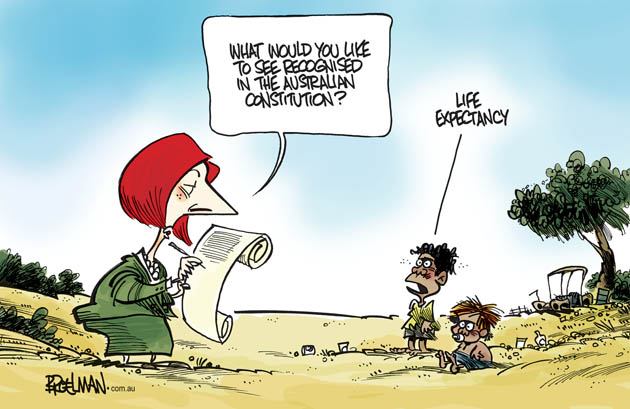
In 1967, the Australian Constitution was amended so that the Aborigines
were allowed to assimilate with the British.
were allowed to elect their own leaders.
were counted with the rest of the Australian population.
were allowed to reclaim their native land.
What year were the Cronulla Riots?
2004
2001
2003
2005

