
 Worksheets
Unit 3: Lesson 3 - DNA and RNA
Total questions: 20
Worksheet time: 14mins

What makes up the SIDES of a DNA ladder?
nitrogen bases
sugars & phosphates
genes & chromosomes
RNA

What makes up the rungs (steps) of a DNA ladder?
sugars & phosphates
nitrogen bases
sugars
genes & chromosomes
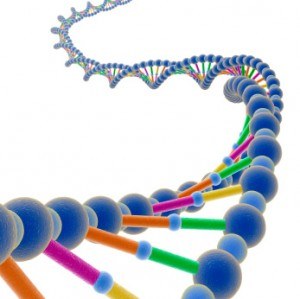
double helix
contains ribose
made of amino acids
contains Uracil
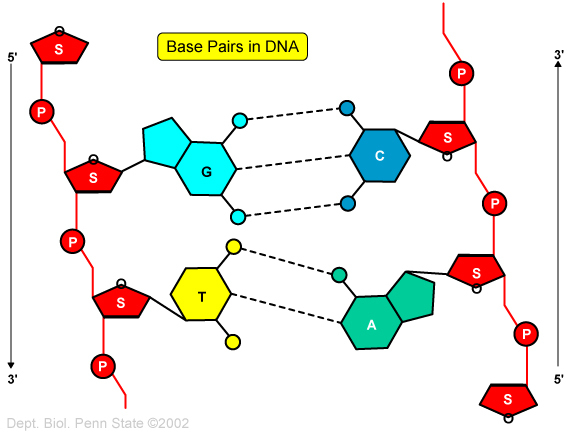
polar bonds
ionic bonds
covalent bonds
hydrogen bonds
sugar, hydrogen, nitrogen base
sugar, oxygen, nitrogen base
sugar, phosphate, nitrogen base
sugar, phosphate, protein
Adenine
Thymine
Uracil
Guanine
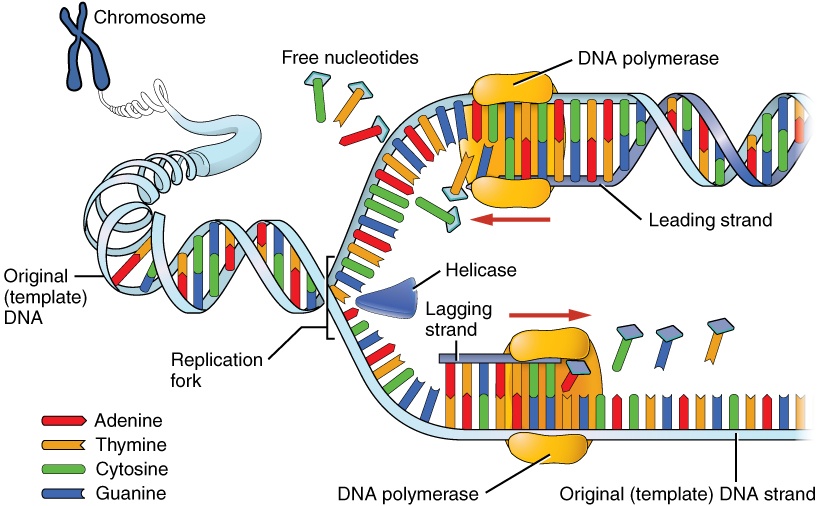
What is the complement to the DNA strand below:
5'-ATGCCAT-3'
(a)
The order of the Nitrogen Bases determines the number of chromosomes present in an organism.
The order of the Nitrogen Bases determines the traits that an organism will possess (have).
The order of the Nitrogen Bases determines the gender of an organism.
The order of the Nitrogen Bases determines whether an organism is abiotic biotic.
You have DNA and your sibling does not.
Your sequence of nitrogen bases is different than your sibling.
Your sibling has a weave.
Your sibling has a genetic mutation.
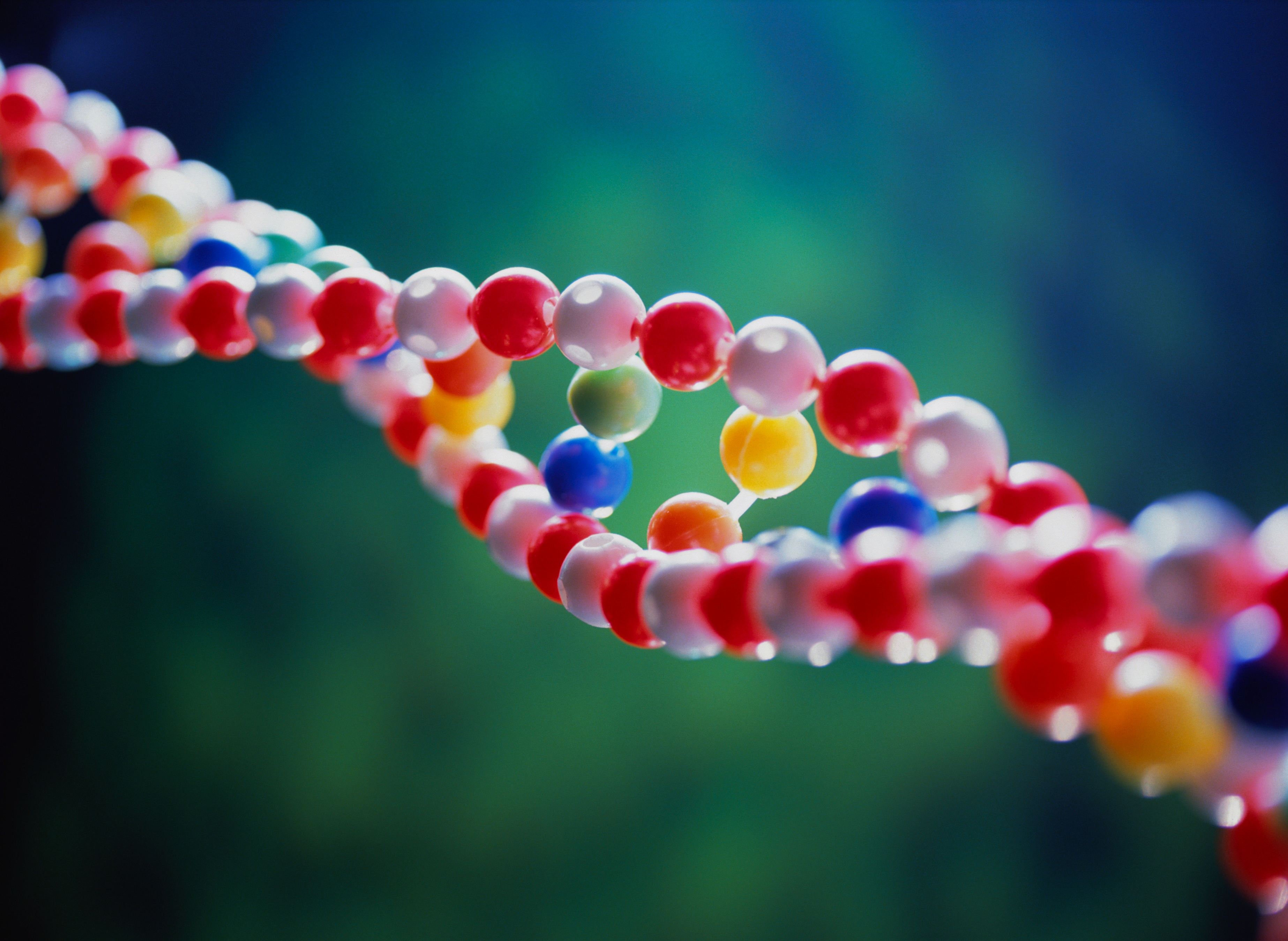
it is very small and very complicated
it's in everything
it serves as the blueprint for traits of all living things
because we eat it every day for energy
adenine, thymine, cytoplasm, and guanine
adenine, thymine cytosine, and guanine
adenine, thymine, cytosine, and gylcerol
adenine, thymine, cytosine, and glucose
cell membrane
vacuole
chloroplast
nucleus

What is a section of DNA that codes for a specific protein called?
RNA
replication
gene
protein

What does DNA stand for?
Deoxyribonucleic acid
Diribose nutride acidosis
Dinitro acid
Deoxynitrogenic acid

If 23% of the nitrogenous bases in a DNA molecule are guanine, what percentage of the nitrogenous bases will be adenine?
27%
23%
46%
54%
RNA contains glucose
RNA contains sucrose
RNA contains deoxyribose
RNA contains Ribose
RNA contains uracil in place of thymine
RNA contains uracil in place of adenine
RNA contains uracil in place of guanine
RNA contains uracil in place of cytosine
one
two

