
 Worksheets
Weight Training Methods Quiz #2
Total questions: 109
Worksheet time: 1hrs 22mins
It is estimated that up to _______calories are required to build one pound of muscle
1,500
2,500
3,500
4,500
The ultimate goals of ultimate nutritional intake during resistance training are (check all that apply)
maximize protein synthesis
minimize protein degradation
restore muscle fuel stores
maintain euhydration
During fasting or in the absence of nutritional intake after resistance training, the muscle is in a state of negative nitrogen balance, indicating that:
Choose all that apply
Protein synthesis exceeds protein degradation
Protein degradation exceeds protein syntheis
the body is in an Anabolic state
the body is in a Catabolic state
Anabolic actions affect only the muscle fibers that were activated during the resistance exercise
True
False
Catabolic actions affect only the muscle fibers that were activated during the resistance exercise
True
False
Identify all of the functions of Insulin
Promotes glucose uptake by the tissue
Promotes amino acids uptake by the tissues
Promotes glycogen formation
Promotes protein synthesis
which hormone promotes glucose and amino acid uptake by the tissues, promotes glycogen formation and protein synthesis?
Growth Hormone
Testosterone
Insulin
IGF-1
which hormone is produced in the liver and stimulates the growth of most body tissues?
Growth Hormone
Testosterone
Insulin
IGF-1
which hormone has an anabolic and androgenic effect?
Growth Hormone
Testosterone
Insulin
IGF-1
which hormone is secreted from the anterior pituitary gland?
Growth Hormone
Testosterone
Insulin
IGF-1
Which of the following sources of proteins have a high biological value?
Peas
Beans
Nuts
Salmon
Which of the following sources of proteins have a low biological value?
Peas
Beans
Nuts
Salmon
Which of the following macronutrients is the major energy source during resistance exercise?
Protein
Fats
Carbohydrates
Which of the following macronutrients is required in order to maintain concentrations of circulating testosterone in the body?
Protein
Fats
Carbohydrates
Which of the following macronutrients is not considered a primary energy source?
Protein
Fats
Carbohydrates
This type of nutrient is needed in larger amounts and includes proteins, fats, and carbohydrates
Carbohydrate
Micronutrient
Mineral
Macronutrient
This macronutrient is a building block for the body's tissues
Carbohydrate
Fat
Protein
Vitamin
Nutrients that serve as energy and energy reserve. There are three types: Monounsaturated, saturated and Polyunsaturated.
Fat
Protein
Carbohydrates
Nutrients
Compounds that help to regulate body processes and act as catalysts in food metabolism
Fats
Vitamins
Minerals
Carbohydrates
Elements in food that regulate several of he body's chemical processes.
Minerals
Fats
Nutrients
Protein
A collection of chemical reactions that takes place in the body's cells. Determines the rate at which our bodies break down and use food for energy.
Calorie
Metabolism
Nutrition
Nutrient
One gram of carbohydrate has how many calories?
9
7
4
14
The RDA of protein is
55-75% of total calories
Less than 25% of total calories
0.5 grams per pound of body weight
More than 30grams
One gram of fat has how many calories?
9
7
4
14
The RDA of fat is
55-75% of total calories
Less than 25% of total calories
0.5 grams per pound of body weight
More than 30grams
One gram of alcohol has how many calories?
9
7
4
14
One pound of fat has how many calories?
3000
2500
500
3500
The RDA of Carbohydrates is
55-75% of total calories
Less than 25% of total calories
0.5 grams per pound of body weight
More than 30grams
The Recommended intake of fiber per day is
Less than 11 grams
Between 10-20 grams
0.5 grams per pound of body weight
More than 30grams
Vitamin D has many important functions, check all that apply.
Carries waste products out of the body
Most powerful regulator of cell growth
Reduces the risk of many cancers
Helps to regulate body temperature
Reduces the risk of arthritis and CHD
Water has many important functions, check all that apply.
Carries waste products out of the body
Most powerful regulator of cell growth
Reduces the risk of many cancers
Helps to regulate body temperature
Reduces the risk of arthritis and CHD
What can we do to decrease cancer causing Nitrates in our diet?
Eat more meat
Cook meat at temperatures greater than 300 degrees
Grill or broil your meats
Add acidic ingredients such as vinegar or lemon to your meats
The following are helpful strategies for lowering your percentage of body fat. Check all that apply.
Do not eat breakfast
Instead of 3 big meals eat 5-6 smaller meals
Eat a small breakfast, a moderate lunch and a big dinner
Reduce caloric intake by 300-500 calories
Weight train at least 3 times per week
The following are functions of fat, check all that apply.
Part of all cell membranes
Building, repairing and maintaining tissues
Main energy source
Aids in digestion
Important in maintaining continuous blood glucose levels
The following are functions of Protein, check all that apply.
Part of all cell membranes
Building, repairing and maintaining tissues
Main energy source
Aids in digestion
Important in maintaining continuous blood glucose levels
The following are functions of Carbohydrates, check all that apply.
Part of all cell membranes
Building, repairing and maintaining tissues
Main energy source
Aids in digestion
Important in maintaining continuous blood glucose levels
High Protein/High Fat/Low Carbohydrate diets maybe detrimental to your health because these diets. Check all that apply.
Help you lose weight
Cause chronic inflammation
Increase the risk of Coronary Heart Disease
Associated with greater incidence of cancer and type II diabetes
What is the problem with dieting alone (in the absence of weight training)?
It's boring
You may lose upwards of 25% muscle mass
It will stimulate your metabolism
It will expedite your weight loss
What is the importance of weight training as it relates to weight loss?
It increases Resting Metabolic Rate
It expedites your weight loss
Increases your muscle mass
All of the above
What Macronutrients seem to be most important for Hypertrophy? Check all that apply
Fats
Carbohydrates
Protein
Vitamins

Leg Abductor
Gluteus Medius and Tensor Fasciae Latae
Gluteus Maximus
Biceps Femoris

Arm Flexor
Hamstrings
Triceps
Anterior Deltoid
Posterior Deltoid

Knee Extensor
Rhomboids
Quadriceps
Hamstrings
Teres Major

Hip Extensor
Gluteus Medius
Gluteus Maximus
Trapezius
Piriformis

Retractor of the scapula
Upper Trapezus
Posterior Deltoid
Rhomboids
Gastrocnemius

External Rotation of the Humerus
Lower Trapezius & Serratus Anterior
Anterior Deltoid & Biceps
Gluteus Medius & T.F.L.
Infraspinatus & Teres Minor

Horizontal Abduction of the Humerus
Anterior Deltoid
Posterior Deltoid
Middle Deltoid
Pectoralis Minor

Plantar Flexion
Gastrocnemius
Anterior Tibialis
Illiopsoas
Teres Major
Dorsiflexion
Anterior deltoid
Posterior Tibialis
Anterior Tibialis
Soleus

Elbow Extensor
Biceps
Rhomboids
Triceps
Deltoid

Horizontal Adduction of the humerus
Posterior Deltoid
Pectoralis Major
Triceps
Gastrocnemius

Hip Flexion
Glueus Maximus
Hamstrings
Illiopsoas
Semitendinosus
Supination
position of the forearm with the palm down
position of the forearm with the palm up
movement that increases the angle between two bones
Movement that decreases the angle between two bones
Pronation
Position of the forearm with the palm down
Position of the forearm with the palm up
movement of a body part towards the mid line of the body
moving the sole of the foot inward

Abduction
Movement of a body part towards the mid line of the body
Movement of a body part anteriorly
Movement of a body part posteriorly
Movement of a body part away from the mid line of the body

Inversion
Movement of the plantar surface of the foot distally
Movement of a join where the bones are closer together
Movement of the sole of the foot inward
Movement of the sole of the foot outward

Eversion
Movement of the sole of the foot inward
Movement of the sole of the foot outward
Movement of the plantar surface of the foot distally
Moving the anterior part of the foot closer to the tibia

Flexion
Movement of a body part away from the midline of the body
Movement of a body part towards the midline of the body
Movement of a joint where the bones are closer together
Movement of a joint that increases the angle between two bones
Which type of training requires muscles to resist a constant weight over a range of motion, causing a change to the length of the muscle?
Isotonic training
Isokinetic training
Suspension training
Resistance band training
Which of the following are benefits of suspension training?
Ability to use body weight in multiple angles
Increased abdominal muscle activation
Good for increasing strength with heavy resistance
Variety of exercises
The following statements are true of resistance band training. Choose all that apply
you get maximal resistance at the beginning of the movement
You get maximal resistance at the end of the movement
You get minimal resistance at the beginning of the movement
You get minimal resistance at the end of the movement
Why is controlling the speed of movement important during strength training.
Consistent application of force
More total muscle force produce
More fiber activation
Less potential for injury
Which of the following is NOT a general recommendation for strength training?
Strength train at least two days per week
Perform only single joint exercises
Control the speed of movement
Work out all major muscle groups
Fill in the blank: For strength training, the recommended maximum repetition is (a) per set.
Which training goal requires the shortest rest period between sets?
Strength
Power (single-effort event)
Hypertrophy
Muscular endurance
Which of the following are advantages of using free weights over resistance training machines?
More functional – learning curve
Works more muscles
Safer
Less expensive
What is the correct position for your knees during a squat, as shown in the images?
Knees should extend past the toes
Knees should stay behind the toes
Knees should be locked
Knees should touch each other
What are two common mistakes shown in the images when performing bodyweight exercises?
Arching the back excessively
Keeping the core tight
Letting the hips drop or rise too much
Maintaining a straight line from shoulders to feet
In what year were the ancient Olympics held?
756 B.C.
766 B.C.
776 B.C.
786 B.C.
Who founded the first YMCA and what was its significance by 1860?
George Barker Windship; invented weightlifting devices
Alan Calvert; promoted adjustable barbells
Eugen Sandow; inspired bodybuilding competitions
George Williams; emphasized exercise and physical fitness
When was the first Modern Olympics held?
1796
1896
1996
2006
When was women's weight lifting added to the Olympic Program?
2000
2010
2020
There is no women's weight lifting in the Olympic Games
Harold Zinkin invented the Universal Gym Machine in the late (a)
How did the Nautilus fitness machine, invented by Arthur Jones, changed gym training.
Moved focus from free-weights to machine based
Focused on free-weights
Variable resistance cam to match body's natural strength curve
None of the above
Who is credited with changing the image of fitness centers from dungeons to pleasant multipurpose training facilities?
Victor Tanny
Jack LaLanne
Joe Gold
Arnold Schwarzenegger
What impact did the documentary 'Pumping Iron' have on the perception of weight training in America?
Normalized body building. No longer freakish
popularized weight training
Golden age of body building
None of the above
What are the four reciprocating curves found in the sagittal plane of the spine?
Cervical, Thoracic, Lumbar, Sacral
Cervical, Thoracic, Pelvic, Sacral
Cervical, Lumbar, Sacral, Coccyx
Thoracic, Lumbar, Sacral, Coccyx
Abnormal curvature of the spine, resulting in a hunchbacked appearance
Lordosis
Scoliosis
Kyphosis
Pytosis
An abnormal lateral curvature of the spine
Lordosis
Kyphosis
Scoliosis
Kinosis
Which muscle compresses your abdominal contents?
(a)
The coach wants you to rotate your trunk and do side bending exercises. Which pair of muscles allows you to accomplish this exercise?
internal and external obliques
transversus abdominis and rectus abdominis
serratus anterior and trapezius
transversus abdominis and rhomboids
Which muscle is active when you do "crunches" for your 6-pack, and also flexes the ribs and stabilizes the pelvis?
Transversus abdominis
Internal Obliques
rectus abdominis
External Obliques
Which exercise involves both the internal and external obliques?
Jack Knife
Bicycle Crunches
Bird Dog
Plank
What are the main functions of the spine as described in the lesson?
Protecting the spinal cord and nerve roots
Providing weight bearing, transmission of forces, and motion
Maximizing joint, ligament, and muscle function
All of the above
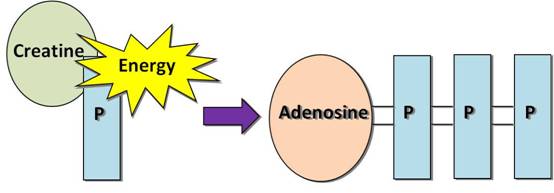
increases phosphocreatine in muscles
increased energy
enhance ATP utilization
contributes to buffering of acidosis
creatine
arginine
ergogenic aids
nutritional supplements
removal and reintroduction of the athletes own blood to increase red blood cells
steroids
marijuana
blood doping
illegal drugs
The ergogenic effects of caffeine are: (check all that apply)
Increase in fat mobilization
decreased perceived exertion
Muscle growth
muscle glycogen sparing
What type of ergogenic aid is being described?
These are a group of synthetic hormones which resemble the male hormone testosterone and are taken to promote protein synthesis and muscle growth. Available in tablet, capsule, solution (injection) and cream form.
Anabolic Steroids
Human Growth Hormone
EPO
Blood Doping
Which ergogenic aid is known for increasing oxygen delivery to muscles by stimulating red blood cell production?
Anabolic Steroids
Human Growth Hormone
EPO
Blood Doping
What does an increased red blood cell do?
you have more blood
you have less chance to die
improves your ability to carry oxygen
Which of the following have been proven to be ergogenic in humans? select all that apply
DHEA
Androstenedione
Clenbuterol
Creatine
Caffeine

is called?


What takes place in the Mitochondria?
Anaerobic Respiration
ATP_PC SYtem
Aerobic Respiration
Nothing

What is the biproduct of anaerobic glicolysis?
Acetyl coenzyme
Lactate
Oxygen
Glucose
Which of the following are psychological effects of anabolic steroid use?
Increased aggressiveness
Decreased sex drive
Gynecomastia
Testicle shrinking
Androstenedione supplementation at high dosages can lead to increased levels of (a) , which may result in gynecomastia and possibly certain cancers.
Which of the following supplements was banned by the FDA in 2004 due to reported adverse effects including death, heart attack, and stroke?
Creatine
Beta-Alanine
Ephedrine (Ma Huang)
Caffeine
Which of the following statements about creatine supplementation is/are correct?
Loading dose is 20-25 grams daily for five days.
Maintenance dose is 2 grams per day.
Creatine supplementation is recommended for aerobic endurance sport competition.
Consuming creatine with a glucose-containing drink increases uptake and storage in skeletal muscle.
Which of the following is true regarding caffeine and its use in sports?
Caffeine is banned by the NCAA at urine concentrations higher than 15 μg/mL.
The ergogenic effect of caffeine was sound to last even after 10 hours
Performance improvements are greater when caffeine is ingested in tablet form.
Taking more than 5 mg/kg of caffeine provides greater benefits for exercise performance.
Blood doping enhances athletic performance by increasing the number of (a) blood cells.
What is the primary function of erythropoietin (EPO) in the body?
Increase muscle mass
Stimulate red blood cell production
Reduce fatigue
Enhance bone strength
Athletes should consume ___grams of protein per pound of body weight
.5
.6
.7
Athletes should not worry about consuming protein
Athletes should consume ___grams of carbohydrate per pound of body weight
1
2
3
4

