wayground logo

Free Printable Worksheets

Font size

S
M
L
XL
Worksheets

Review for Test Friday

Total questions: 63

Worksheet time: 3hrs 50mins

Name
Class
Date
1.

The little grey mouse that lived in my wall prospered for many days on nibbles of my lunch. I’d pack a meal before bed and, while I slept, he would take small bites of my lunch, which I left on the counter. He’d take a cracker crumble here, and a bread crumb there, but he wouldn’t take too much and he’d always clean up after himself. Things were going quite well for him and I didn’t even know he existed, until he got sloppy. One night while I slept, he ate all of my chips and left behind a big mess. When I awoke to this sight, I knew what had happened to my chips. So the next night when he returned for another snack, he found a nice, delicious piece of cheese… lightly balanced on a mouse trap. Now I don’t have to share my chips anymore.

a)

The mouse lives a happy life in the shadows, until he gets too bold.

b)

Clean up your messes.

c)

The mouse should move to a new place with many friends.

d)

Believe in yourself.

e)

Don't be greedy.

2.

Even though they were sisters, Suzie and June were nothing alike. If Suzie wanted to jump rope, June wanted to play hopscotch. If June wanted to watch soap operas, Suzie wanted to watch talk shows. Tensions rose to the point that the girls could no longer stand one another’s company. It seemed that they had nothing in common, until the day that progress reports came out. While riding the bus home from school, the girls—startled by how upset the other looked—realized that they were both failing a subject. Suzie was failing math and June was failing reading. Since both girls wanted to pass their classes, they got to talking and agreed to help one another. So everyday after school for the next few weeks, Suzie tutored June in reading and then June tutored Suzie in math. By the time report cards came were distributed, Suzie and June were passing all of their classes. The girls were delighted, but their mother was happiest of all. Not just because her daughters passed their classes, but because they had learned to be good sisters.

a)

It's better to work together.

b)

Friendship is everything.

c)

Two heads are better than one.

d)

June and Suzie help one another out by learning to work together.

e)

Everyone should just get along.

3.

Theme is... Choose ALL that apply

a)

a topic

b)

a debatable opinion

c)

one word answer

d)

the truth or central idea a story reveals about life

e)

a life lesson, moral, message

4.
a)
When you receive a gift you don't like, you should lie and say you like it.
b)
When asked for gift ideas, always give more than one idea.
c)
It's important to be gracious when someone does something for you.
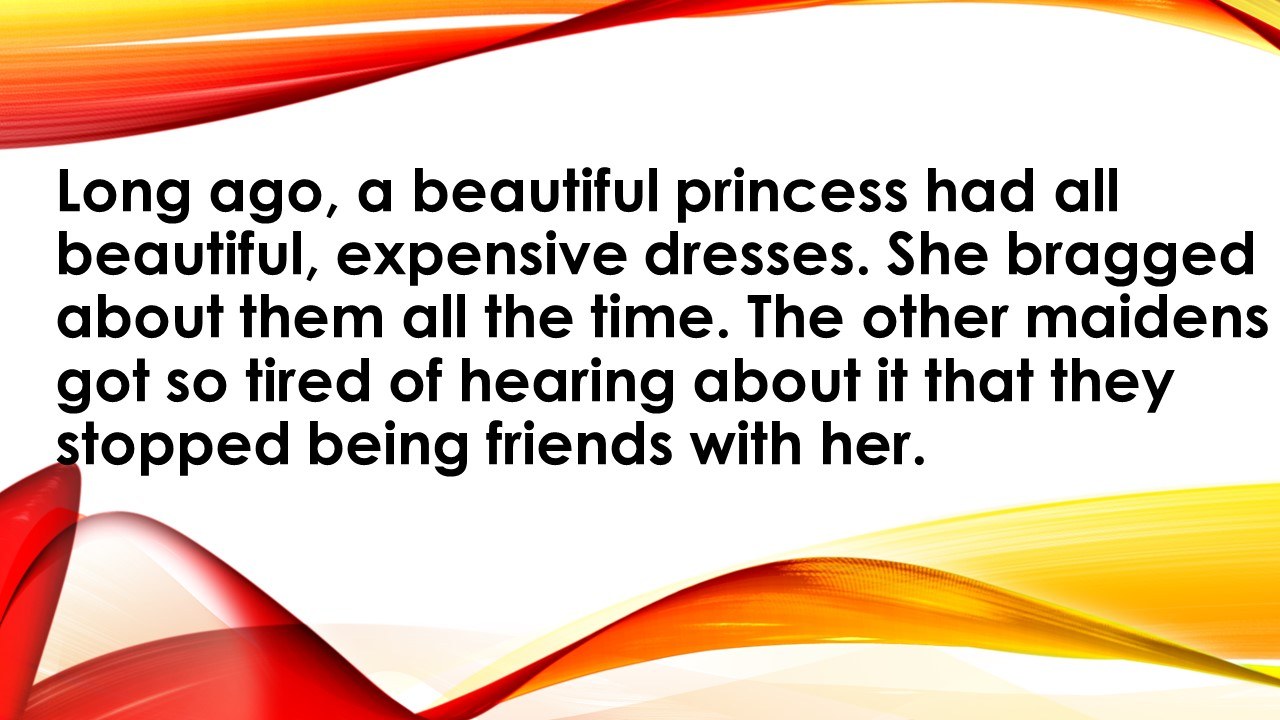
5.
What is the theme of this story?  
a)
Eat your vegetables.
b)
Don't brag. Be modest. 
c)
Don't talk to strangers. 
d)
Necessity is the mother of invention.
6.

What is the theme of this story?

a)

Slowly but surely wins the race.

b)

Don't be lazy.

c)

We are stronger together than we are apart.

d)

If you try to go on your own, you will get eaten by a big fish.

7.
a)
Be tolerant to others and their views, even if you don't agree.
b)
Always agree with your parents.
c)
Don't keep your feelings bottled inside too long without saying something.
d)
It's important to be honest. 
8.
a)
Kids should not ask for things their parents cannot afford.
b)
Appreciate what you have.
c)
Kids should save their own money if they want something.
d)
Kids shouldn't interrupt parents when they are talking privately. 
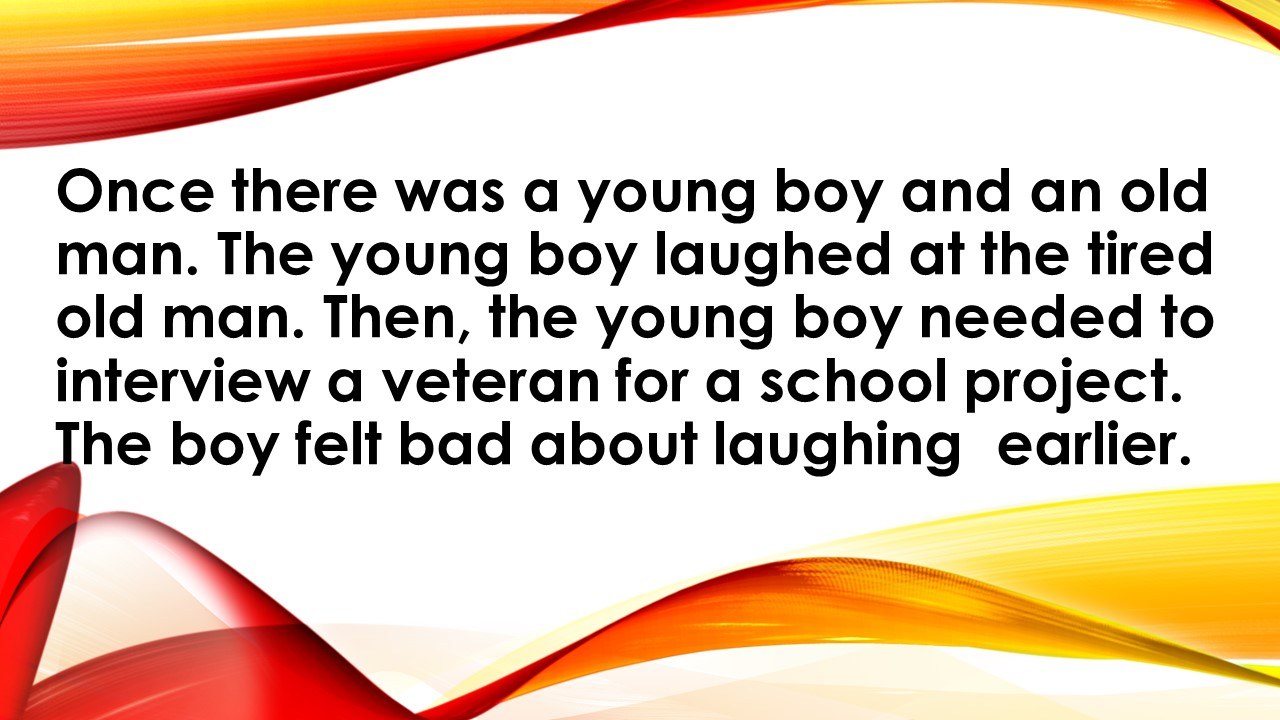
9.
What is the theme of this story? 
a)
Necessity is the mother of invention.
b)
Don't steal.
c)
Respect your elders.
d)
Slowly but surely wins the race.
10.
a)
Bragging is not an attractive trait to have.
b)
Don't put up with braggers.
c)
Be kind to everyone, even if they brag too much.
d)
Listen to advice from adults.
11.

What is the theme of this story?

a)

Don't be lazy.

b)

Turtles are faster than rabbits.

c)

Our friends are always there for us.

d)

It is better to take your time and do it right then to rush and fail.

12.
a)
There are more important things in life than being popular.
b)
Popularity will make you inconsiderate of other's feelings.
c)
Cliques shouldn't be allowed.
d)
Friends can sometimes let one another down.
13.
Which of these things is not related to the "theme" in a story?
a)
how a character is feeling
b)
a "life lesson" the main character learns
c)
a big idea that people from any culture or any place can understand
d)
the moral of the story
14.
a)
When putting something together, always have two people, one to read the directions, and one to do the work.
b)
Develop a plan before starting a project.
c)
Always read the directions first.
d)
Purchase things that are already assembled whenever possible.
15.
a)
Cheating can have negative consequences. 
b)
Follow directions given by a coach.
c)
Cross-country is a difficult sport for some kids.
d)
Don't let others influence you into making bad choices.
16.

Kyle liked Lucy more than any other girl in the school, but he had an odd way of showing it. When she walked ahead of him in line, he kicked at her shoe. When she passed him on the school yard, he called her “lame Lucy.” He even wrote a mean word on her homework during the bus ride to school. But what puzzled Lucy the most was receiving an invitation to Kyle’s birthday party. Figuring that he was just planning a mean trick on her, Lucy decided not to go, and while Kyle eagerly awaited Lucy’s arrival, Lucy talked on the phone to Jacob. When Kyle finally realized that Lucy was not coming to his party, he was crushed.

a)

Home is where the heart is.

b)

Kyle likes Lucy but picks on her instead of expressing himself.

c)

If you like someone, you should tell them.

d)

Share your true feelings.

e)

Lucy should tell Kyle to leave her alone.

17.
a)
eating too much candy can make you sick
b)
Think things through when deciding between two activities.
c)
Selfishness can have negative consequences
d)
Don't expect others to give you something just because you made a bad choice
18.
In a piece of narrative text, what is the "theme"?
a)
What the story is about
b)
The topic of the text
c)
A message the author is trying to get across to the reader
d)
Where and when the story happens
19.
What is the theme of this story? 
a)
Don't steal. 
b)
Don't judge others. You don't know what they are capable of. 
c)
Being beautiful is the most important thing.
d)
Swans are prettier than ducks.
20.

What is the theme of this story?

a)

Respect your elders.

b)

Don't steal.

c)

Don't be lazy.

d)

Help others because what goes around comes around.

21.
Which is an example of a simile?
a)
His room was a hurricane of a mess.
b)
His room looked as if a hurricane came  through.
c)
A hurricane! AHHH!
d)
The hurricane screamed through the town. 
22.
What is a metaphor?
a)
A comparison using "like" or "as"
b)
A comparison without using "like" or "as"
c)
A figure of speech in which the word imitates it's meaning.
d)
An extreme exaggeration
23.
Which of the following in an example of onomatopoeia?
a)
Boom!
b)
No!
c)
Yes!
d)
Go!
24.
What is the definition of hyperbole?
a)
When a group of of words all start with the same sound.
b)
When words sound like what they mean.
c)
An extreme exaggeration 
d)
A comparison 
25.
Which of the following is an example of personification?
a)
You are as a beautiful as a flower.
b)
The trees danced in the wind.
c)
I waited in line for 10 years!
d)
He is an encyclopedia of knowledge. 
26.
"As straight as an arrow" is an example of what?
a)
simile
b)
alliteration
c)
metaphor
d)
onomatopoeia
27.
What is this is an example of: The clock on the wall laughed at me as I tried to finish my test before class ended.
a)
personification
b)
metaphor
c)
simile
d)
hyperbole
28.
What's the meaning of this simile?
"My mom can be as fiery as a volcano when I don't do my chores on time."
a)
Her hair is red.
b)
She talks really loudly.
c)
She gets really angry. 
d)
She spits when she talks. 
29.
What is personification?
a)
The same beginning sound repeated
b)
Giving human characteristics to non-human things
c)
A word that is a sound
d)
An exaggeration
30.
Why do people use figurative language?
a)
To make their writing interesting and visual, or to emphasis an idea and make a point.
b)
To be grammatically correct.
c)
To structure their writing into paragraphs.
d)
Because Beyonce uses it in her songs. 
31.
"The assignment was a breeze!" is an example of a(n)...
a)
Metaphor 
b)
Simile 
c)
Alliteration
d)
Onomatopoeia 
32.
What is a simile? 
a)
Comparing two things without  using  like and as
b)
Comparing two things in a text
c)
Comparing two things using  like and as
d)
None of the above
33.
"He was as cool as a cucumber." is an example of a(n)
a)
Simile
b)
Alliteration
c)
Metaphor
d)
None of the above
34.
"The stars will cry." 
The kind of figurative language used here is _______ 
a)
Metaphor
b)
Personification
c)
Alliteration
d)
Onomatopoeia
35.
An extreme exaggeration used for effect
a)
metaphor
b)
personification
c)
hyperbole
d)
simile
36.
"The last day of school is like a day at the beach - easy and relaxing." The kind of figurative language used here is _______ 
a)
personification
b)
hyperbole
c)
metaphor
d)
simile
37.
I am so hungry, I could eat a horse right now. 
a)
hyperbole
b)
personification
c)
onomatopoeia
d)
simile
38.
He is as quiet as a mouse. 
a)
onomatopoeia
b)
metaphor
c)
simile
d)
hyperbole
39.
The sun stretched its golden arms across the land.
a)
simile
b)
metaphor
c)
hyperbole
d)
personification
40.
I waited a million years for my ride to get to the house.
a)
alliteration
b)
repetition
c)
idiom
d)
hyperbole
41.
I'm so tired I could sleep for days!
a)
simile
b)
metaphor
c)
hyperbole
d)
alliteration
42.
I can smell pizza from a mile away.
a)
simile
b)
metaphor
c)
hyperbole
d)
personification
43.
1-2 words the story is about
a)
Theme
b)
Topic
44.
1-2 sentences containing the lesson of the story
a)
Theme
b)
Topic
45.
Dogs
a)
Theme
b)
Topic
46.
Dogs are man's best friend!
a)
Theme
b)
Topic
47.
A _________ theme is expressed directly in the text.
a)
Stated
b)
Implied
48.
You infer this theme from the characters' actions, experiences, and from story events.
a)
Stated
b)
Implied
49.
These three things are used to help determine theme..
a)
Characters, Setting, Plot
b)
Language, Dialogue, Grammar
50.
Crime does not pay!
a)
Theme
b)
Topic
51.
The ______ of a text is its central message or lesson learned by the character.
a)
Theme
b)
Topic
52.
Making an educated guess based on information in the text
a)
Theme
b)
Inference
53.

Which sentence is most likely the topic sentence of the paragraph?

The best trip my family ever took was to New Orleans, Louisiana. We drove there in two days. I didn't think it would be very interesting, but I was wrong. We saw the Mississippi River, rode a horse carriage in the French Quarter, and visited a cemetery where everyone was buried above the ground. I liked the food best, especially the New Orleans doughnuts called beignets.

a)

I didn't think it would be very interesting, but I was wrong.

b)

We drove there in two days.

c)

The best trip my family ever took was to New Orleans, Louisiana.

d)

I liked the food best, especially the New Orleans doughnuts called beignets.

54.

The central idea is...

a)

the focused idea of the text.

b)

a detail from the text.

c)

the first sentence of a paragraph.

d)

a quote you provide from the text.

55.

How is central idea different from theme?

a)

Theme incudes specific names and details from the text.

b)

Central idea includes specific names and details from the text.

c)

The central idea tells the lesson or moral of the text.

d)

The theme is the main topic or focus of the text.

56.

True or False: The central idea is directly tied to the author's main point or argument.

a)

False

b)

True

57.

Being able to identify the central idea of a text shows...

a)

that you can cite evidence from the text.

b)

that you know how to write.

c)

that you understand the text.

d)

that you like what you are reading.

58.

Why are we working on central idea in high school?

a)

The central idea is harder to identify in complex texts.

b)

Identifying the central idea is a new standard in high school.

c)

The central idea is very easy and it is ridiculous that we are still learning about it.

d)

Analyzing the central idea involves more than identifying it.

59.

In complex texts, the central idea...

a)

is stated and can be quoted directly from the text.

b)

is implied, not stated, meaning you must rely on clues in the text to find it.

c)

is not directly said by the author, meaning you must draw conclusions.

d)

is said in the title, and therefore, copying the title is a great way to find the central idea.

60.

Which of the following is NOT a type of specific detail that could support the central idea?

a)

points made

b)

events

c)

conversations

d)

citations

61.

True or false: You do not have to read all of the supporting details to determine the central idea.

a)

True

b)

False

62.

True or False: One supporting detail could change what your central idea says.

a)

True

b)

False

63.

How ready do you feel to start determining and analyzing the central idea?

a)

Very Ready

b)

Somewhat ready

c)

I need more information

d)

What are we talking about?