
 Worksheets
DNA Structure/ Hisotry
Total questions: 23
Worksheet time: 13mins
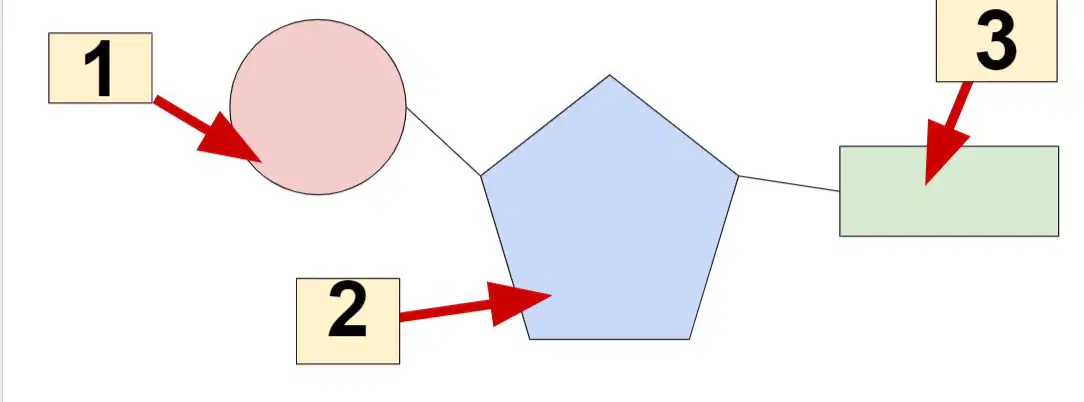
🧬 Dive into the DNA world! A nucleotide, the building block of DNA, consists of 3 essential parts: a phosphate, sugar, and ____? Can you guess the missing piece? 🧐
phosphate
nitrogen base
hydrogen bond
nucleotide
In a DNA molecule the bases are located _________?
on the inside
on the outside
Tightly bundled up DNA is called a ______
gene
double helix
chromosome
nucleus
Which complementary base pairing is INCORRECT in DNA?
C-G, T-A
C-G, T-T
T-A , T-A
A-T, G-C
The 4 nitrogen bases of a DNA molecule are thymine, adenine, cytosine, and _______?
phosphate
deoxyribose
nitrogen base
sugar
guanine
Where's the secret code of life, DNA, hiding in a cell?
cell membrane
lysosome
ribosome
nucleus
What base pairs with Thymine (T) ?
A
G
C
T
Ready for a DNA challenge? Which base is the perfect match for Guanine (G)? Think of it as a molecular dance partner!
A
C
G
T
Guess what? Most of our genes are like universal codes, identical in every one of us. But, the tiny differences in a handful of genes make each of us unique. What do you think causes these slight variations in one particular physical feature?
a small difference in their chromosomes
a small difference in their sequence of DNA bases
a large difference in their DNA bases
a large difference in their chromosomes
What is the complimentary sequence of the following strand: GAT - CAG
TGA - CAT
GAC - ATG
CTA - GTC
CGA - CTA
In a DNA molecule, what joins the nitrogen bases together ?
phosphate bonds
nucleotides
hydrogen bonds
covalent bonds
peptide bonds
Guess what? A gene is not about fashion but science! What exactly is it?
a section of DNA that codes for a trait
the building blocks of DNA
a section of DNA
Pants or jeans
What is Chargaff's contribution to the discovery of DNA?
took clear X-ray crystallography pictures of DNA that showed DNA is a double helix
obtain picture of DNA fibers through X-ray diffraction
discovered base pairing (A pairs with T and C pairs with G)
figured out the doble helix structure of the DNA
What is Franklin's contribution to the discovery of DNA ?
took clear X-ray crystallography pictures of DNA that showed DNA is a double helix
obtain picture of DNA fibers through X-ray diffraction
discovered base pairing (A pairs with T and C pairs with G)
figured out the doble helix structure of the DNA
Guess what? The structure of DNA looks like a twisty ladder! What's this shape called?
triple helix
double helix
helix
braided spiral
Ready to dive into the world of genetics? Which dynamic duo forms a double hydrogen bond, making our DNA super special?
A and T
C and G
Which dynamic duo forms a triple hydrogen bond, making our DNA super special?
A and T
C and G

Let's see if you can identify the trio that makes up a nucleotide!
thymine, adenine, sugar
phosphate, adenine, nitrogen base
phosphate, hydrogen bond, nitrogen base
phosphate, sugar, nitrogen base
Using the labels, identify the parts of a DNA molecule.
Base pair
Nitrogen Base
Nucleotide
Hydrogen bond
Phosphate
Based on Pre-Lab: Why are strawberries used for this extraction lab instead of human cells?
They are softer and easier to smash
They are octoploid, meaning they have 8 copies of their DNA per cell
They do not have cell membranes
Their DNA is naturally a bright red color
From Pre-lab: When the DNA "precipitates" after adding alcohol, what will it look like in the cup?
Clear, invisible liquid
A bright red liquid
A white, cloudy solid
Hard, black crystals
Match each "Chemical Tool' to the specific job it performs during the lab.
Detergent
Causes the cells to "pop open" (lyse)
Salt
Separates DNA from its proteins
Alcohol
Causes DNA to precipitate (become visible)
Which of the following is NOT a reason scientists study and extract DNA mentioned in your pre-lab?
Developing new medicines
Solving crimes using forensic evidence
Reconstructing evolutionary histories
Helping plants grow larger leaves

