
 Worksheets
SMARTs Refresher
Total questions: 20
Worksheet time: 12mins

AI in education means modernizing the role of educator and learner so that they work collaboratively with machines to complete tasks and create new content.
True
False
Debatable

An important thing to remember when it comes to artificial and human intelligence is that what we take for granted as humans are fundamental to our human intelligence in an AI enhanced world, and they're much easier to automate.
True
False
Debatable

It is not important to know the difference between opinions and facts when determining what counts as evidence.
True
False
Debatable
Evidence is the same thing as proof.
True
False
Debatable
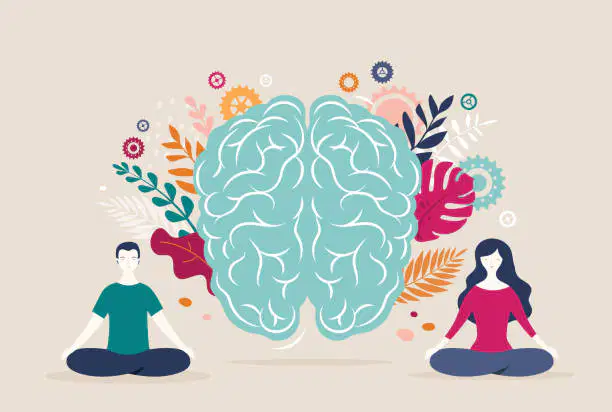
Our emotional wellbeing is tied to other aspects of our health like our physical and spiritual health.
True
False
Debatable
Which of the following is not required when we want to offer evidence to prove a knowledge claim?
Testing
Fabrication
Verification
Examination
What are the four stages involved in SMART about Thinking?
Monitor, evaluate, plan, reevaluate
Skim, read, reflect, evaluate
Preview, review, regulate, evaluate
Plan, monitor, reflect, evaluate
Cognition is ....
Thinking about thinking
Knowledge/skill to carry out a task
Using a strategy to complete a task
Simple knowledge
Not giving your best effort on a group task where individual effort can’t be measured is ...
Groupthink
Aggression
Social loafing
Social interference
What is perceived self-efficacy?
Belief in one's ability to succeed in a specific task or situation
Belief in one's intelligence level
Belief in one's physical strength and fitness
None of the above
Analysing contextual case study in pairs is an example of ....
Smart about Situation
Smart about Knowledge
Smart about People
All of the above
What is the ability to sense other people's emotions and imagine what someone else might be thinking or feeling called?
Self-awareness
Sympathy
Empathy
Self-regulation
What is academic intelligence (SMART about Knowledge)?
Ability to think critically and solve complex problems
Ability to memorize information quickly and accurately
Ability to communicate effectively
None of the above
Which of the following is an example of academic intelligence (Smart about Knowledge) in practice at Charterhouse Malaysia ?
ILP & IPQ
SCI
Fortnight TMA
Design Thinking
Scrutiny of/suitability of information sources is an example of ...
Smart about Knowledge
Smart about Understanding
Smart about Situation
Smart about Thinking
Assigning students to self/peer assess tasks and providing success criteria to form a constructive feedback is an example of ...
Smart about Knowledge
Smart about Understanding
Smart about Thinking
Smart about Myself
Smart about People
Creating an empathy map of your students will help you consider what they are likely to think, feel and do while they progress through your unit. This is an example of ....
Smart about People
Smart about Feelings
Smart about Thinking
Smart about Myself
Smart about Thinking
Reflecting and scrutinizing life decisions to ensure there is no confirmation bias (seeking or interpreting evidence to support our existing beliefs) is an example of ....
Smart about Understanding
Smart about Myself
Smart about Feelings
Smart about People
This smart relates to knowledge about the world Knowledge is not the same as information and knowledge is only valuable if it is connected.
Smart about Knowledge
This Smart demands accurate estimations of one’s own knowledge, understanding, emotions and motivations,
Smart about Myself
The ability to interpret and manage our own mental activity. Metacognition. Are we aware of our strengths and areas for development? Do we understand how to learn? How do we know when we have achieved our goals?
Smart about Thinking
This smart relates to social interaction. Social interaction is the foundation for individual thought and of communal intelligence. We may have social connections, but can we know how to work well as a team, how to be emotionally intelligent, and how to get the best out of people?
Smart about People
Involves us in learning to recognise what good evidence is and how to make judgements based on that evidence. We may feel strongly about something, but can we scrutinize the quality and integrity of the sources that lead us there?
Smart about Understanding
Meta-knowing Intelligence
Smart about Understanding
Meta-cognitive Intelligence
Smart about Thinking
Meta subjective Intelligence
Smart about Feelings
Metacontextual Intelligence
Smart about Situations
Social Intelligence
Smart about People

