
 Worksheets
Dr. Morton Quiz 2
Total questions: 221
Worksheet time: 11hrs 3mins
Which of the following in an expected error pattern?
Backing of alveolars to velars
fricatives replacing stops
glottal replacement of oral consonants
Final consonant deletion
True or False According to Dodd, if we see consistent production of one type of atypical error pattern, this is considered a delay
True
False
According to Dodd, pproximately 81-______% of all phonologically based speech sound disorders cases faill into the delay category.
89
95
82
92
True or False: /hag/ for /dog/ is an expected error pattern
True
False
True or False: /gat/ for /dat/ is an atypical error.
True
False
True of False: /at/ for /kat/ is an atpical error.
True
False
True or false: /tu/ for /tudeI/ (today) is a typical error.
True
False
True or False: "choe" for "toes" is a typical error
True
False
True or False: atypical errors almost always occur without typical errors.
True
False
True or False: Articulation has to do with the motoric production aspects of speech sounds. This is the placing, coordination, and timing of the articulators. With articulation, phonemes are produced.
True
False
True or False: Phonological disorders affect the function of speech sounds within a specific language system. They have to do with impaired comprehension and/or use of the sound system of a language and the rules that govern the sound combinations. Phonemes are affected.
True
False
True or False: Children with articulation disorders often have a restricted inventory of phonemes.
True
False
Which does NOT apply to the letter /p/
Bilabial
Stop
voiceless
fricative
Which does NOT apply to the letter /b/
Stop
Voiced
bilabial
affricate
Which does NOT apply to the letter /t/
Stop
Voiceless
bilabial
alveolar
Which does NOT apply to the letter /d/
Stop
Voiced
velar
alveolar
Which does NOT apply to the letter /k/
Stop
Voiceless
velar
alveolar
Which does NOT apply to the letter /g/
Stop
Voiceless
velar
liquid
Which does NOT apply to the letter /f/
labiodental
affricate
voiceless
fricative
Which does NOT apply to the letter /v/
labiodental
Stop
voiced
fricative

Which does NOT apply to theta
labiodental
dental
voiceless
fricative

Which does NOT apply?
Dental
Fricative
Affricate
voiced

Which doe NOT apply
fricative
labiodental
voiceless
alveopalatal
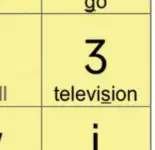
Which doe NOT apply
fricative
glottal
voiceless
alveopalatal
Which does not apply to /h/
fricative
velar
glottal
voiceless

Which does NOT apply
Velar
stop
glottal
voiceless

Which does NOT apply
voiceless
alveopalatal
affricate
alveolar

Which does NOT apply
Alveopalatal
palatal
voiced
affricate
Which does NOT apply to /s/
Voiceless
alveolar
fricative
dental
Which does NOT apply to /z/
Voiced
alveolar
fricative
dental
Which does NOT apply to /m/
Bilabial
voiced
nasal
liquid
Which does NOT apply to /n/
Labiodental
nasal
voiced
alveolar

Which does NOT apply
nasal
velar
alveolar
voiced
Which does not apply /l/
liquid
dental
alveolar
voiced
Which does not apply /r/
liquid
dental
alveolar
voiced
Which does NOT apply to /w/
bilabial
glide
voiced
glottal
Which does NOT apply to /j/
palatal
glide
voiced
velar
Fill in the blank ________: error patterns that normally developing children produce during a given time frame
natural phonological processes
atypical error patterns
normal phonological processes
typical error patterns
Fill in the blank ________: atypical errors are substitutions and syllable structure errors that are not generally found in normal phonological development.
natural phonological processes
atypical error patterns
abnormal phonological processes
atypical articulation processes
True or False: stressed and unstressed "er" as is further are elligable for clusters
True
False
True or False: Vowelization includes replacing a postvocalic /r/ with a vowel sound
True
False
/sta/ for /star/ is an example of
vowelization
final constant deletion
cluster reduction
fronting
Is /tudeI/ for /tuzdeI/ cluster reduction or final consonant deletion?
Cluster reduction
Final consonant deletion
What type of activity is this?
A child is stopping fricatives and affricates. You made cards with the words tun, sun, chest, and best. You have the cards in two piles. Pile one: tun and best. Pile two: sun, best. You say, "can you point to tun? Can you point to sun?" Then you have them say the words on the cards
Maximal pairs activity
minimal pairs activity
articulation pairs activity
phonological pairs activity
True or False: Theory provides facts
True
False
A ______ is a carefully thought-out explanation for observations of the natural world that has been constructed using the scientific method and which brings together many facts and hypotheses.
Hypothesis
Inquiry
Theory
Scientific Facts
True or False: Generatism is the belief that language is learned using a language acquisition device (a designed language learning mechanism).
True
False
Fill in the blank:
_____ is the belief that language is learned via domain-general learning from a number of sources.
Nativism
Generativism
Empiricism
learning theory
Select all that apply to Nativist
Children's language learning capacity is special and innate.
Language input is pretty bad for language learning because of the number of mistakes and revisions in everyday spoken language. Therefore, the language learning must have an innate capacity for language.
Even when the impoverished language of the ambient input is present, the language system is activated and kids still learn language.
Humans are attuned to detect patterns in language input.
True or False: Distinctive features are related to empiricism.
True
False
Which of the following applies to empiricists?
Children use the same systems that they use when learning any skills
Language-rich situations are meaningful, social ones
Humans are attuned to detect patterns in language input because:
a) humans want to receive and send messages (aka the input is meaningful)
b) attention is already focused on the input because of a.
Has to do with Distinctive features
What am I describing?
-Kids keep track of statistical regularities
-kids only pay attention to meaningful langauge
-You can filter out unnecessary parts of language
Empiricism
Nativism
What am I describing?
-Children use innate special systems that are used specifically for learning language. Children have a structure of language in mind already and with minimal exposure, it is activated.
-Children only need minimal language exposure to learn the phonology, morphology, and syntax of their language.
-For semantics (vocabulary) the amount and type of words that a child hears really matters.
Nativist
Empiricist
What am I describing?
-Childeren use the same systems that they use when learning any language skill.
-The parts of phonology, morphology, and syntax that children hear the most will be the parts that children learn the best.
-For semantics (vocabulary) the amount and the type of words that a child hears really matters.
Nativist
Empiricist
Fill in the blank: ______ is any property that separates a subset of elements from a group.
Distinctive feature
distinctive feature
sonorant
approximant
Which does not apply to Distinctive features?
the smallest, indivisible sound properties that establish phonemes
properties that distinguish among phonemes
property that a sound either has (+) or doesn't have (-)
It separates one tpe of phoneme from another type of phoneme.
All apply
Think about:
p and d
m and v
Which ones are closer together?
p and d
m and v
They are the same
Think about Distinctive features:
Which major class feature has open vocal tract which promotes voicing?
Sonorants
consonantals
Approximates
Coronal
Think about Distinctive features:
Which major class feature has sound produced with a high degree of constriction?
Sonorants
consonantals
Approximates
Coronal
Think about Distinctive features:
Which major class feature has sound produced with a low degree of constriction?
Anterior
consonantals
Approximates
Coronal
Nasal
Think about Distinctive features:
Which cavity feature has sound produced with the blade of the tongue raised from neutral position?
Anterior
lateral
lateral
Coronal
Nasal
Think about Distinctive features:
Which cavity feature has sound produced in the frontal region of the mouth with alveolar ridge being the posterior boarder (aka alveolar and forward)?
Anterior
lateral
high
low
Nasal
Think about Distinctive features:
Which cavity feature has sound produced with an open nasal passageway?
Anterior
lateral
high
low
Nasal
Think about Distinctive features:
Which cavity feature has sound produced with lowered rim portion of the tongue?
back
lateral
high
low
Nasal
Think about Distinctive features:
Which cavity feature has sound produced with high tongue position, some vowels as well as consonants?
back
lateral
high
low
Nasal
Think about Distinctive features:
Which cavity feature has sound produced with low tongue position, some vowels as well as consonants?
back
round
high
low
continuant
Think about Distinctive features:
Which cavity feature has sound produced with retracted tongue position, some vowels as well as consonants?
back
round
high
low
continuant
Think about Distinctive features:
Which cavity feature has sound produced with rounded lip position?
back
round
high
low
continuant
Think about Distinctive features:
Which manner feature has sound produced with "incessant" sounds produced without hindering the airstream?
delayed release
round
strident
low
continuant
Think about Distinctive features:
Which manner feature has sound produced by a slow release of a total obstruction within the oral cavity?
delayed release
round
strident
low
continuant
Think about Distinctive features:
Which source feature has sound produced with simultaneous vocal fold vibration?
delayed release
voiced
strident
low
continuant
Think about Distinctive features:
Which source feature has sound produced with simultaneous vocal fold vibration?
delayed release
voiced
strident
low
continuant
One idea related to ________ is taht perhaps speech error patterns are the result, substitutions, and/or omissions when children's knowledge of speech sound's distinctive features is incomplete
Generative phonology
learning theory
implicational universals
Which is NOT true regarding implicational universals?
It is part of generative phonology
If children have knowledge of the Distinctive features of affricates, it implies knowledge of fricatives, stops, liquids, and nasals
It describes sound properties in which on property is predictive of another
It is part of empiricism.
Which one applies to generative phonology
Children's errors may be the result of not knowing something about the distinctive features of the sounds in error
Some sounds imply knowledge of the Distinctive features of other sounds
If you target a sound that implies other sounds, you may activate the knowledge of the simpler sounds for free
all of the above
According to implicational universals, knowledge of affricates implies knowledge of ______
fricatives
stops
liquids
nasals
According to implicational universals, knowledge of fricatives implies knowledge of ______
fricatives
stops
liquids
nasals
According to implicational universals, knowledge of liquids implies knowledge of ______
fricatives
stops
liquids
nasals
Fill in the blank: According to ______ big change can only occur if the individual understands the rules and features that distinguish every phoneme that they learn from every other phoneme that they learn.
Learnability theory
Dynamic systems theory
True or False:
According to dynamic systems theory, for phonological interventions, you should present complex infult in treatment to enhance widespread generalization of learning across the phonological system, thereby improving treatment efficacy.
True
False
Select all that apply about how learnability theory is applied to generative phonology.
Children's knowledge of their phonological systems is limited in a way that significantly limits speech production in connected speech
To make therapy efficient, children must make large changes in their phonological system.
Speech sound acquisition is developmental
children are able to learn some sounds easier than others
Select all that apply to both nativists and empiricists
speech sounds are produced in distinct ways from each other
the position of the articulators needed for some sounds are harder to achieve than others
Speech sound acquisition is developmental
children are able to learn some sounds easier than others
True or False:
Empiricists believe that speech sound acquisition is developmental
True
False
Which of the following does NOT apply to empiricisms
Children are able to learn about some sounds easier than others
Learning about immediately more difficult sounds may make it easier for a child to produce a speech sound target
Children experience less frustration/more success when attempting to learn an easier sound (applies to parents too)
Once a child has activated a speech sound, it is adult like.
What is this the definition of?
Systems (like children) that exhibit internal states (like phonological knowledge) that evolve over time and how these systems interact with applied input.
Dynamic systems
Learnability Theory
Generative phonology
According to _______, big change occurs gradually and is based on the child's previous knowledge about targeted phonemes. What the child knows about a phoneme that she doesn't produce yet (in and adult-like manner) still helps her eventually produce it.
Learnability theory
Generative phonology
Dynamic systems theory
Rvechew and Bernhardt
Dynamic systems theory and Rvechew and Bernhardt
What is this the definition of?
Children know a small subste of phonemes which they know as well as adults. The child's system matures and eventually children can discriminate between the presence and absence of differentiating distinct features
Dynamic systems
Learnability Theory
learnabilility phonology
True or False Gierut et al. say that by targeting earlier acquired sounds, there is greater system-wide change (across-class generalization)
True
False
Which of the following is a key assumption for learnability theory?
Early on, the child's phonological system consists of a large subset of phononemes
The phonemes in the child's phonological system resembles the phonemes in other children.
Children start out with full access to adult phonological system (aka they than discriminate between the presence and absence of differentiating distinct features.
Children know a small subset of phonemes which they know as well as adults. The child's system matures and eventually the child can discriminate between the presence and absence of differentiating distinct features.
Select all that apply:
What are the take-aways from Rvachew & Nowak (2001) article
Percent accuracy of early targets /t, k, v/ production was greater than later target production
Children made paster progress through targets when early sounds were targeted
Children made paster progress through targets when later sounds were targeted
None of the above
True or False: According to the complexity approach, there is some evidence of generalization, whereas early-developing phoneme targeting does not have evidence of that.
True
False
True or False: According to the complexity approach & Storkel: If rapid completion of treatment steps in a longer number of sessions or learning of the treatment is the primary goal of treatment, then treatment of most-knowledge/early-acquired targets through the sentence level may be optimal.
True
False
True or False: According to the complexity approach & Storkel: If system-wide phonological change is the goal of treatment, then treatment of least-knowledge/late-acquired targets through a required set of treatment steps may be optimal.
True
False
If I was working on minimal contrast pairs with a client and I wanted to use the learnability theory, which two targets would I pick?
Best
Vest
Chest
Bean
If I was working on minimal contrast pairs with a client and I wanted to use the dynamic systems theory, which two targets would I pick?
Best
Vest
Chest
Bean
Children do not start off with an adult's inventory of speech sounds. As children add speech sounds to their inventory of speech sounds, children produce errors. These errors can be:
Articulation-based errors
Phonologically based errors
Motoric errors: timing, placement coordination
Function: how sounds can be assembled
All of the above
True or False: If we are working with children with phonology-based errors, we should prioritize how their position their articulators—knowledge of how to position articulators to produce speech sounds in word positions.
True
False
True or False: If we are working with children with phonology-based errors (knowledge of speech sounds in their language), we should prioritize resolving speech sound error posters, knowledge of speech sounds, and producing target speech sounds in word positions.
True
False
According to the _______ approach, work on "difficult sounds" firsts (child not producing the sound in any context, developmentally later acquired, phnemes that share many distinctive features of sounds not yet produced by child)
Complexity approach
Early-developing phoneme targeting approach
None of the above
According to the _______ approach, work on "easy sounds" first (developmentally earlier acquired, child is producing the sound in some contexts or close to producing).
Complexity approach
Early-developing phoneme targeting approach
None of the above
Which of the following is a reason why you should do speech intervention for a school-age child during school hours
Their communication impairment is making them less likely to talk
The child can say more, but is limiting themself
The speech sound errors causes the message to be incomprehensible
All of the above
______ is the degree or extent to which a speaker is understood. It can also be defined as a judgment made by a clinician based o how much of an utterance is understood.
Intellegence
Intelligibility
Comprehensibility
None of the above
True or False: Intelligibility is important because it is critical to thinking about adverse educational impact and to thinking about progress for children with Speech Sound Disorders
True
False
Select the factors that contribute to whether a speaker is understood
Production factors
Articulation factors
Contextual factors
Phonological factors
True or False: for contextual factors, these are factors within the child that affect intelligibility. For example, does the child have several speech sound error patterns, and is she missing her front teeth?
True
False
True or False: for contextual factors, these are factors outside the child that affect intelligibility. For example, is the audience familiar with the child? Can the child hear himself misarticulate sounds or is the environment too noisy?
True
False
What type of factors am I describing?
Child's speech skills -speech production, loudness, prosody, speech sounds produced at that single-word-level (limiting or age appropriate), speech sounds produced in connected speech (limiting or age appropriate), child's repair of conversational breakdowns (e.g. say more accurately, use different words), Nature of spoken material (utterance length, phonological complexity)
Contextual
Production
Both
What type of factors am I describing?
-Listener familiarity with langauge, dialect, speaker
-Diversity of listeners across contexts (e.g. home, school)
-Environmental noise
-Conversation topic
-Grammatical Structure
-Presence of visual cues
-Monologue or Dialogue
-Is the child picking up the toy to show you if you can't understand
Contextual
Production
Both
What am I describing?
How much do you understand? It is not scientific and context is not included
Impressionistic statements
Rating Scales
Quantitative mesures
What am I describing?
How much do you understand? Most, some, very little
How much do you understand 25%, 50%, 75%, nearly 100%
This information captures different contexts and across various metrics
Impressionistic statements
Rating Scales
Quantitative mesures
What am I describing?
Some sort of direct measurement that yealds a reliable quantitative score
Impressionistic statements
Rating Scales
Quantitative mesures
Which of the following is NOT a problem encountered when measuring intelligibility
Whose impression
Most of the time in what context
How did you arrive at that number
None of the above
What am I describing?
The intelligibility Context Scale (ICS)
-A parent reports child's intelligibility
The 7-item questionnaire rates the degree to which children's speech is understood by different communication partners on a 5 point scale
Impressionistic statements
Rating Scales
Quantitative mesures
What am I describing?
The intelligibility Context Scale (ICS)
-A parent reports child's intelligibility
The 7-item questionnaire rates the degree to which children's speech is understood by different communication partners on a 5 point scale
Impressionistic statements
Rating Scales
Quantitative mesures
Select the advantages of the Intelligibility in Context Scale (ICS)
Parents have the opportunity to see their child's communication difficulties in multiple circumstances. They are the only IEP team member that has this knowledge.
It is quick, it makes sense, it has ecological validity
It can be used to gather information from families who are not native English speakers
It requires that parents do not impose their knowledge of child's speech
SLP role is collect information, not from direct observation
Select the disadvantages of the Intelligibility in Context Scale (ICS)
Parents have the opportunity to see their child's communication difficulties in multiple circumstances. They are the only IEP team member that has this knowledge.
It is quick, it makes sense, it has ecological validity
It can be used to gather information from families who are not native English speakers
It requires that parents do not impose their knowledge of child's speech
SLP role is collect information, not from direct observation
What am I describing?
Preschool Speech Intelligibility Measure (PSIM):
-50 sets of 12 phonetically similar words
-Random section of one word from each list to create a list of 50 words.
*The child repears words modeled by adults
-Listener chooses from a list of 12 options for each word production
-Clacualte percent of word productions identified correctly by the listener
-Intended fro progress monitoring
Impressionistic statements
Rating Scales
Quantitative mesures
Fill in the blank: For the PSIM (a quantitative method for gathering intelligibility) a score below _______ % suggests that the child is significantly less intelligible than same age peers.
35
73
46
55
Select the advantages of the PSIM (Preschool Speech Intelligibility Measure)
Clinician controlled
Quick to administer
Provides information at the single word level
"Difficult to prepare to score and to score
Possible lexicon issues and it does not tell us about connected speech.
Select the disadvantages of the PSIM (Preschool Speech Intelligibility Measure)
Clinician controlled
Quick to administer
Provides information at the single word level
"Difficult to prepare to score and to score
Possible lexicon issues and it does not tell us about connected speech.
True or False: Percent Consonants Correct is a measure of intelligibility.
True
False
Fill in the blank: _______ is an umbrella tern referrin to any difficulty or combination of difficulties with perception, motor production, or phonological representing of speech sounds and speech segments - including phonotactic rules governing permissible speech sounds sequences in language.
Speech Sound disorder
Articulation disorders
phonological disorders
None of the above
Does the term "speech sound disorders" encapsulate both articulation and phonology?"
Yes
No
True or False: A child who has a speech sound disorder is delayed in the acquisition of speech sounds (phonemes) and the child's speech is more difficult to understand that is expected given the child's age.
True
False
Which of the following is a reason why we give a speech assessment?
To find out if the child has a disability.
To find out if the child is eligible for services
To find out the child's present level of performance:
*If they are new to intervention, where are they relative to peers. If returning, evidence of progress?
*Planning annual goal (what is functional and achievable in 12 months)
Information about developing a treatment plan.
For example: what phonological processes are being produced
All of the above
Select the term that applies:
The study of psychological measurement. A tool's ability to measure in human's what it says it measures.
Psychometrics
Reliability
Validity
Sensitivity
Specificity
Select the term that applies:
It is answering the question of what are you actually measuring with your scale. It quantifies the accuracy of your measurement!
Psychometrics
Reliability
Validity
Sensitivity
Specificity
True or False: If you don't have validity, you can't get reliability.
True
False
Select the term that applies:
It is making sure you are measuring -whatever it is. -well. It is a way to quantify the consistency of your measurement.
Psychometrics
Reliability
Validity
Sensitivity
Specificity
Select the term that applies:
Proportion of actual positives that are correctly identified. How many children with a speech sound disorder are identified as having a speech sound disorder?
Psychometrics
Reliability
Validity
Sensitivity
Specificity
Select the term that applies:
Proportion of true negatives that are actually identified. How many children without an SSD were identified as not have an SSD.
Psychometrics
Reliability
Validity
Sensitivity
Specificity
Select the term that applies:
The degree to which a pair of variables are linearly related.
Correlation
Test-Retest Reliability
Convergent Validity
Sensitivity
Specificity
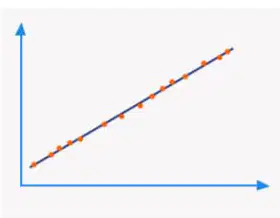
What is this type of correlation
Large positive
medium positive
weak/no correlation
Small negative
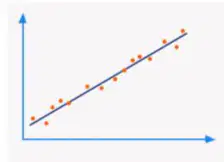
What is this type of correlation
Large positive
medium positive
weak/no correlation
Small negative
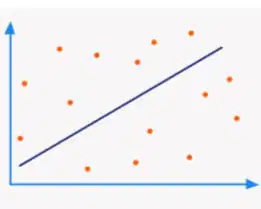
What is this type of correlation
Large positive
medium positive
weak/no correlation
Small negative
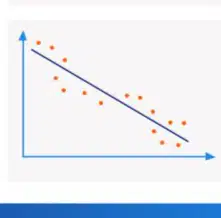
What is this type of correlation
Large positive
medium positive
weak/no correlation
Small negative
Select all that apply:
A normative sample should include:
At least 100 individuals within each subgroup of interest (age bands, demographic group of interest based on region)
Inclusion of participants that are representative of the larger population that will be assessed (SES, race/ethnicity, gender, geographic region)
Exclusion of individuals with disabilities
No more than 95 people within each subgroup of interest.
Select the term that applies:
How closely a test is related to other tests that measure the same (or similar) constructs. For example: A test of phonology should have this with other validated phonology tests.
Correlation
Test-Retest Reliability
Convergent Validity
Sensitivity
Specificity
Select the term that applies:
A measure of reliability obtained by administering the same test twice over a period of time to a group of individuals. An individual should obtain the same score if test measures a stable characteristic about an individual.
Correlation
Test-Retest Reliability
Convergent Validity
Sensitivity
Specificity
True or False: For standards for educaiton and psychological testing, in order for a test to be valid, it must provide at least 4 opportunities for each of the 11 core phonological patterns.
True
False
According to Kirk and Vigeland for convergent validity, compared to another test of philological error patterns that has been validated, and the correlation coefficient between test scores must be at least _____%
95
90
85
87
According to Kirk and Vigeland for reliability, evidence of test-retest reliability and interscorer reliability should be ______%
95
90
85
87
True or False: According to Kirk and Vigeland, only two commericailly-available assessments studied in this project met all the necessary criteria to be deemed "psychometrically sound"
True
False
True or False: In the GFTA-3 all errors are created equal
True
False
True or False: In the GFTA-3, clusters are scored as with good, fair, or poor
True
False
What is the problem with the GFTA-3's convergent validity
It is 0.83
They looked for a correlation between GFTA-2
They looked for a correlation between GFTA-2 and it it 0.83
They did not accurately calculate the score.
GFTA-3 Reliability:
Sounds in words test-retest: 0.83
Sounds in sentence test-retest: 0.91
Does it have test-retest reliability?
Yes
No
True or False: In teh AAPS (Arizona Articulation and Phonology Scale) errors are not weighted
True
False
True or False: In teh AAPS (Arizona Articulation and Phonology Scale) each word is scored for all phonemes and medial consonants are included.
True
False
True or False: In the AAPS (Arizona Articulation and Phonology Scale) has articulation and phonological subtests
True
False
True or False: In the AAPS (Arizona Articulation and Phonology Scale) has articulation and phonological subtests
True
False
True or False: The AAPS (Arizona Articulation and Phonology Scale) did not receive a 0.9 convergent validity, but it is still better than the GFTA-3 because it was compared to other strong assessments
True
False
According to Dodd and Colleagues, which group predicts persistent phonologically based errors?
Disordered phonology
Delayed phonology
articulation-only errors
Both disordered and delayed phonology
According to Dodd and collegues, what was the outcome for the articulation only group?
general resolved by time 2 (either no longer misarticulated fricatives or percent of misarticulated fricatives was smaller at time 2)
They became worse
They stayed the same
No clear pattern emerged.
According to Dodd and collegues, what was the outcome for the delayed phonology group?
Had no new phonologically based errors at time 2 - the percent of phonologically based errors was smaller at time 2
They became worse
They stayed the same
No clear pattern emerged.
According to Dodd and colleagues, what was the outcome for the disorderd phonology (disordered phonological + articulation) group?
All disordered phonology and articulation children had phonological and articulation based errors at time 2.
They became worse
They stayed the same
No clear pattern emerged.
True or False: When intelligibility improves, so does percent consonants correct
True
False
Percent consonants correct is a measure of speech accuracy. It only looks at contextual factors
True
False
Which of the following is NOT a key assumption of the learnability theory?
It comes form nativists theories of language acquisition (generative phonology)
Children start off with limited access to the adult phonological system (aka they cannot discriminate between the presence and absence of differentiating distinctive features)
Early on, the child's phonological system consists of a small subset of phonemes
The phonemes in teh child's phonological system resembles the adults' phonological system.
Learning speech sound is a gradual acquisition process
Which of the following is NOT a kep assumption of Dynamic Systems Theory?
It comes from Empiricist theories of language acquistion
It is interested in systems that exhibit internal states that evolve over time and how these systems interact with applied input
Change to a child's phonological occurs gradually
-children keep track of of important information about a given phoneme
-Production fo /s/ will get better as the child learns more about /s/.
-Children gradually acquire all necessary knowledge of a phoneme
Change to a child's phonological system is based on a child's previous knowledge about phonemes.
-Previous knowledge supports future development.
-Children continue to learn about a given phoneme, even when they begin to produce that phoneme
-First productions of /s/ does not imply adult-like knowledge of /s/
-Children do not start with adult-like knowledge of a given phoneme.
Sounds are activated for a child
Rvachew and Nowak were arguing for early developing phoneme approach. What is true about their study and their findings?
It was in response to Gierut and colleagues claimed that system-wide change was greater when clinicians select later targets
Percent accuracy was greater for early targets than later target production
Targeting the earlier sounds resulted in as much increased production of untreated phonemes as targeting the later sounds.
The earlier developing sounds resulted in faster progression through therapy.
All of the above
True or false: speech sound disorders can affect the form of speech sounds within a specific language system.
True
False
(a) is the actual realization of phonemes; concrete and produced
An ______ is the atypical production of phones
articulation disorder
Phonological disorder
True or False: Articulation disorders can only affect /s/, /z/, and consonantal/vocalic r
True
False
Fill in the blank: _______: difficulty with the motor production aspects of speech or the inability to produce certain speech sounds.
Phonological disorder
Articulation disorder
What am I describing?
H preferance: initial consonants are h
Backing: marking alveolar consonants with velars
Initial consonant deletion
Stressed syllable deletion
affrication
Natural phonological processes
Atypical phonological processes
Check all that apply:
A child's speech sound aquisition is:
Gradual
unique
rapid
follows a consistent trajectory across all children
What am I describing?
Substitution of /b/ for voiced bilabial fricative v
Differening realizations of I (I -> i)
Variable production of ch and sh (ch -> sh)
T and d produced for that and thorn
Spanish Influenced English
AAVE
MAE
None of the above
______ are two words that differ in only one phoneme value.
Minimal pairs
maximal pairs
similar pairs
none of the above
What am I describing?
It is preceded by tupcal child speech errors
Children start life with a speech sound inventory that is more limited than that of adults.
Normal speech acquisition (NSA)
Normal intonation acquisition (NIA)
None of the above
all of the above

What is this
Lateralized s
dentalized s
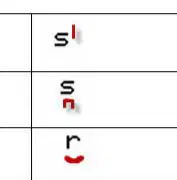
What is the SECOND one on this list?
Lateralized s
dentalized s
______ transcription capture productions with as much detail as possible and are deonted in [ ]
Broad
Narrow
______ transcription used to discriminate between phonemes.
In isolation, youlose value impared by diacritics
Denoted in / /
Broad
Narrow
___ are early produced sounds. They show on mouth whane talking, so there is a strong visual
stops
/h/
none of the above
all of the above
___ are early produced sound (s). they are produced with an open mouth and easier. The is little constriction.
stops
/h/
none of the above
all of the above
True or False: The easier sounds to produce tend to be the ones that children acquire first
True
False
when do children approximately aquire these consonants:
/m, n, b, p, d, t, w, j, h/
2-3 years
2-4 years
4+ years
none of the above
when do children approximately aquire these consonants:
/k, g, f, v, n, long n, "ch", d3, 3/
2-3 years
2-4 years
4+ years
none of the above
when do children approximately aquire these consonants:
/s, z, "sh", theta, thorn, l, r, l, 3/
2-3 years
2-4 years
4+ years
none of the above
when do children approximately aquire these consonants:
/ a, ʊ, I, ʌ/
18 months
18-24 months
24+ months
none of the above
when do children approximately aquire these consonants:
/ɔ, u, ɛ, æ, i, oʊ, aI, eI, aʊ, ɔI/
18 months
18-24 months
24+ months
none of the above
when do children approximately aquire these consonants:
/ɚ, ɝ/ and rhotic diphthongs: /Ir, ɛr, ɔr, ar/
18 months
18-24 months
24+ months
none of the above
______: any consonant other than /s/ in which air escapres from sides of tongue - mostly /s, z/ second most common "sh"
lateralized
dentalized
derhotacized
unreleased plosive
______: articualatory variateion when tongue approaches the upper incisors- often applied to /s, z, d, t, and "sh"/
lateralized
dentalized
derhotacized
unreleased plosive
Which of the following is NOT a phonological process error?
Substitutions of an earlier developing sound for a later one
substitution of a neighboring sound for a target speech sound
Changes to the syllable structure of words
Changes to the consonant cluster in a word.
Any consonant other than /l/ in which air escapes from the slides of tongue.
Complete blockage
Stop
fricative
affricate
nasal
glide
very narrow opening between articulators
Stop
fricative
affricate
nasal
glide
stop and fricative component
Stop
fricative
affricate
nasal
glide
nasal emission
Stop
fricative
affricate
nasal
glide
artiuclators come close together but not as much as frictives
Stop
fricative
affricate
nasal
glide and liquids
Describe the phonetic categories and features used to characterize consonants.
Place-manner-voice
fronting of velars and palatals, stopping of fricatives, voicing changes, and gliding of liquids
Describe the phonological processes
Place-manner-voice
fronting of velars and palatals, stopping of fricatives, voicing changes, and gliding of liquids
Which of the following does NOT apply to MAE
Generally stops, nasals, and glides are among the fist speech sounds acquired by children
Generally fricatives and liquids are among the last speech sounds acquired by children
/ a, ʊ, I, ʌ/ developed early
generally syllable shapes cvc and vcv are the earlies developed
True or false: an accent is a neural label that refers to any variety of langue that is shared by a group of speakers
True
False
Which of the following is NOT a difference between AAVE AND MAE consonant mastery
S is developed earlier in AAVE
R is developed earlier in AAVE
Thorn is developed earlier in AAVE
All of the above
Which of the following is part of phonological awareness
It is the ability to pay attention to the sound structure of language separate from its meaning
uses a single modality - the auditory one
has to do with the recognition and manipulation of sounds in spoken words.
all of the above
True or false: there is a connection between learning to read and phonological awareness
True
False
What part of phonological awareness am I describing?
Awareness that words can be divided into syllables.
Syllable identification: How many syllables does the word baby have
Word completion: Rainbow: I'll say the first part and you say the second part. Rain_
Syllable awareness
onset-rime awareness
phonemic awareness
none of the above
What part of phonological awareness and emerging literacy am I describing?
Recongition of the nose of a syllable. (onset= all the osudns before the vowel nucleaus of a syllable.
Tast measuring it: Spoken rhyme recognition. Do hop and top rhyme?
Recognition of words that do not rhyme: which word does not rhyme: cat, sat, top
Spoken rhyme production: tell me a word that rhymes with cat
Onset-rhyme blending: c and at is blended into
Syllable awareness
onset-rime awareness
phonemic awareness
none of the above
What part of phonological awareness and emerging literacy am I describing?
Ability to manipulate sounds
Phememe detection: which of these words has a different first sound
Phoneme matching: which words begins with teh same sound as rose - time, run
Phoneme isolation: Which sound do you hear ath the beginning of the word road
Syllable awareness
onset-rime awareness
phonemic awareness
none of the above
Which of the following is a difference between SIE and MAI?
S-clusters are not in spanish
reduction of consonant clusters in the word final position.
/a/ for /ʌ/ in single syllable words and in stressed syllables
all of the above
Which of the following is a reason we collect a speech sample?
the characteristics of speech that are present in single words may differ form those found in connect speech
Coarticulation difference
As complexity goes up, so does error rate
all of the above
CHildren's speech sound accuracy is more variable in connected speech.
Children do best in which of the following
isolated speech sound
open syllable: zoo
closed syllable: shoes
phrase: two shoes
connected speech: did you see my two shoes
Select all of the considerations when collecting a speech sample:
Plan a spontaneous speech sample using results from standarized, single-word measures
Provide objects and pictures that contain speech sounds of interest
Plan length of sample: for example 1 minute conversational sample
Plan for diversity of sample: different communication situations
Monitor the Audio Recording and Provide Gloss of Difficult Utterances: glossing- repearing with normal pronunciation what the child said
When you collect a child's speech sound inventory and you find out about all the speech sounds that the child uses to distinguish between possible words.
collect a phemic inventory of all the child's phonemes
collect a phonetic inventory of all the phone.
When you collect a child's speech sound inventory and you find out about all the speech sounds that the child can articulate
collect a phemic inventory of all the child's phonemes
collect a phonetic inventory of all the phone.
______ refers to testing the client's ability to produce a misarticulated sound in an appropriate manner when "stimualted by the clinician."
Stimulability testing
phonetic inventory asssessment
phonemic inventory assessment
none of the above
Stimulabilty testing is doing with of the following?
Fining at what level of supports a child can produce a speech sound (part 1)
helping to determine whether a speech sound is a good target for intervention (part 2)
None of the above
all of the above
True or False: Articulation-based errors only occur in certain contexts (ex: word positions: initial, medial, final, in isolation)
True
False
WHich traditional targeting Articulation intervention strategy am I describing?
Model behavior "watch me and do exactly what I do."
imitation
phonetic placement method
sound modification method
None of the above
WHich traditional targeting Articulation intervention strategy am I describing?
instructions for placement of articulators: put the sides of your tongue on the bumpy ridge.
imitation
phonetic placement method
sound modification method
None of the above
WHich traditional targetingArticulation intervention strategy am I describing?
modifying production of the target sound from an existing sound, "You are saying sho with sh. We want to say so.
imitation
phonetic placement method
sound modification method
None of the above
Which articuation intervervention strategy amd i describing?
Find a sound that the child produces where the place of articulation is very close to the place of articulation for the targeted sound
Faciliating contexts
Targeting sounds in nonsense syllables
Which articuation intervervention strategy amd i describing?
Fproduction of the target in easy vc or cvc contexts.
Faciliating contexts
Targeting sounds in nonsense syllables
Which of the following is an example of facilitating contexts
target "air" context: the bear read the book.
Target /s/ consonant context: "Make it loose sam."
Target /z/ vowel context: "please"
All of the above
The child is producing
Which method should i use if the client is producing s and z in some contexts
Modification of phonetic placement method
Facilitating contexts
Imitation
Sound modification method + phonetic placement method
The child is not prododcing /s/ or /z/
Modification of phonetic placement method
Facilitating contexts
Imitation
Sound modification method + phonetic placement method
True or False: When working on Rs with a client you need to make sure you aware of the the way they produce r so that you can work with them correctly.
True
False
True or False: When working on Rs with a client you need to make sure they are correctly rounding their lips
True
False

