
 Worksheets
MR* Ques
Total questions: 178
Worksheet time: 1hrs 29mins
If a body is positively charged, then it has
excess of electrons
excess of protons
deficiency of electrons
deficiency of neutrons
A body can be negatively charged by :
Giving excess of electrons to it
Removing some electrons from it
Giving some protons to it
Removing some neutrons from it
during charging of her body mass of the body increases then the body becomes
+vely Charged
remains neutral
-vely Charged
NONE
charge development on the body 10 electron removed from the body
1.6 X 10⁻¹⁹ C
3.2 X 10⁻¹⁹ C
6.25 X 10⁻¹⁶ C
1.6 X 10⁻¹⁸ C
Two bodies are charged by rubbing one against the other During the process, one becomes positively charged while the other becomes negatively charged. Then mass of each body
Remains unchanged
Charges marginally
And total mass changes slightly
Changes slightly but the total mass remains unchanged
Number of electrons in one coulomb of charge will be
5.46 × 1029
6.25 × 10¹⁸
1.6 × 10+19
9 × 10¹¹
The electric charge in uniform motion produce
An electric field only
A magnetic field only
Both electric and magnetic field
Neither electric nor magnetic field
Identify the wrong statement.
Charge is a vector quantity
Current is a scalar quantity
Charge can be quantised
Charge is additive in nature.
If a charge on the body is 1 nC, then how many electrons are present on the body?
1.6 × 10¹⁹
6.25 × 10⁹
6.25 × 1027
6.25 × 1028
When a piece of polythene is rubbed with wool, a charge of –2 × 10⁻⁷ C is developed on polythene. What is the amount of mass which is transferred to polythene?
5.69 × 10⁻¹⁹ kg
6.25 × 10⁻¹⁹ kg
9.63 × 10⁻¹⁹ kg
11.38 × 10⁻¹⁹ kg
If 1010 electrons are acquired by a body every second, the time required for the body to get a total charge of 1C will be
2 h
2 days
2 yr
20 yr
A comb rub through one’s dry hair attracts small bits of paper. This is due to
Comb is a good conductor
Paper is good conductor
The atoms in the paper get polorised by the charged comb
The comb possesses magnetic properties
What is charge on 90 kg of electrons?
1.58 × 10¹³ C
2.3 × 10¹² C
2.53 × 10¹² C
None of these
Two identical spheres carrying charges –9μC and 5μC, respectively are kept in contact and then separated from each other. Point out true statement from the following. In each sphere
1.25 × 10¹³ electrons are in deficit
1.25 × 10¹³ elections are in excess
2.15 × 10¹³ electrons are in excess
2.25 × 10¹³ electrons are in deficit
Which of the following charge is possible
1/100 C
1/50 e
4.8 x 10⁻²¹ C
1.56 x 10⁻¹⁵ C
Which of the following charge is not possible
6.4 x 10⁻¹⁷ C
7.8 x 10⁻¹³ C
4.8 x 10⁻¹⁹ C
5.71 x 10⁻¹⁶ C
Charge and body is -1 PC then find excess electron given to that object . Also find extra mass given to that charge during charging
12.5 x 106,6.25 x 106 x 9.1 x 10-31 kg respectively
6.25 x 106,6.25 x 106 x 9.1 x 10-31 kg respectively
6.25 x 105,5.6 x 106 x 9.1 x 10-31 kg respectively
12.5 x 106,6.25 x 106 x 18.2 x 10-31 kg respectively
If a body is losing 104 electron per second .Then find the charge on a body after two days
1.6 x 10⁸
1.728 x 10⁸
1.456 x 10⁸
1.728 x 10⁹
Sure check off charge on a body
attraction
repulsion
both
none of these
If two charge body having charge 5C and -10 C are placed in contact then find Net charge on the body if they are conducting sphere of the same size
-5 C
-2.5 C
5 C
2.5 C
Smallest unit of charge is
Frankline
Faraday
Coloumb
E.M.U
Which of the following is not correct about charge
charge on a body is integral multiple of a certain charge known as charge of Electron
charg is scalar quantity
charge can be converted into energy and energy be converted into charge
none of these
if 1014 electrons are removed from a neutral metal sphere then the charge on the sphere becomes
16 μC
-32 μC
-16 μC
32 μC
Which of the following is not correct unit of charge
farad
faraday
coloumb
stat coloumb
A glass rod is rubbed with a silk cloth acquire a charge of 19.2 x10¹⁹. Find the number of Electrons lost by the glass rod
12
14
10
5
A conductor has one 4.4 x10⁻¹⁹ C positive charge. The conductor has
9 electron in excess
27 electrons in excess
9 electron in short
27 electrons in short
Charge on an alpha particle is
1.6 x 10⁻¹⁹C
3.2 x 10⁻¹⁹C
6.4 x 10⁻¹⁹C
4.8x10⁻¹⁸C
A body has -80μC charge number of additional electrons in it will be
15 x 1014
5x10¹⁰
5x10¹⁴
5x10⁻¹⁰
two charges Q1 and Q1 shows repulsion, then which of the following option is correct for this:
Q1 x Q2=0
Q1 x Q2>0
Q1 x Q2<0
All of these
When a soap bubble is charged then its size
Increases
Decreases
Remain same
None of these
Speed of charged body is decreasing continuously then its charge and specific charge will be
Increase, increase
Decrease, same
Same, increase
Same, same
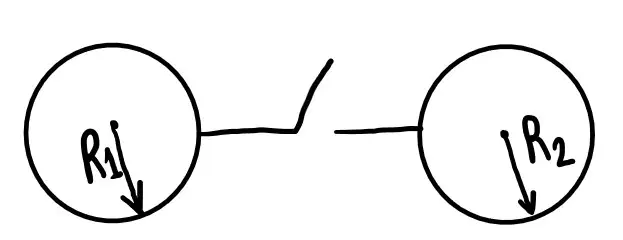
If a solid and hollow conducting sphere have same radius then what will be the final charge on each sphere if key is closed
Solid sphere has more maximum charge
Hollow sphere has more maximum charge
Both will hold same maximum charge
Both the sphere cannot hold charge
2 identical conducting sphere carrying charge -9μC and 5μC respectively are kept in contact and then separated from each other. Point out true statement from the following. In each sphere
1.25 X 10¹³ electron are in deficient
1.25 X 10¹³ electron in excess
2.25 X 10¹³ electron in excess
2.15 X 10¹³ electron in deficient
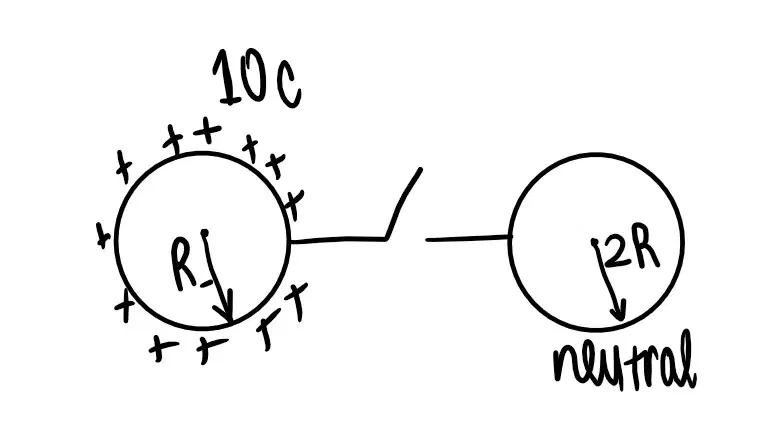
Find final charge if key is closed
Q1=10/3 C, Q2=10/3 C
Q1=5/3 C, Q2=20/3 C
Q1=10/3 C, Q2=20/3 C
Q1=20/3 C, Q2=10/3 C
If point charge is placed very near to the uncharged conducting sphere then net charge induced on this sphere is
Zero
Positive
Negative
Can't say
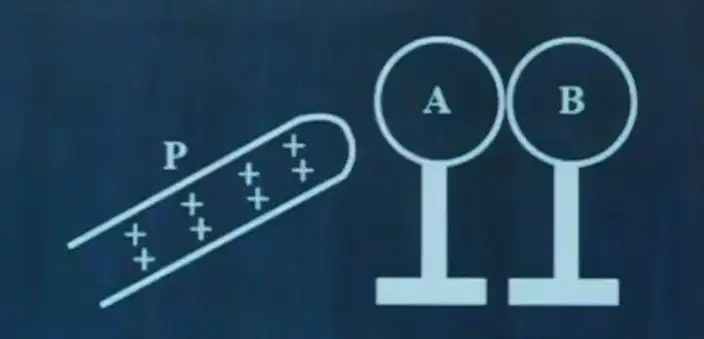
2 uncharged metal sphere placed in contact as soon in figure and a positive charge rod place in contact with A, then charge on A and B will be
Both become positive
Both become negative
A negative but B become positive
A become positive and B negative
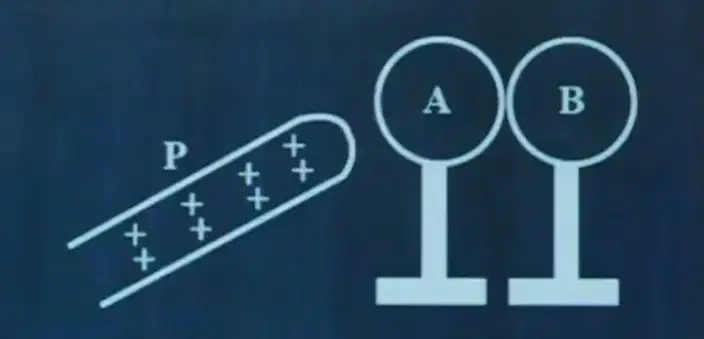
2 uncharged metal sphere placed in contact as shown in the figure If the rod is placed very near to the A sphere but not in contact then
Both become positive
Both become negative
A is positive but B is negative
A is negative but B is positive
A body can be negatively charged by
Rubbing
By connecting with earth under the influence of positively charged conductor
By connecting it with negatively charged conductor
All of the above
A glass rod rubbed with silk and used to charge a gold leaf electroscope and the leaves are observed to diverge. The electroscope thus charged is exposed to X-rays for a short period. Then
The divergence of leaves will not be affected
The leaves will diverge further
The leaves will collapse
The leaves will melt
Five balls numbered 1 to 5 are suspended using separate threads. Pairs (1, 2), (2, 4) and (4, 1) show electrostatic attraction, while pair (2, 3) and (4, 5) show repulsion. Therefore ball 1 must be
Positively charged
Negatively charged
Neutral
Made of metal
Gold leaf electroscope is given a positive charge so that it's leaves diverge. How is the divergence of leaves affected when a negatively charged rod is brought near its disc
Divergence increases
Divergence decreases
Divergence remains the same
Can't say
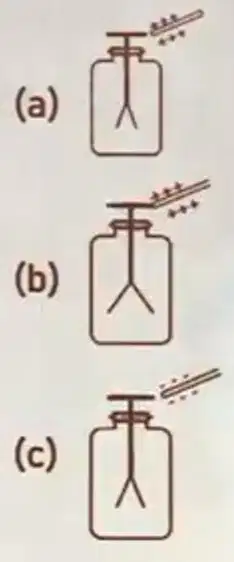
To perform these steps one by one
(a) a positively charged rod is brought closer to initially uncharged knob.
(b) then the positively charged rod is touched to the nob knob.
(c) now the positively charged rod is removed and a negatively charged road is placed.
Rod of same magnitude is brought closer at same distance in which case the leaves will converge (come closer), as compared to the previous state
(a)
only (c)
(a) and (c)
In all cases, the leaves will diverge
Electric charges A and B repel each other. Electric charges B and C also repel each other. If A and C are held together they will
Attract
Repel
Not affect each other
Not enough information
electric charges X&Y repel each other and X&Z attract each other then the nature of force between Y and Z
Attract
Repel
Zero
Not enough information
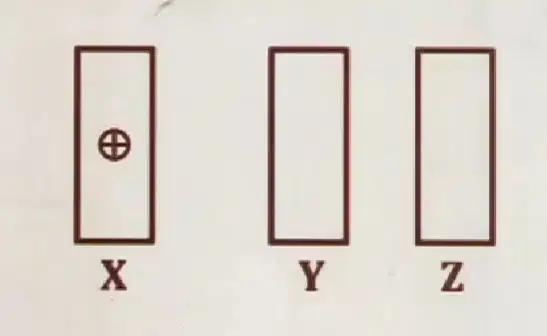
Identify nature of force between body X and Y, Y and Z (Y and Z are neutral)
attract, repel
repel, attract
attract, attract
Repel, repel
2 point charges separated at a distance d repel each other with the force of 9 N. If the separation between them becomes 3d, the force of repulsion will be
1 N
3 N
6 N
27 N
Coulomb's law is analogous to
Charge conservation law
Newton's law of gravitation
Newton's second law of motion
Law of conservation of energy
2 point charges Q1 and Q2 exert a force of F on each other when kept at a certain distance apart. If the charge on each particle is halved and the distance between the 2 particle is doubled the new force between the 2 particles will be
2F
4F
16F
8F
If 2 identical Spears having charge 16μC and -8μC are kept at certain distance apart the force is F. They are touched and again kept at the same distance, the force becomes
2F
2F
16F
8F
Two equally charged identical small balls kept some fixed distance apart exert a repulsive force F on each other. A similar uncharged ball, after touching one of them is placed at the mid-point of line joining the two balls. Force experienced by the third ball is
4F
2F
F
2F
Two charge +6C and +4C are placed at some distance then force between
them is 10N now, -4C charge given to each sphere then force between
them becomes.
0 N
6N
15N
None
2 identical small bodies each of mass m and charge Q suspended from 2 string each of length l from a fixed point. This whole system is taken into an orbiting artificial satellite then find the tension in the strings.
l2kq2+2mg
l2kq2
4l2kq2+2mg
4l2kq2
Minimum electrostatic force between 2 charges placed at 1 cm is
2.30 x 10⁻²⁰
2.30 x 10⁻²⁴
1.60 x 10⁻²²
1.60 x 10⁻²⁴
Two charges each of 1µC are at a distance 1 cm apart in vacuum, the force between them is:
9 × 10³ N
90 N
1.1 × 10⁻⁴ N
104 N
The charges on two sphere are +7µC and –5µC respectively. They experience a force F. If each of them is given additional charge of –2µC, the new force of attraction will be:
F
F/2
F/3
2F
+2C and +6C two charges are repelling each other with a force of 12 N. If each charge is given –2C of charge, then the value of force will be:
4N (Attractive)
4N (Repulsive)
8N (Repulsive)
Zero
A charge q1 exerts some force on a second charge q2. If third charge q3 is brought near, the force q1 exerted on q2 and net force on q2:
decreases, increases
increases, increases
remains unchanged, may increases
remains unchanged, remains unchanged
Fg and Fe represents gravitational and electrostatic force respectively between protons situated at a distance 11µm. The ratio of Fg/Fe is of the order of:
1042
1036
10–36
10–43
Three identical charges are placed at the corners of an equilateral triangle. If the force between any two charges is F, then the net force on each will be:
2 F
3 F
2F
3F
Two small conducting spheres of equal radius have charges +10µC and –20µC respectively and placed at a distance R from each other experience force F1. If they are brought in contact and separated to the same distance, they experience force F2. The ratio of F1 To F2 is:
1 : 8
–8 : 1
1 : 2
–2 : 1
Two positive ions, each carrying a charge q, are separated by a distance d. If F is the force of repulsion between the ions, the number of electrons missing from each ion will be (e being the charge on an electron)
e24πϵoFd2
e24πϵoFd2
d24πϵoFe2
d24πϵoFe2
Force between 2 point charges is F0 when placed in air keeping distance same their placed in water of dielectric constant (K=9) the net electrostatic force on any one charge they will be
9F0
8F0
3F0
F0
3 identical charges placed on the corner of equilateral triangle then find electrostatic force on one charge due to the other 2 charge.
6F
3F
2F
F
4 point charges plus Q placed on the corner of square of side length l then find net electrostatic force on any one charge due to remaining 3 charges.
(2+21) l2KQ2
2l2KQ2
(5+21) 2l2KQ2
None
A particle of mass m and charge -Q1 is moving around a charge +Q2 how long a circular path of radius r. Of period of revolution of the charge -Q1 will be
q1q24π3ϵ0mr3
q1q28π3ϵ0mr3
q1q216π3ϵ0mr3
− q1q24π3ϵ0mr3
2 point charges repel each other with a force of 100 N. One of the charges is increased by 10% and other is reduced by 10%. Then new force of repulsion at the same distance would be
99 N
110 N
101 N
121 N
Force between 2 identical spheres charged with same charge is F. If 50% charge of one sphere is transferred to the other sphere than the new force of repulsion will be
2F
3F
43F
2F
Certain charge Q is divided into 2 parts q & Q-q which are then separated by a certain distance. What must q be in terms of Q to maximise the electrostatic repulsion between the 2 charges
4Q
2Q
45Q
None of these
Electrostatic attraction between 2 point charges is F0 when they are placed at r. If they are given to the conducting sphere of radius R then electrostatic attraction will be, if distance between the centre of sphere is r (r>R).
F>F0
F<F0
F=F0
zero
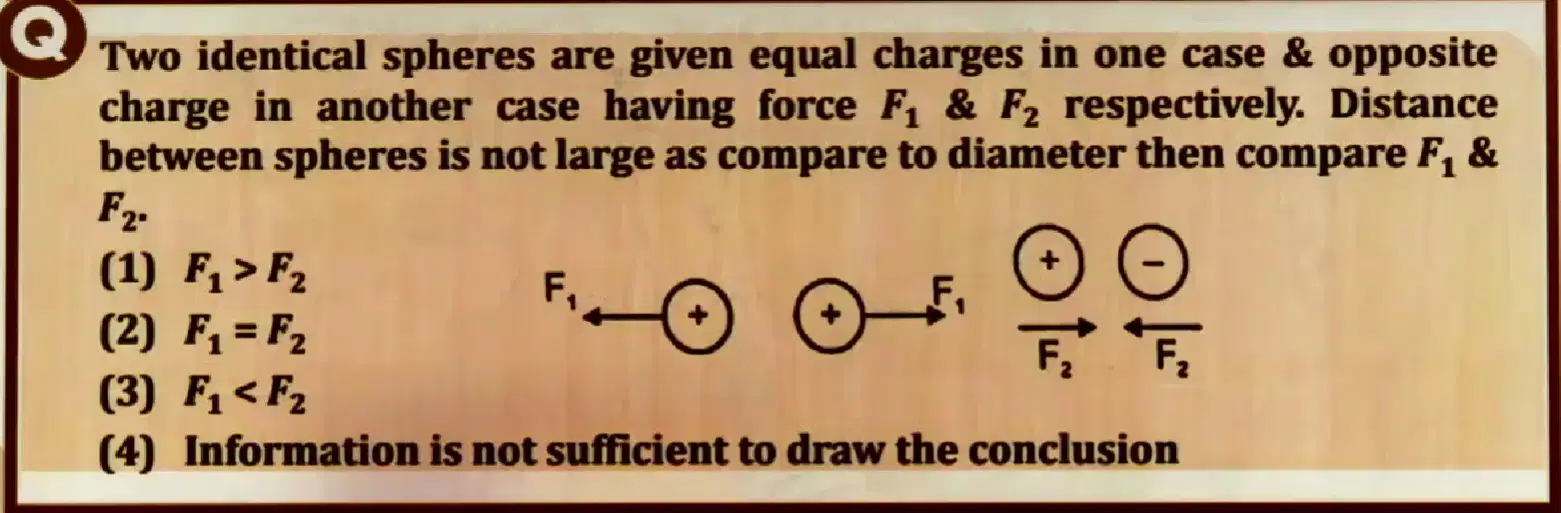
1
2
3
4
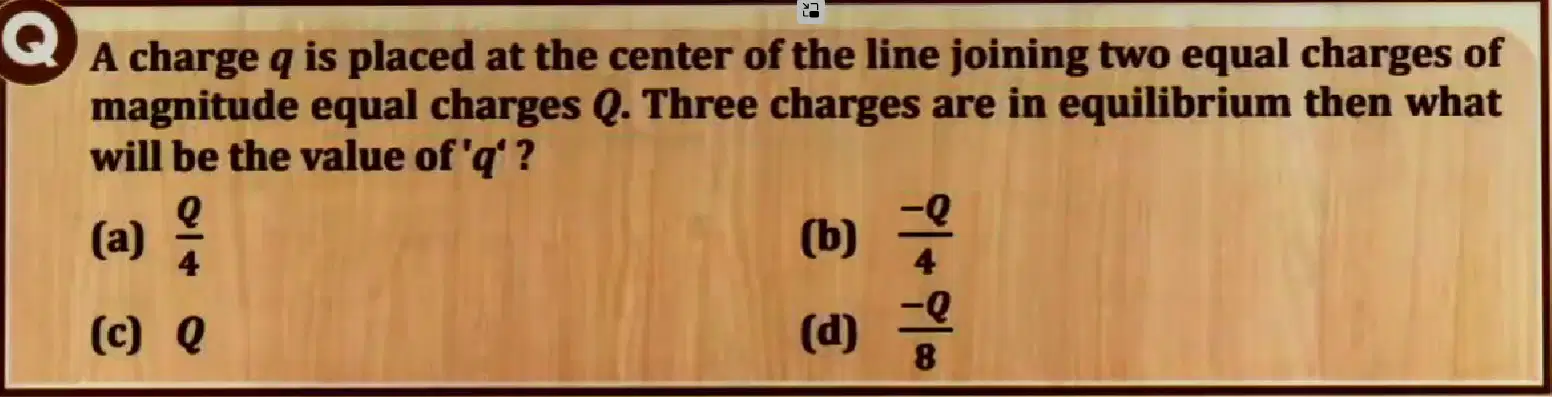
1
2
3
4
1
2
3
4
1
2
3
4

a12 :a22
a22 :a12
a12 : 1
a22 : 1

4+1r
3+1r
2 3+1r
2+1r

2
1.6
3
3.2

1
0
Not define at certain position
None of the these
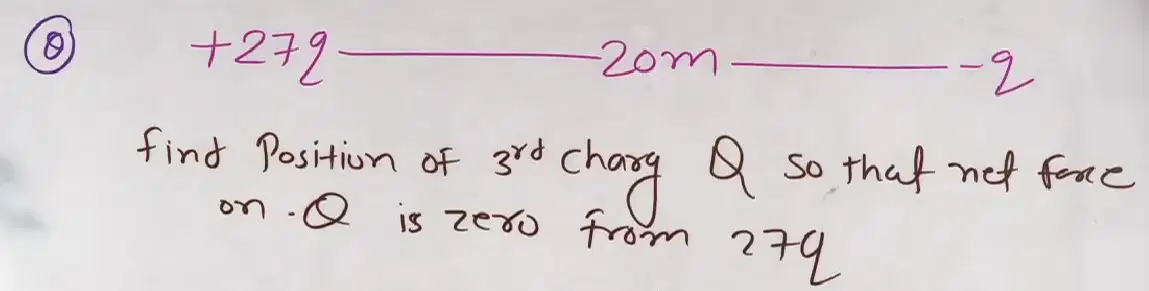
20m
5m
25m
30m

(n+1)2-nx
(n+1)2nx
(n−1)2-nx
(n−1)1nx

0
1
not defined
none of these

−(2+21) 2Q
(2+23) 2Q
−(3+31) 2Q
none of these
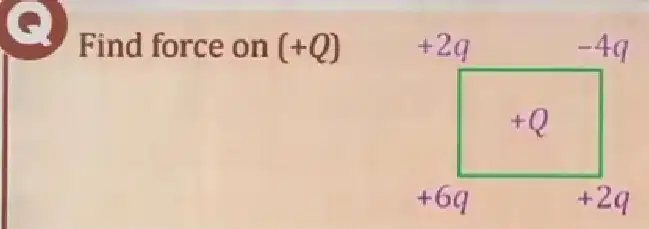
l215KQq
l210KQq
l2KQq
l220KQq
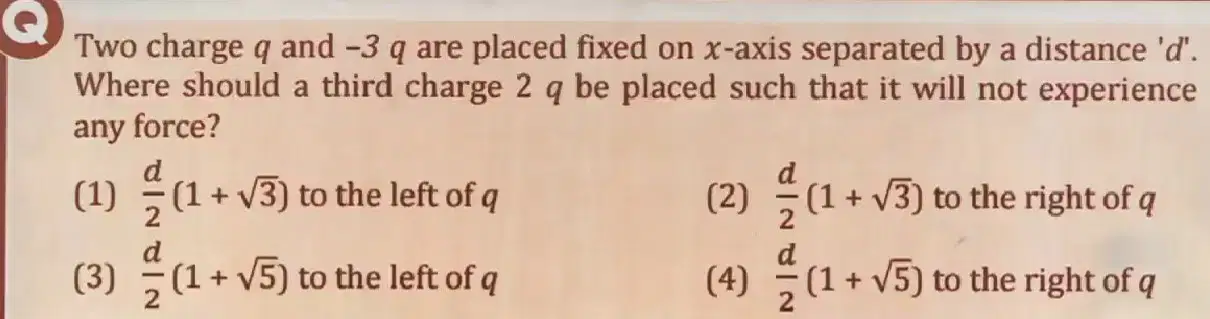
1
2
3
4

4
1
2
3
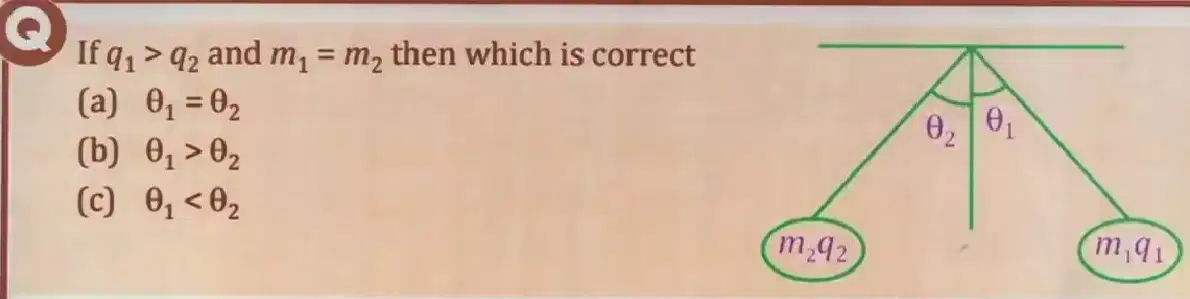
a
b
c
none of these
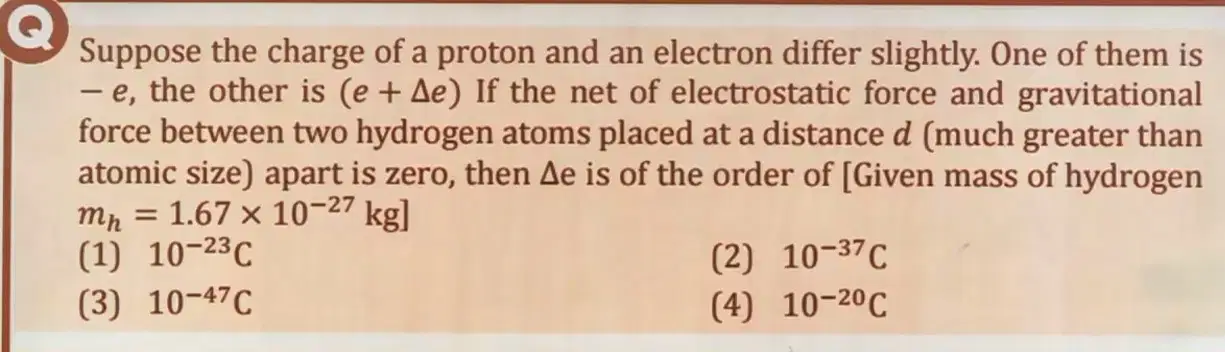
1
3
2
4
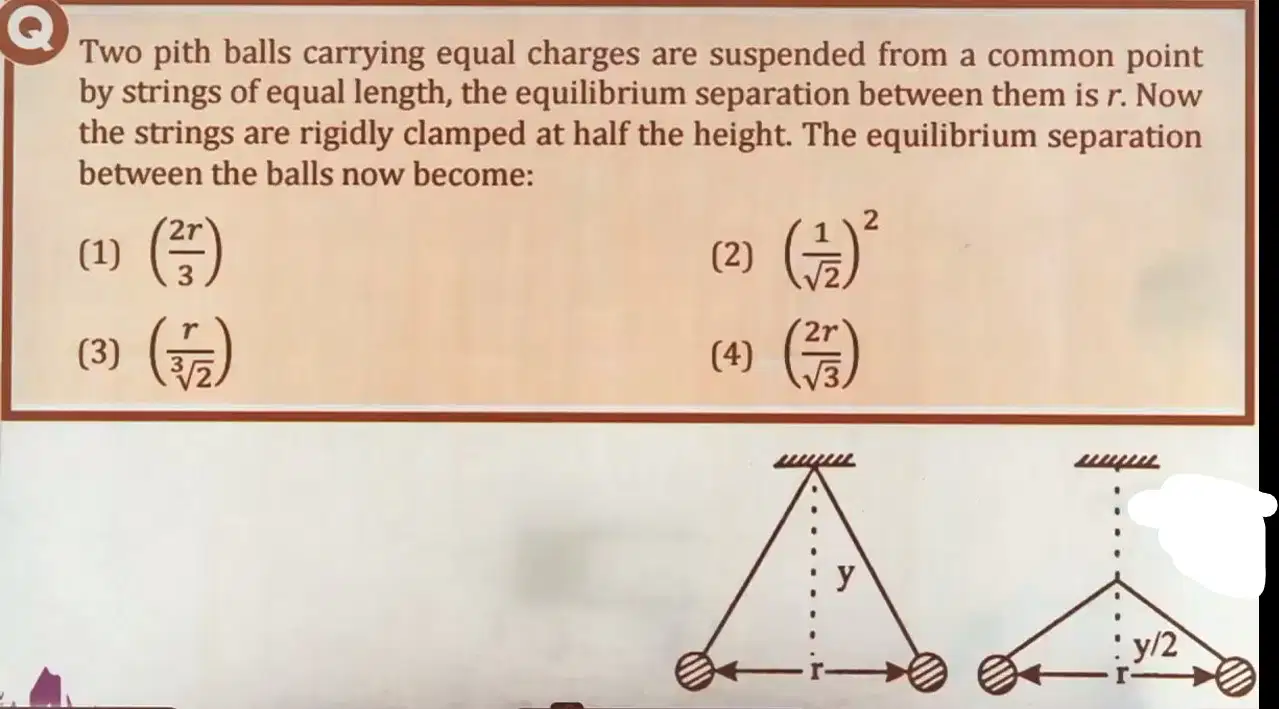
3
4
2
1
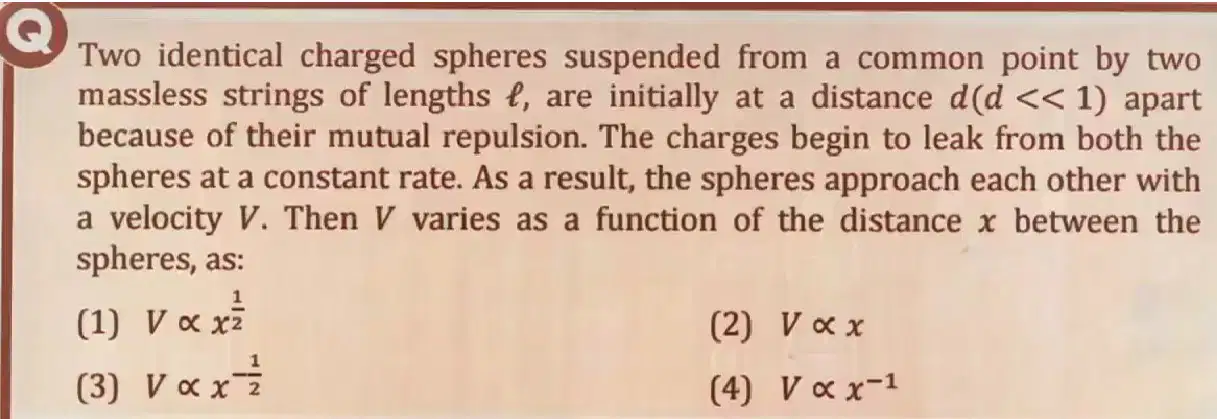
2
4
3
1
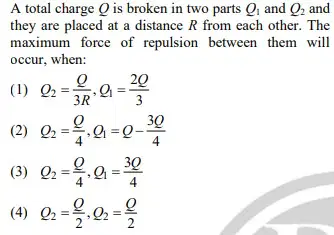
1
2
3
4
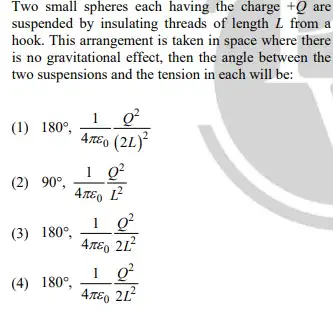
2
1
3
4
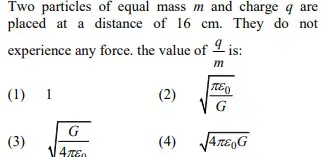
1
3
4
2
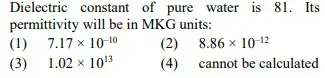
2
3
4
1
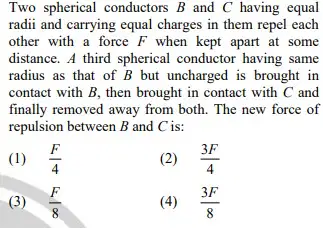
4
1
2
3
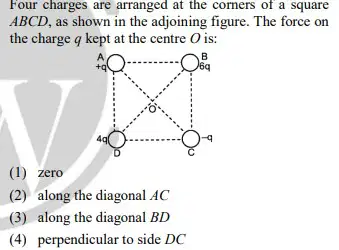
2
4
3
1
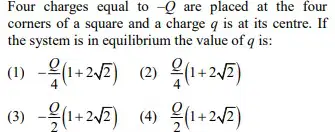
2
1
4
3
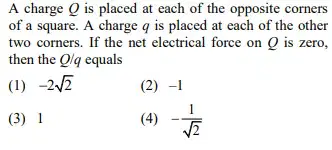
4
3
2
1
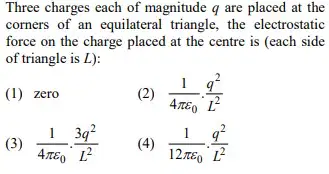
3
2
1
4

1130 m
2215 m
1125 m
none of these

20cm
15cm
25cm
10cm

310, 94Q
−314, 104Q
4Q10, 93
none of these

4 V/m
2 V/m
0
6 V/m
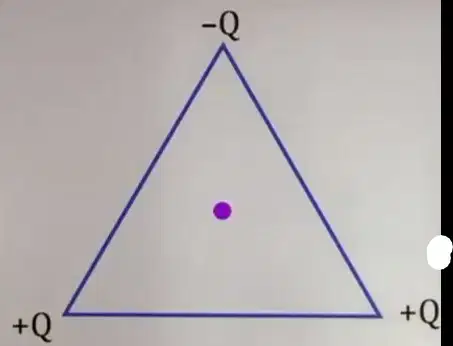
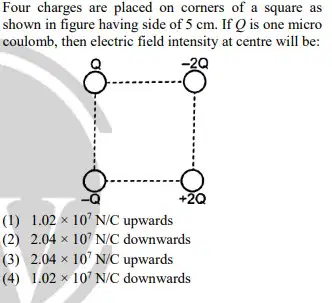
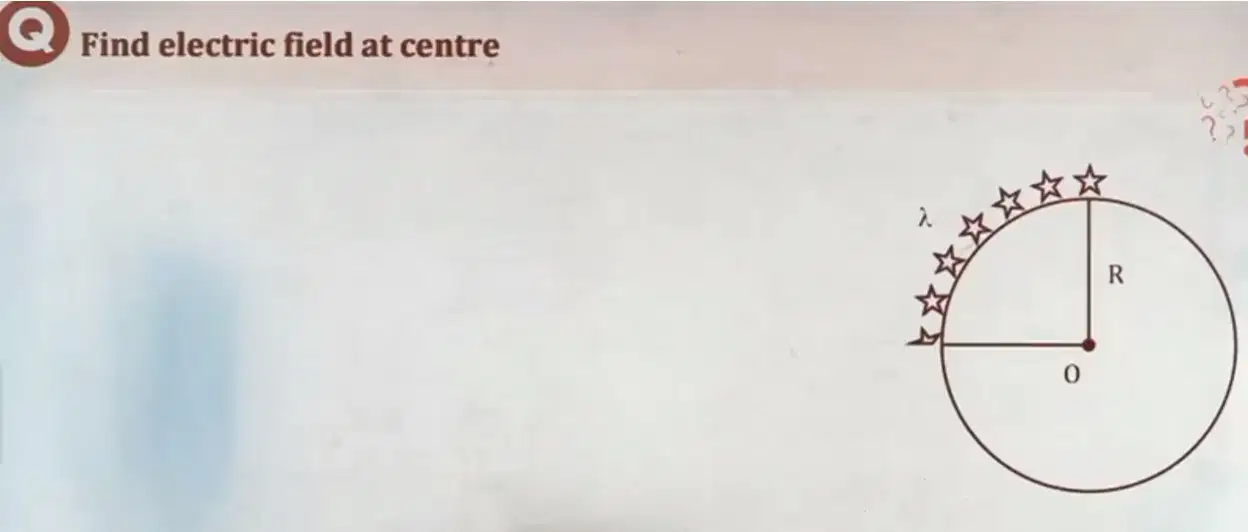
Find electric field at centre
2E
2E
2E
Zero
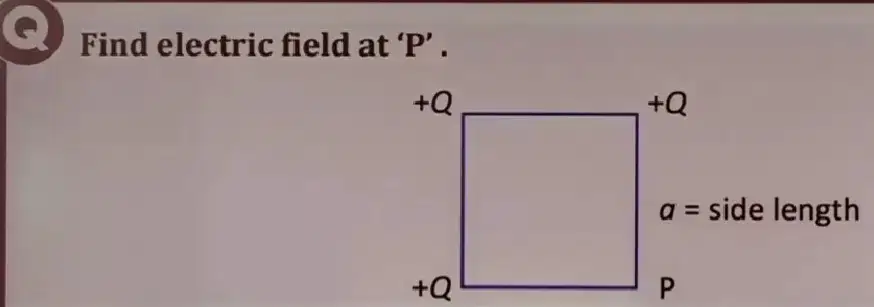
(2+21) a2KQ
(3+21) a2KQ
(2+31) a2KQ
none of these
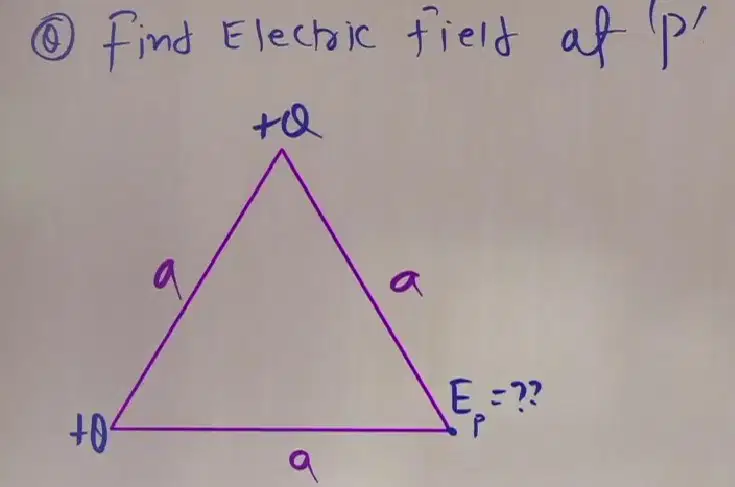
a22 KQ
a22 3 KQ
a23 KQ
none of these
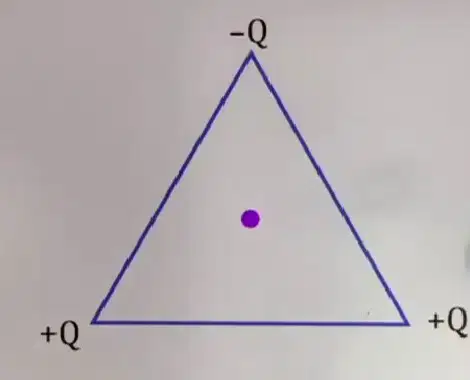
Field at Centre
3a
2 a
2a
3 a
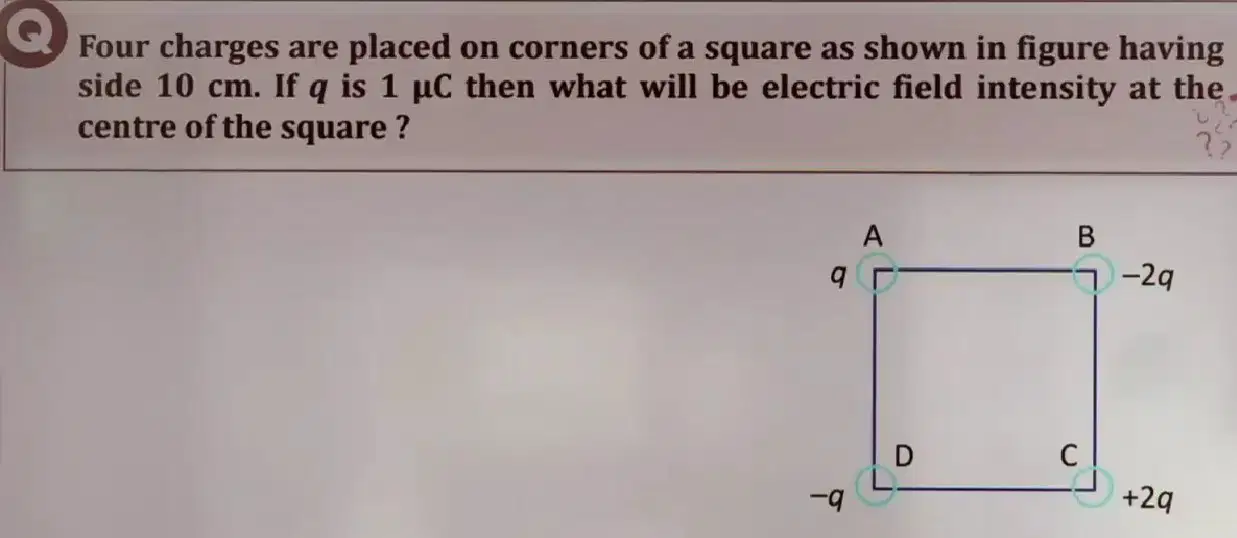
1002 2 K
1004 2 K
504 2 K
5022 K
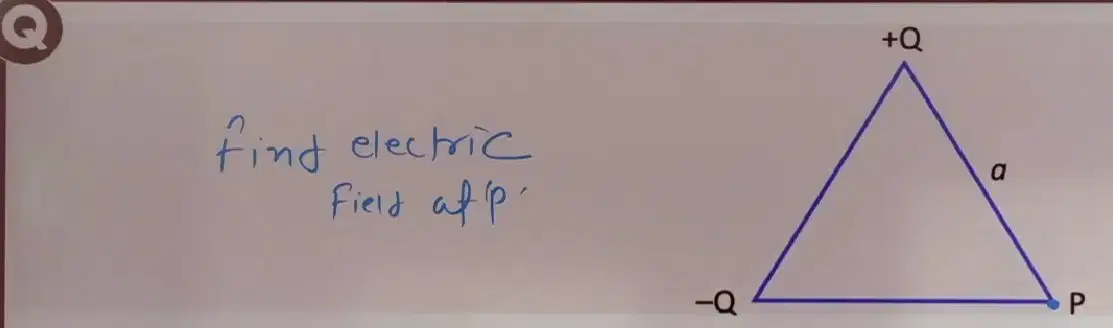
23 E
2 E
3 E
E
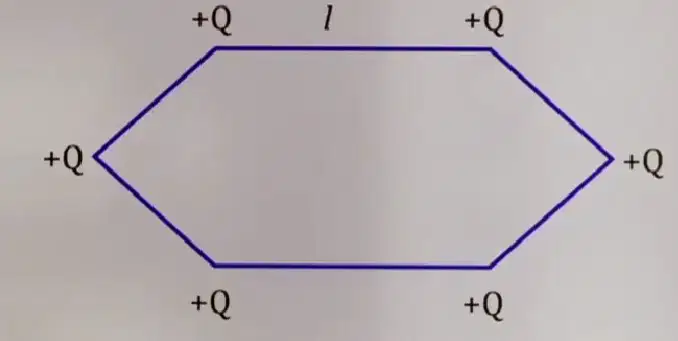
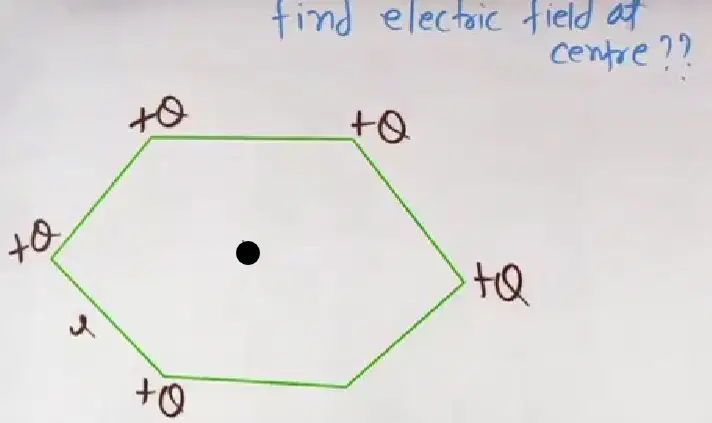
Find electric field at the center of the hexagon
E
2 E
Zero
3 E

15m
20m
25m
10m
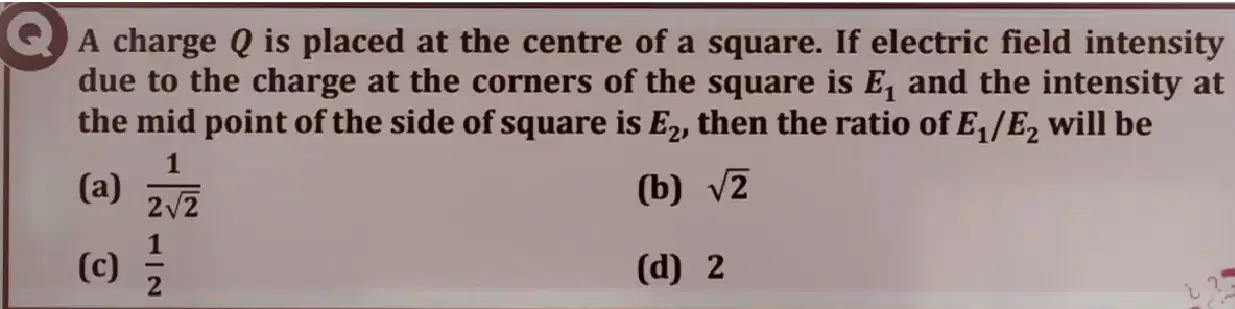
a
b
c
d
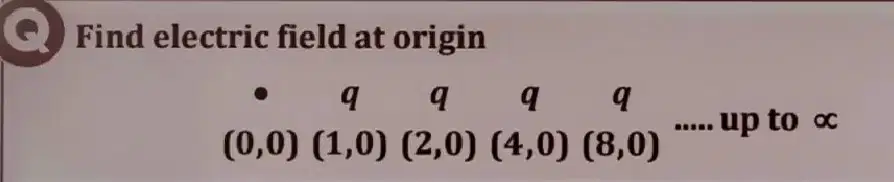
3−2kq
5−3kq
5−2kq
3−4kq

2cm
4cm
8cm
6cm
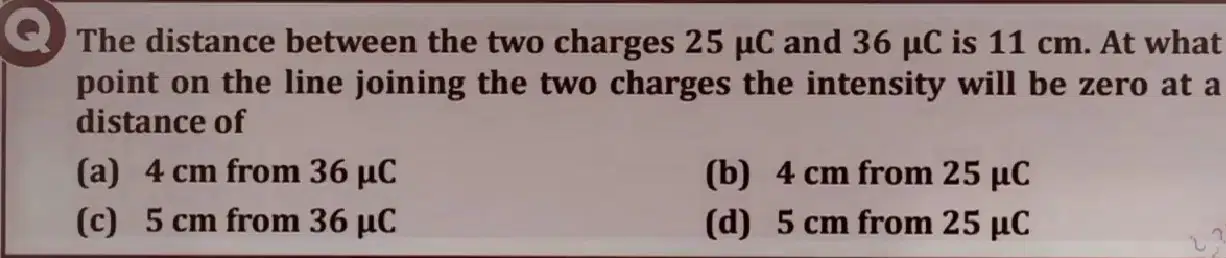
a
b
c
d

24cm
20cm
16cm
4cm
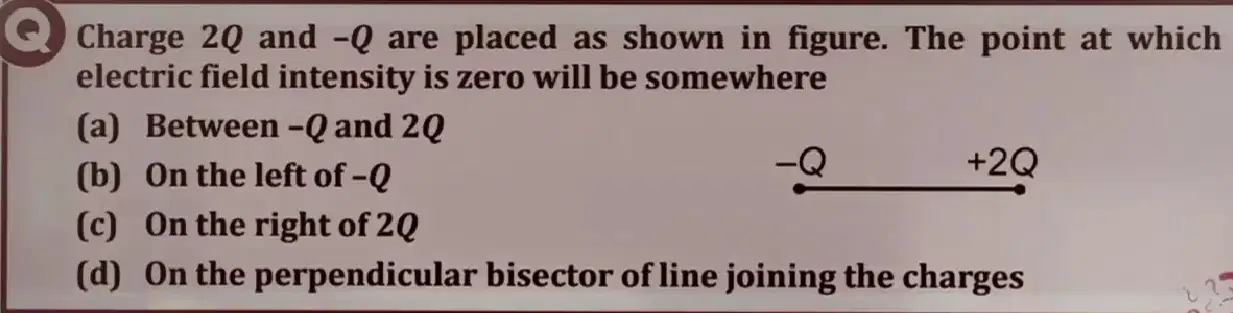
a
b
c
d
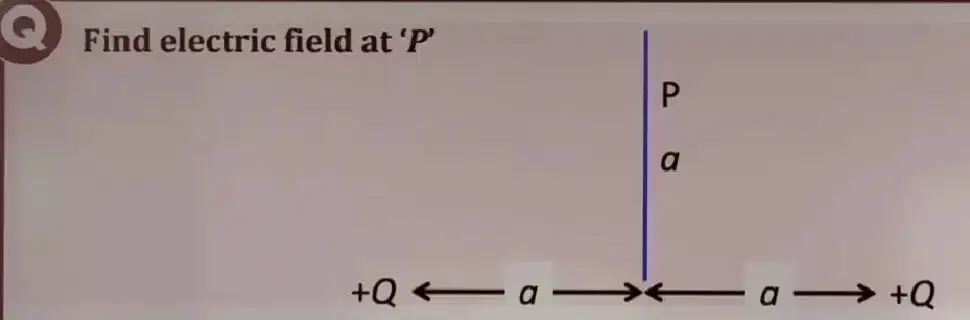
(a2+r2)232KQa
(a2+r2)23KQr
(a2+r2)232KQr
(a2+r2)212KQr
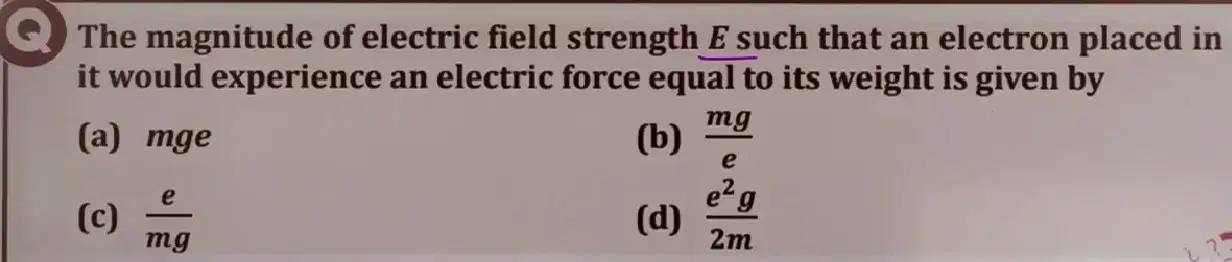
a
b
c
d
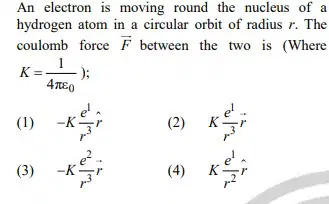
1
2
3
4
1
2
3
4
1
2
3
4
1
2
3
4
1
2
3
4
1
2
3
4
1
2
3
4
1
2
3
4
l2KQ
2 l2KQ
l22KQ
2 lKQ
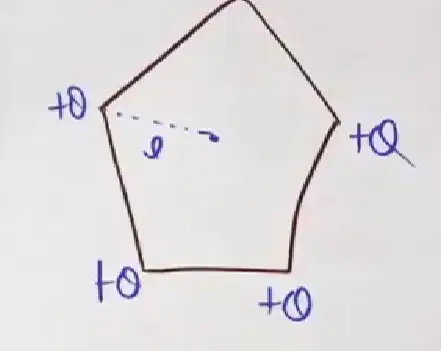
Find electric field at centre of same charge Q is placed at 4 corners of the Pentagon
l22KQ
l2KQ
l2 2KQ
lKQ
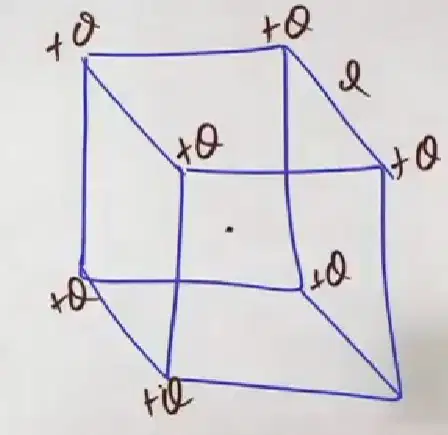
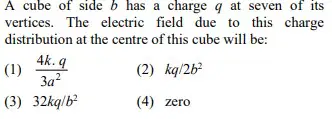
A cube of side b has charge Q at 7 of its vertices whose side length is l. The electric field due to this charge distribution at the centre of this cube will be :
3l4KQ
3l22KQ
3l24KQ
none of these
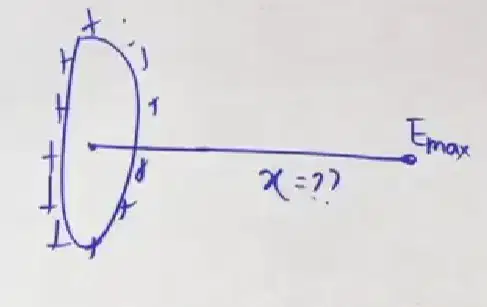
Find position of X so that electric field will be Max at the axis of the ring (let R be the radius of the ring).
2R
2R
3R
22R
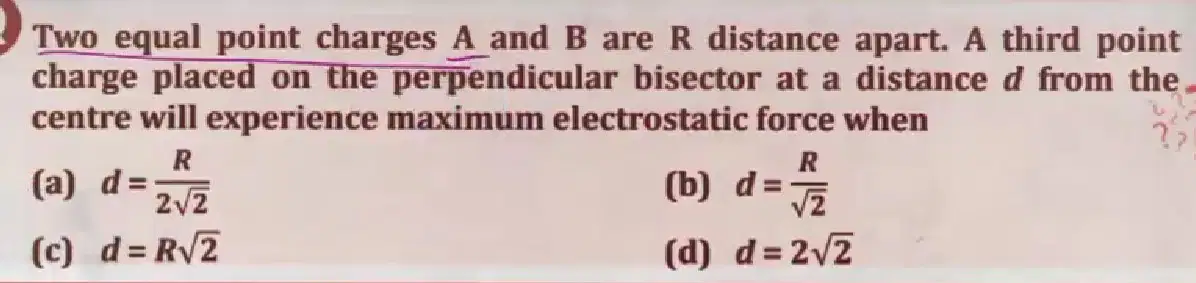
a
b
c
d

Which of the following is correct regarding the given statement :
The statement is correct
The statement is incorrect
Can't say
None of these
2−5
25
5−2
−4−5
a
b
c
d
a
b
c
d
a
b
c
d
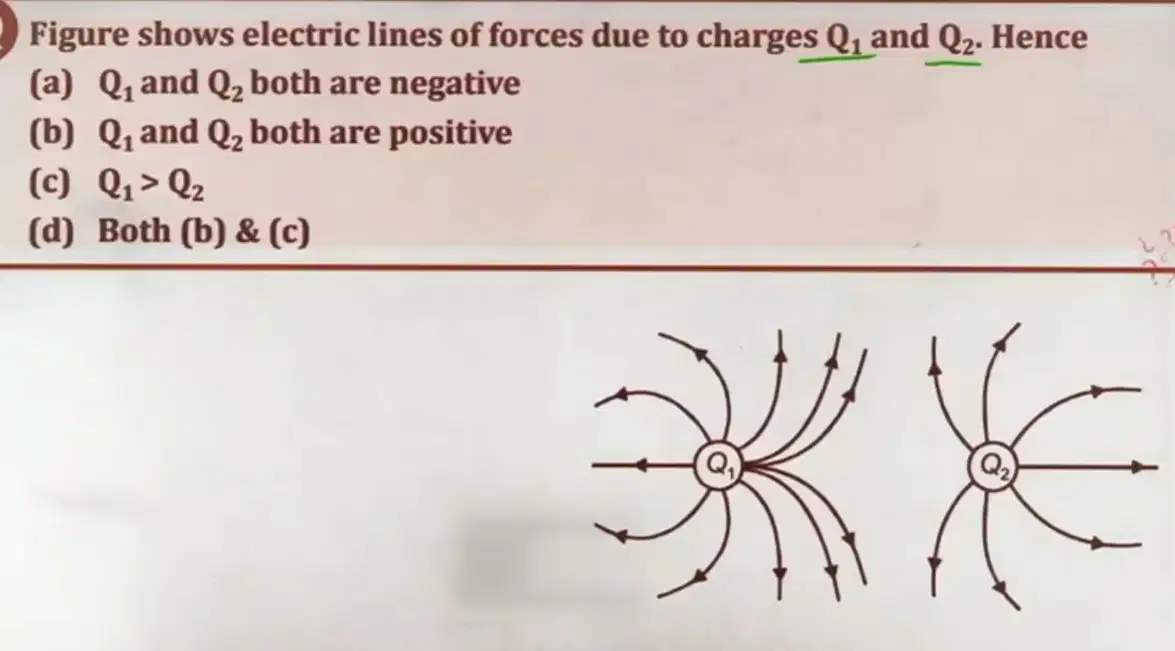
a
b
c
d
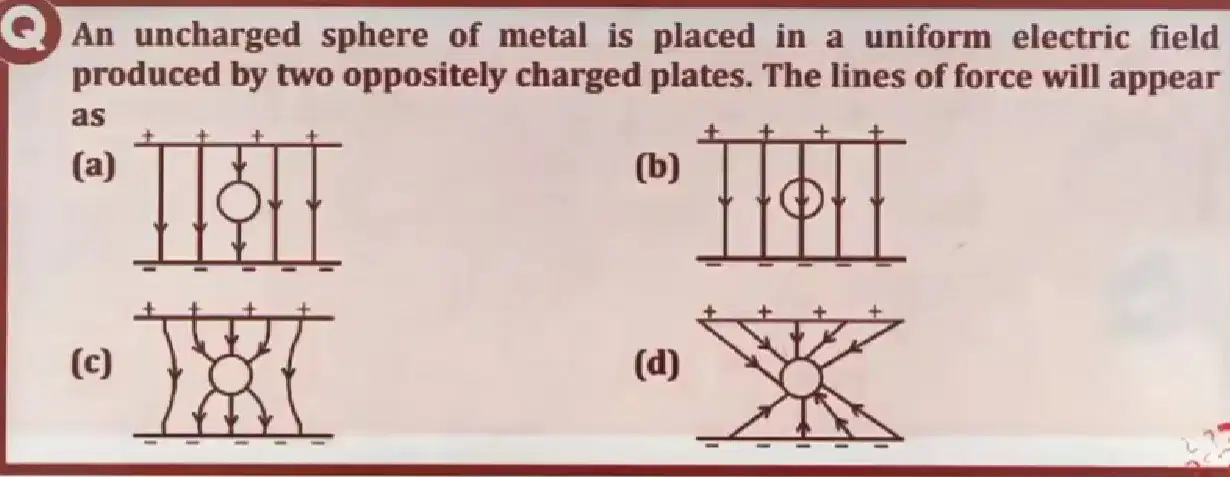
a
b
c
d
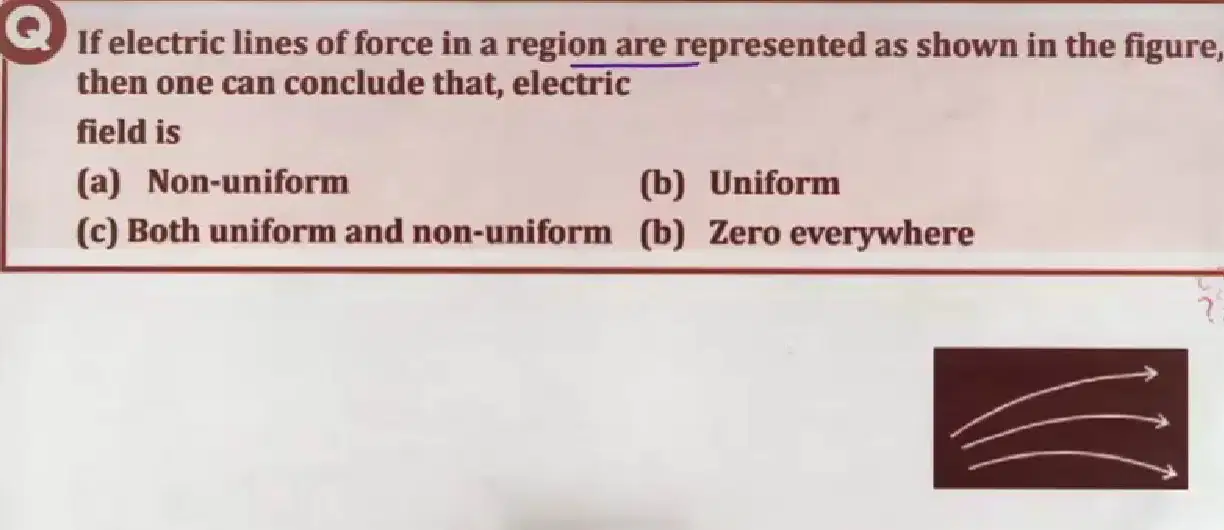
a
b
c
d
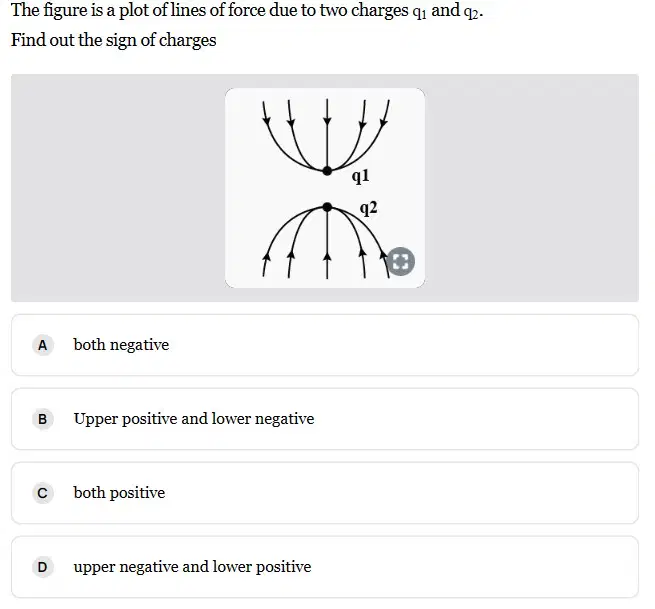
a
b
c
d
a
b
c
d
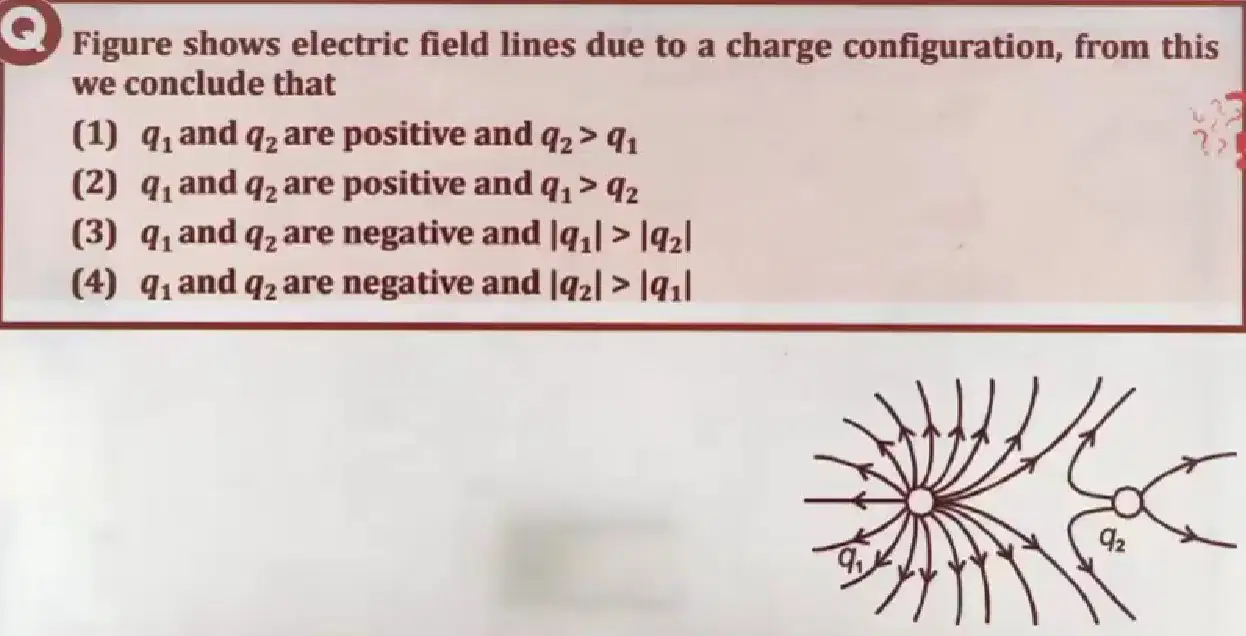
1
2
3
4
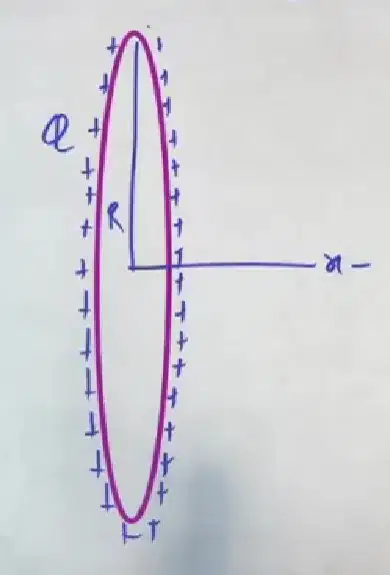
A -q charge particle placed at x (x>>>R) and released then time period of oscillation will be:
2π KQqmR3
π KQq2mR3
2π KQqmR2
2π KQmR3
Two equal negative charges -q are fixed at point (0, a) and (0, -a) on the y-axis. A positive charge Q is related from rest at a point (2a, 0) on the x-axis. The charge Q will
execute simple harmonic motion about the origin
move to the origin and remain at rest there
move to infinity
execute oscillatory but not simple harmonic motion
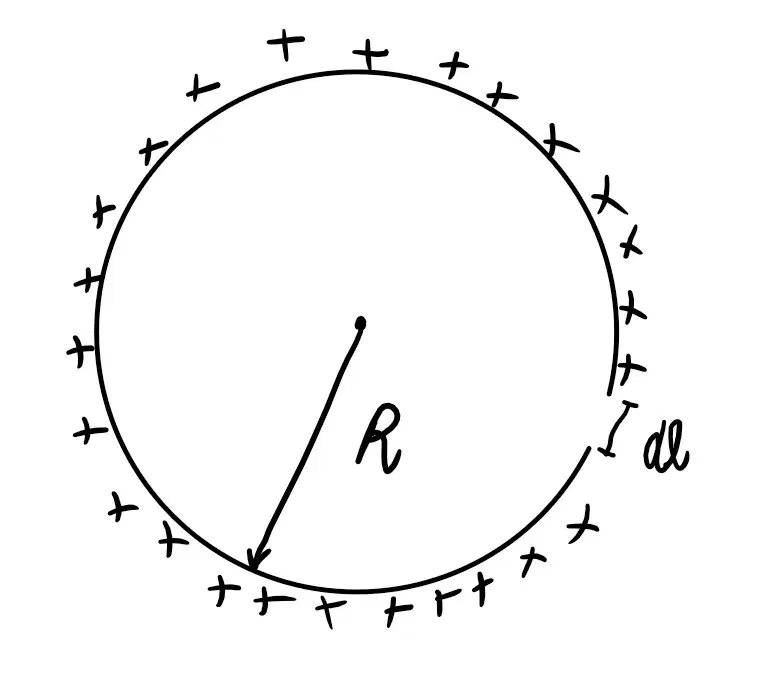
A uniform charge ring of linear charge density λ . If very small dl length is cut as shown in the figure. Then find net Electric field at the centre of the ring
Zero
R2Kλdl
dl2KλR2
R2λdl
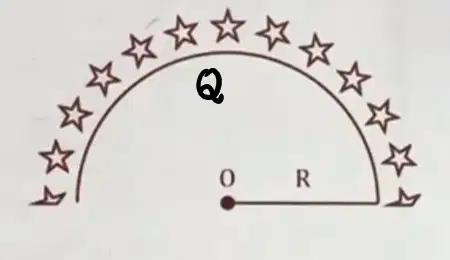
Electric field due to half ring of uniform linear charge density λ=π rQ then find field at O
πr2KQ
r2KQ
r22KQ
πr22KQ

a
b
c
d
R2kλ
R22kλ
R4kλ
none of these
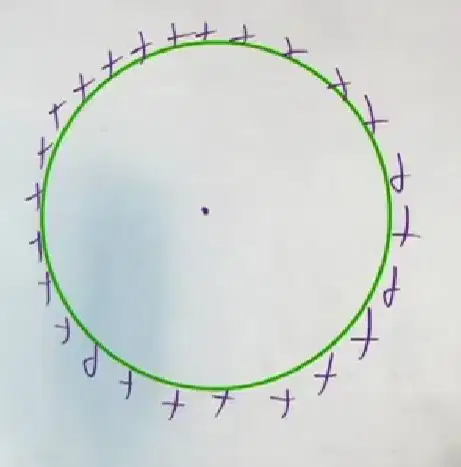
Find electric field at the center.(Lamda is the charge density)
3
4
1
Zero
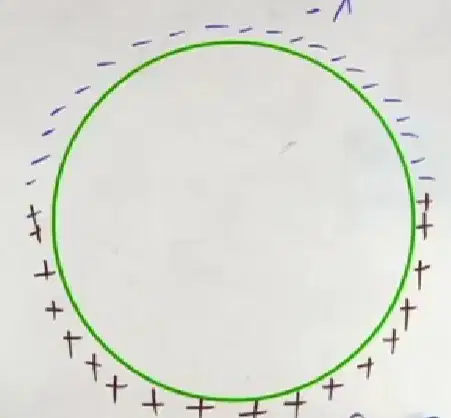
Find letter field at the centre.(Lamda is the charge density)
πϵ°RKλ
πϵ°R2Kλ
πϵ°Rλ
None of these
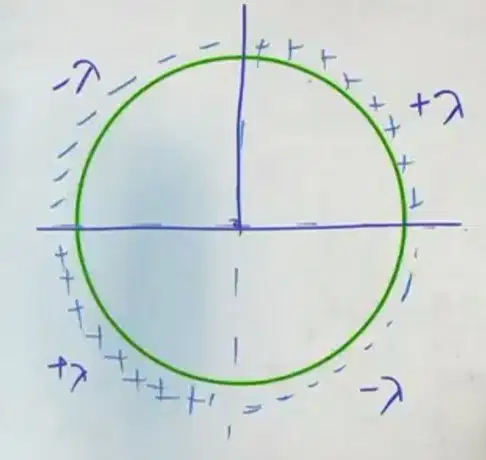
Find electric field at centre.(Lamda is the charge density)
0
2
1
3
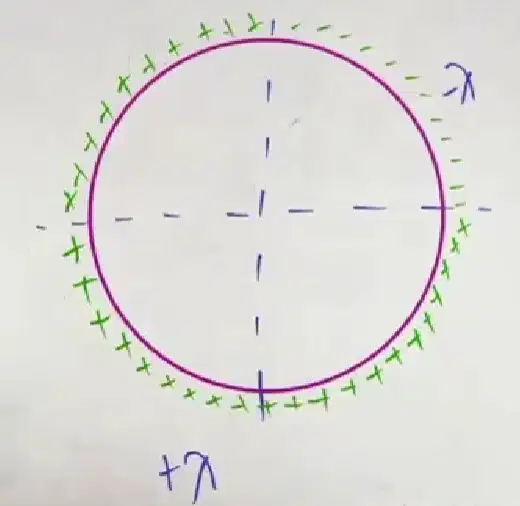
Find electric field at the centre.(Lamda is the charge value).
222kλ
22kλ
224kλ
42kλ

a
b
c
d
R22kλ
R2kλ
2R2kλ
R4kλ
a
b
c
d
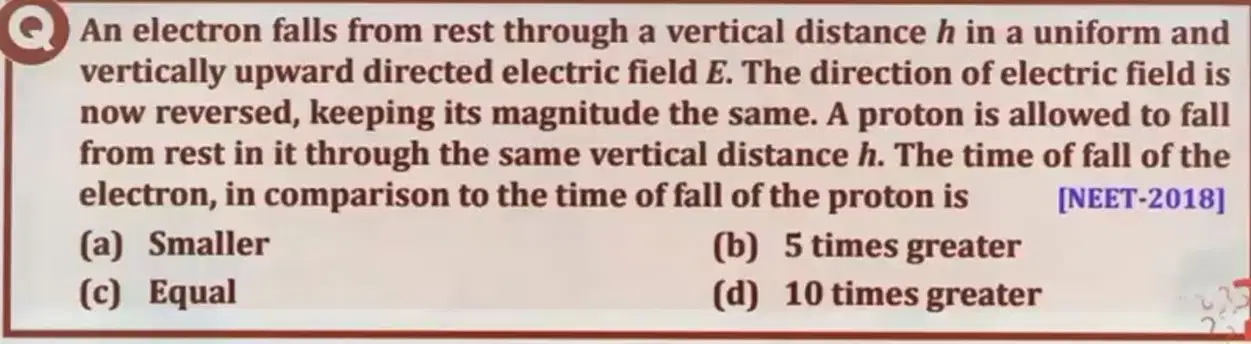
a
b
c
d
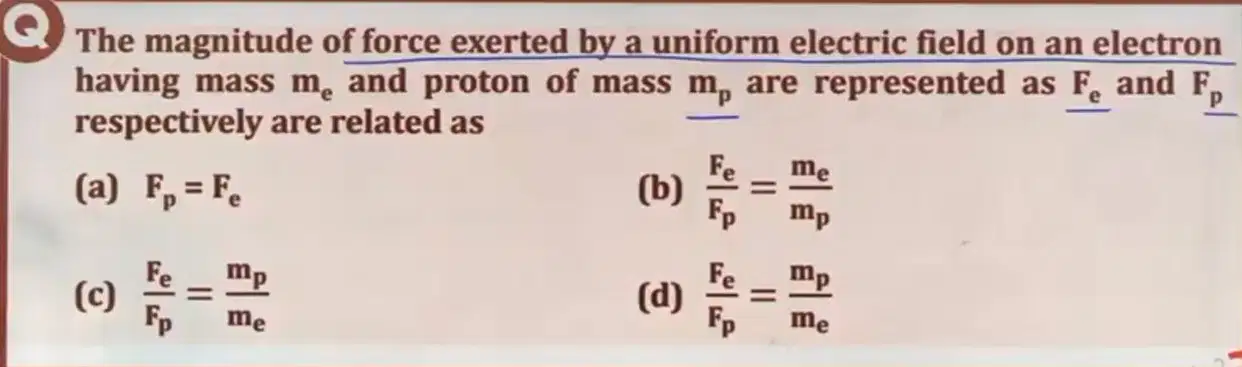
a
b
c
d
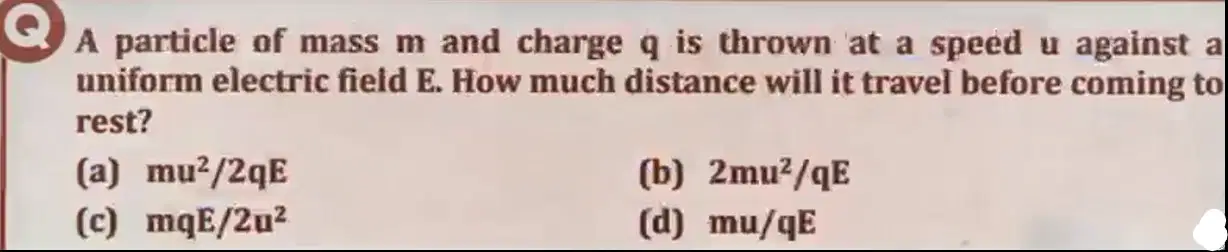
a
b
c
d
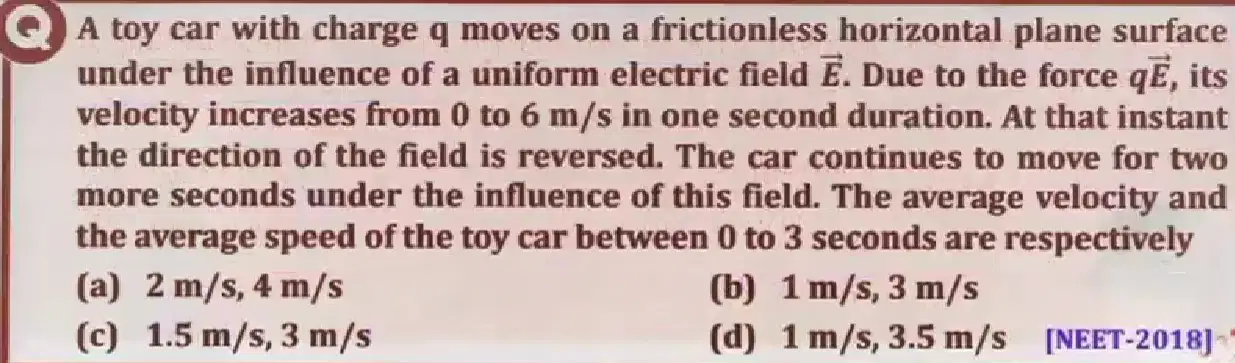
a
b
c
d
a
b
c
d
a
b
c
d

a
b
c
d
a
b
c
d
a
b
c
d

1:1
1:2
2:1
1:4

1:2
1:4
1:1
2:1
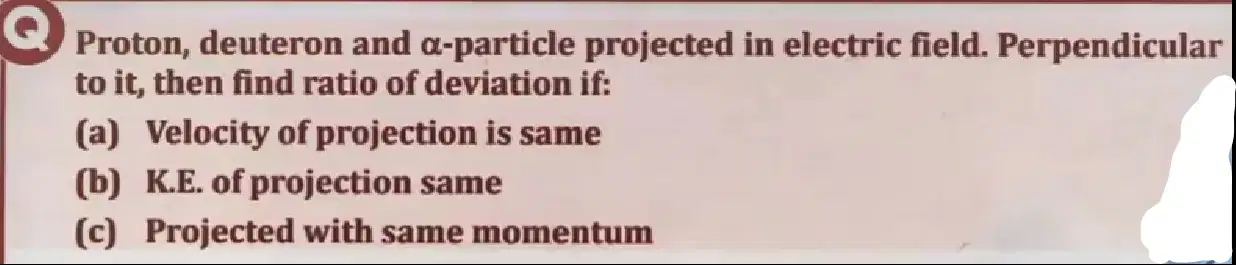
a
b
c
None
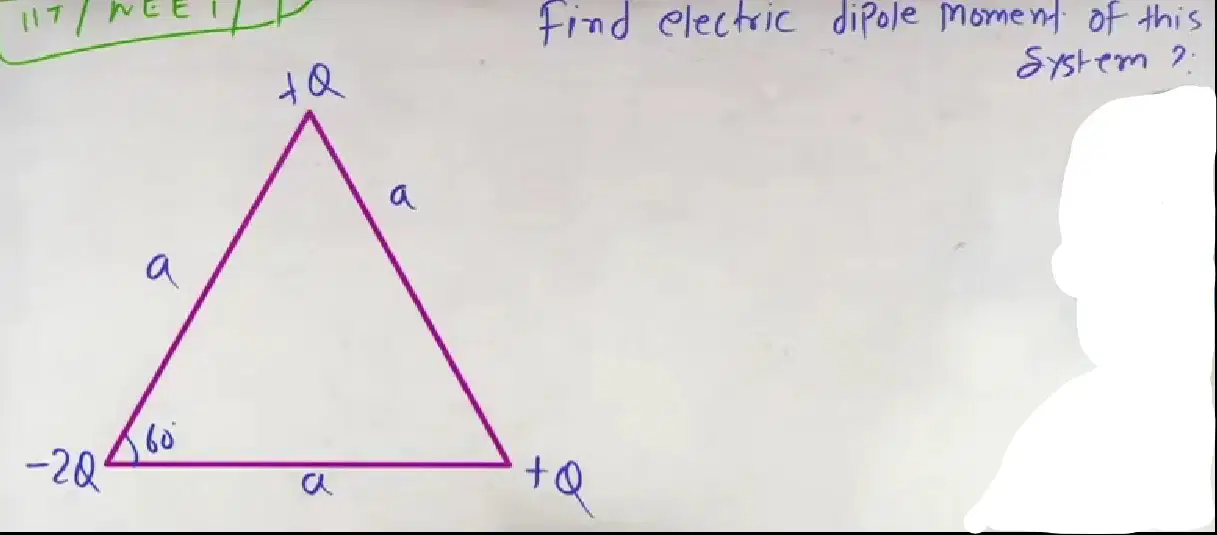
2QA
3QA
22QA
3QA
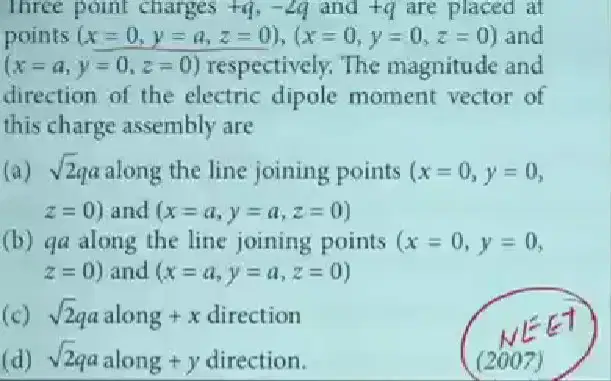
a
b
c
d
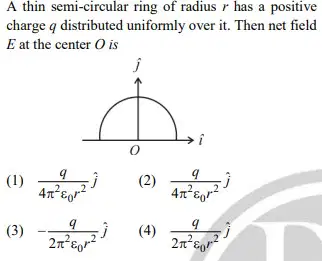
1
2
3
4
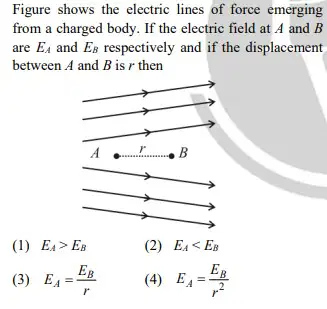
1
2
3
4
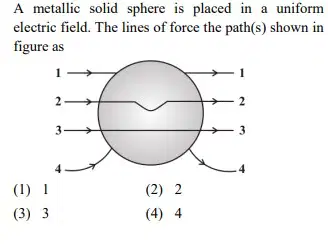
1
2
3
4
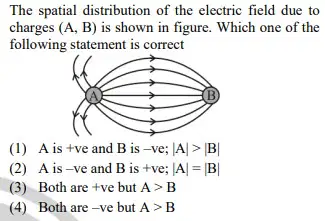
1
2
3
4
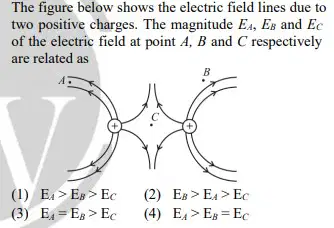
1
2
3
4
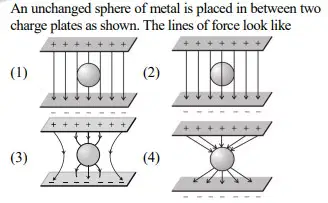
1
2
3
4
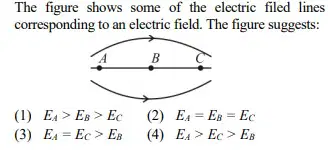
1
2
3
4
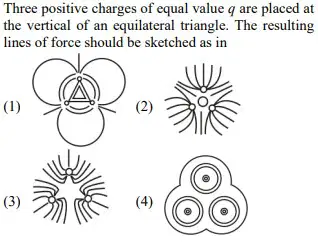
1
2
3
4
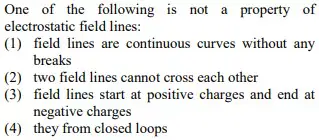
1
2
3
4
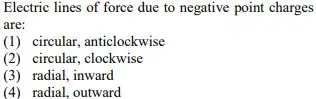
1
2
3
4