
 Worksheets
Geology Test Review
Total questions: 34
Worksheet time: 25mins
Physical Weathering includes:
freezing and thawing
plant growth
grinding rock on rock
acid rain
Process when water expands when it freezes, slowly expanding rocks until pieces break off
freeze-thaw (ice wedging)
chemical weathering
combustion
acidification
– rock is physically broken down into smaller pieces by physical processes grinding away of rock by rock particles carried by water, ice, wind, or gravity
Physical weathering
chemical weathering
erosion

Plant roots conduct -
Physical weathering
Chemical weathering

Rain washing away soil from a hillside is an example of...
Erosion
Weathering
Deposition
Washing out

______________ occurs when water seeps into the cracks of rocks and expands when it freezes.
Icing
Wedging
Expansion
Ice Wedging

What type of weathering is this?
chemical
physical/mechanical
Pick and example of PHYSICAL weathering:
Frost wedging
Acid rain
Oxidation
Carbonic acid
Which of these is the BEST example of physical weathering?
Sediment piling up at the mouth of a river
Plant roots growing through concrete and splitting it
Waves carrying sand away from a beach
Small rocks being carried along a river bed
The two main types of weathering are:
mechanical and physical
potential and kinetic
chemical and physical
potential and chemical

Which of these terms describes the process of acid rain wearing out limestone?
deposition
chemical weathering
physical weathering
erosion
What is the difference between Weathering and Erosion?
Weathering moves the rocks, Erosion breaks the rocks
Weathering breaks the rocks, Erosion moves the rocks
What does Erosion do?
Break down the material
Move the material
Deposit the material
Click all the ways Erosion can happen (Click more than 1)
By gravity
By wind
By water
By sunlight
Sandy beaches are built up through the process of...
Deposition
Convection
Weathering
Destructive forces
Deposition is (a)
Metamorphic rock is created by (a) Sedimentary rock is created by (b) Igneous rock is created by (c)
What type of rock would form from magma or lava?
sedimentary
metamorphic
igneous
Drag and drop the rock types with the numbers that indicate what the rock type forms from.

How could a fossil of a land animal that can't swim end up in North America and Asia?
the scientist's were mistaken
the body could have floated to a new continent
the two continents were connected by land
Drag and drop the labels for the rock strata
Drag and drop the labels onto the rock strata.

What is the Law of Superposition?
All principle that states that rock layers were formed as horizontal layers
A gap in rock layers due to erosion of a weak layer of rock
A principle that states that an intrusive layer of igneous rock will always be younger than the rock it cuts through.
A principle that states that the deeper a rock is, the older it is unless it has been disturbed or altered.
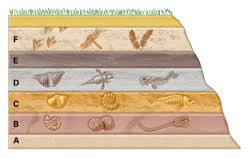
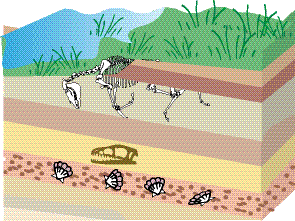

What is the best reason that fossil #4 is NOT a good index fossil?
It is not widespread
it is not short-lived (in numerous layers)
It is in half of the outcrops

Which fossil makes the best index fossil?
ammonite
brachiopod
trilobite
shark
all four are good index fossils

What letter would be the best example of an index fossil?
X
Z
Y
W

Which fossil would make the best index fossil?
Trilobite
Ammonite
Coral
Crinoid

Which layer is OLDER? Fault E or Intrusion D?
Fault E
Intrusion D

If a layer of rock strata contains mostly fish, frogs and snails what could we determine about what the area was like?
the area was covered with water
the area was a desert
the area was mostly land
the area was a forest

