
 Worksheets
CH. 7 Glacier Review
Total questions: 20
Worksheet time: 10mins
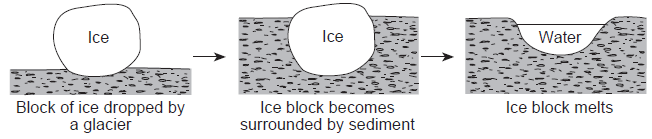
The diagram below shows a glacial landscape feature forming over time from a melting block of ice. This glacial landscape feature is best identified as
a kettle lake
an outwash plain
a finger lake
a lateral moraine
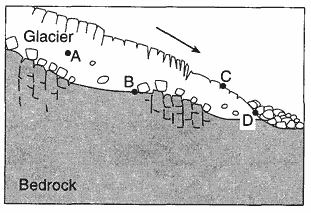
The cross section below represents the transport of sediments by a glacier. At which location is deposition most likely the dominant process?
A
B
C
D
Unsorted, angular, rough-surfaced silt, sand, cobbles, and boulders are found at the base of a cliff. What most likely transported these cobbles and boulders?
running water
wind
a glacier
ocean currents
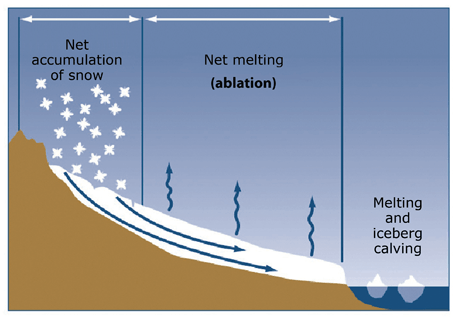
If this glacier experiences more ablation than accumulation, then it would be
accumulating
advancing
regressing
retreating
What will be the most probable arrangement of rock particles deposited directly by a glacier?
unsorted and layered
unsorted and not layered
sorted and not layered
sorted and layered
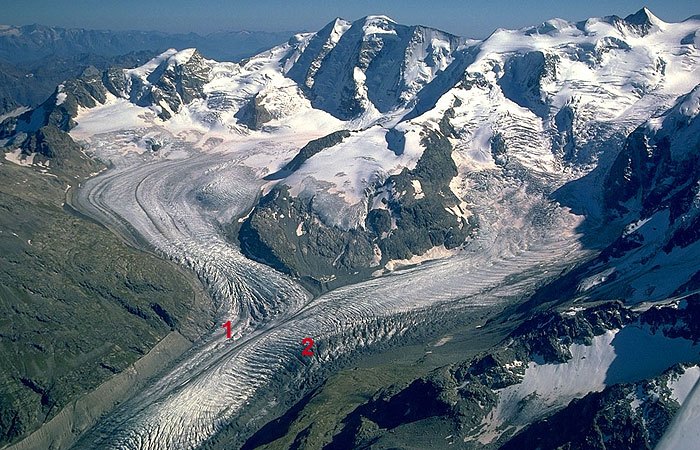
When these 2 glaciers combine, the line of sediment created between them is known as a
lateral moraine
medial moraine
terminal moraine
recessional moraine
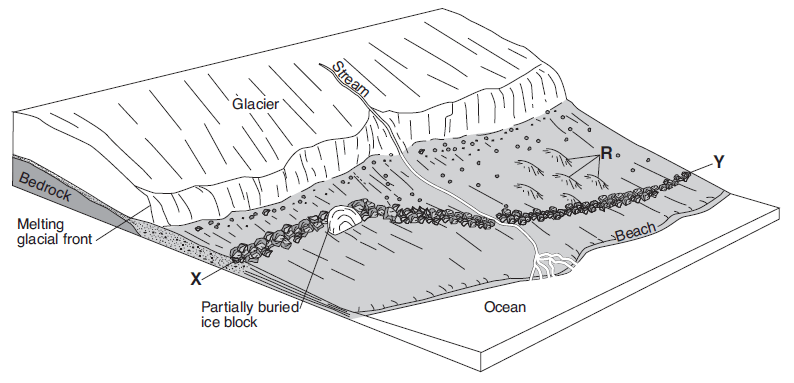
The ridge of sediments from X to Y can best be described as
sorted and deposited by ice
sorted and deposited by melt water
unsorted and deposited by ice
unsorted and deposited by meltwater
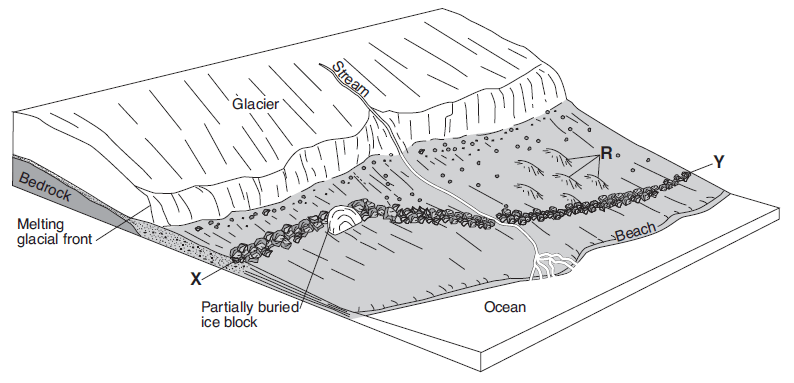
Which feature will most likely form when the partially buried ice block melts?
drumlin
morraine
kettle lake
finger lake
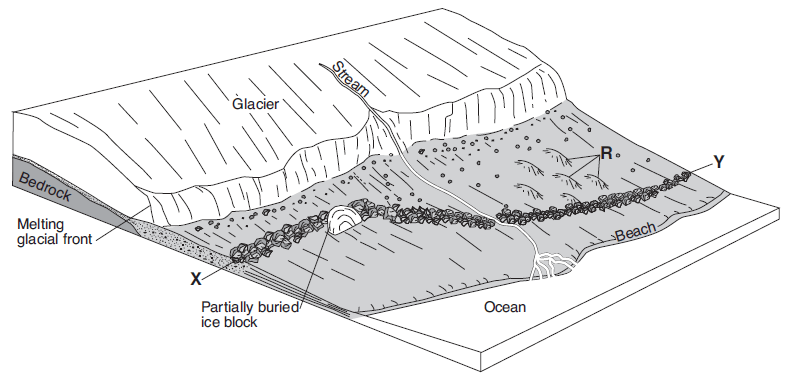
The elongated hills labeled R (called Drumlins) are most useful in determining the
age of the glacier
direction of movement of the glacier
size of the glacier
velocity of the glacier
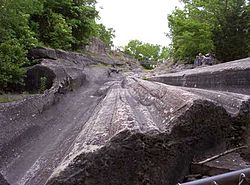
What is the term for these parallel grooves carved by a glacier?
striations
moraines
tarns
aretes
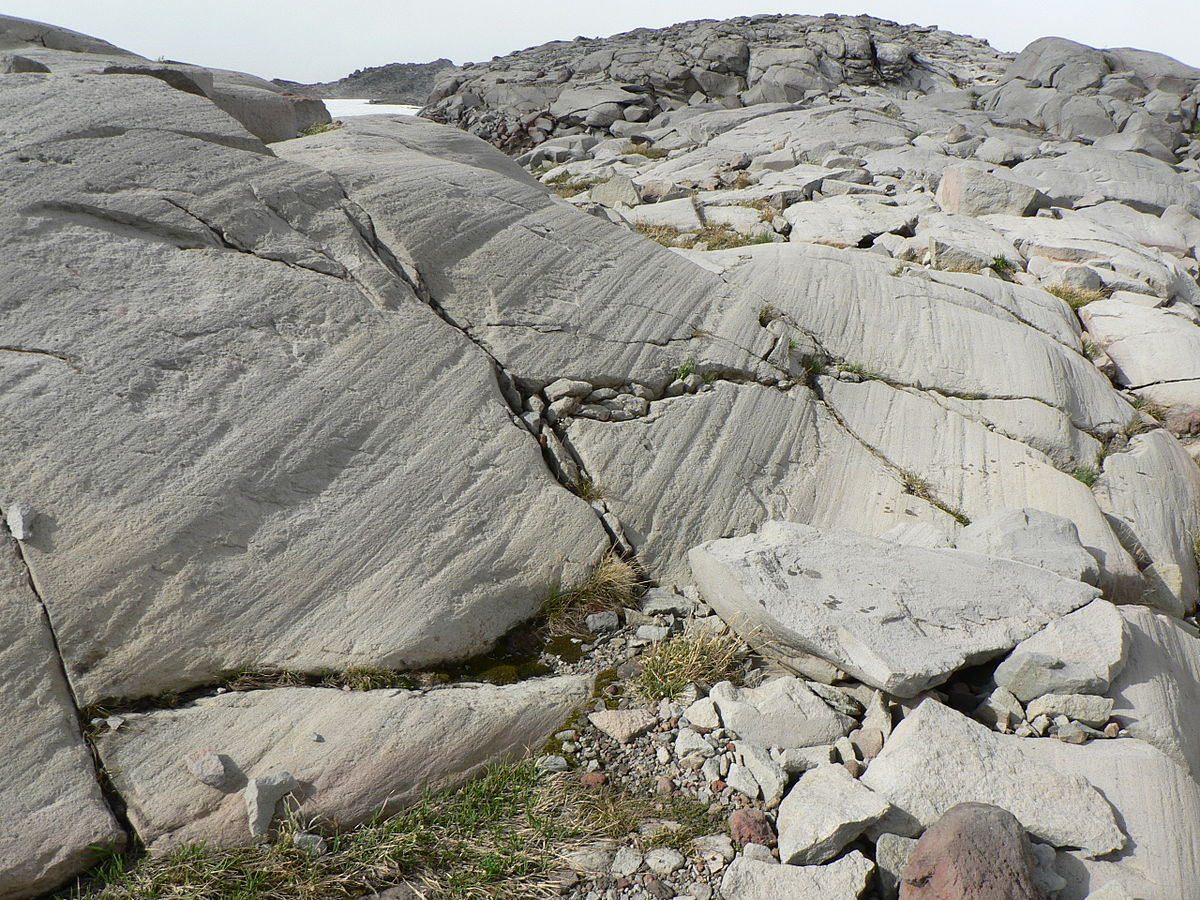
What can these grooves tell us about the glacier that created them?
It's size
It's type
It's weight
It's direction
Which rock material was most likely transported to its present location by a glacier?
rounded sand grains found in a river delta
rounded grains found in a sand dune
residual soil found on a flat plain
unsorted loose gravel found in hills
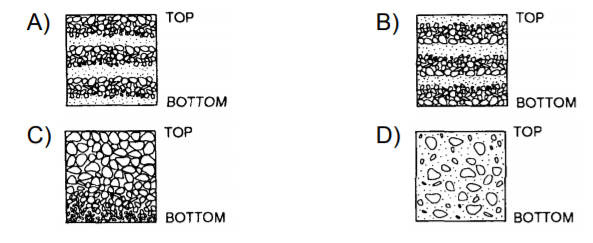
Which soil profile diagram best represents the type of deposition left by a glacier?
A
B
C
D
Which property would best distinguish sediment deposited by a river from sediment deposited by a glacier?
mineral composition of the sediment
amount of sediment sorting
thickness of sediment layers
age of fossils found in the sediment
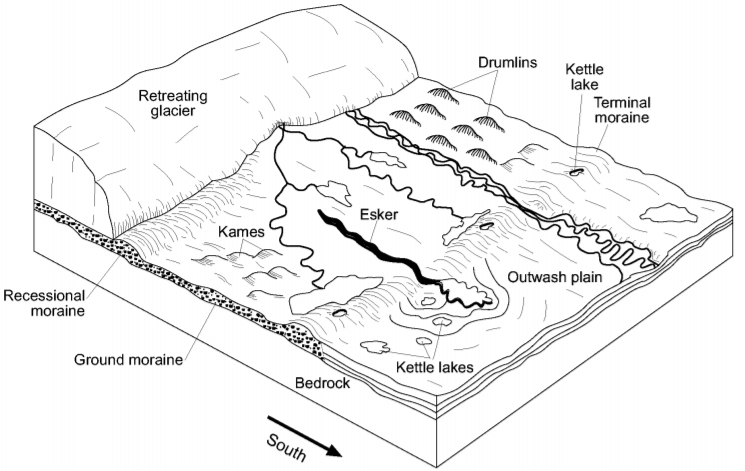
What type of glacier is represented in this diagram?
Valley Glacier
Continental Glacier
Mountain Glacier
Alpine Glacier
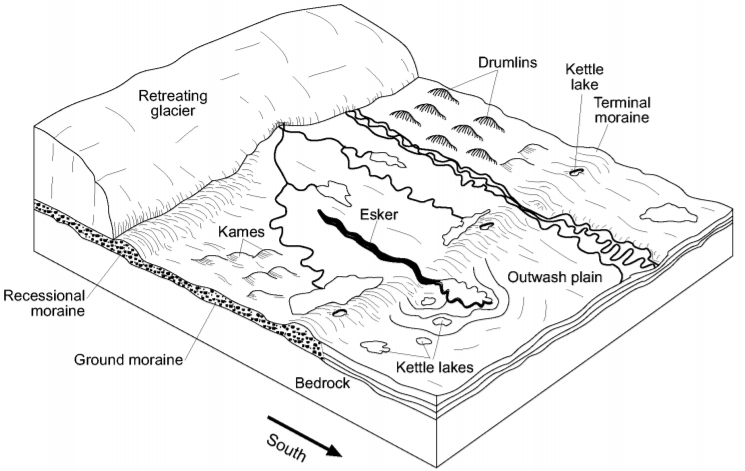
If this glacier is retreating, what must be true?
more ablation than accumulation
more accumulation than ablation
more outwash than inwash
the climate is getting cooler
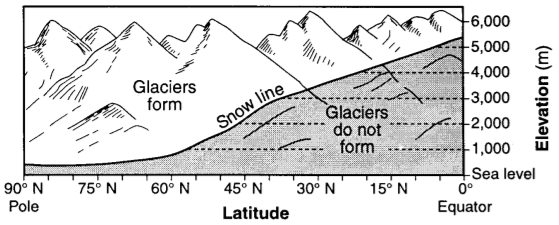
The graph shows the snow line (the elevation above which glaciers form at different latitudes in the Northern Hemisphere). At which location would a glacier most likely form?
0 degrees latitude at an elevation of 6,000m
15 degrees N latitude at an elevation of 4,000m
30 degrees N latitude at an elevation of 3,000m
45 degrees N latitude at an elevation of 1,000m
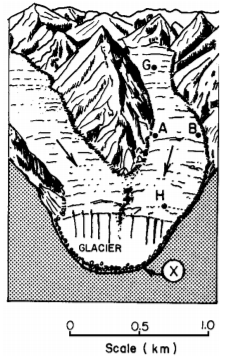
What type of glacier is shown in the diagram? (Choose all that apply)
Valley Glacier
Continental Glacier
Ice Sheet
Alpine Glacier
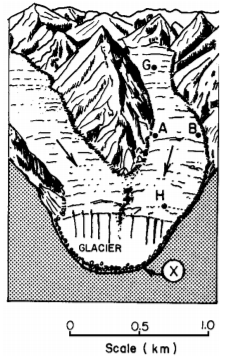
What force is primarily responsible for the movement of the glacier?
ground water
gravity
running water
wind
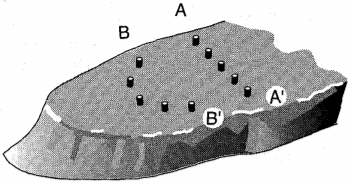
Wooden stakes were placed in a glacier in a straight line as represented by A-A' in the diagram. The same stakes were observed later in the positions represented by B-B'. The pattern of movement of the stakes provides evidence that
glacial ice does not move
glacial ice is melting faster than it accumulates
the glacier is moving faster in the center than on the sides
friction is less along the sides of the glacier than in the center

