

wayground logo

Free Printable Worksheets

NEW

Font size

S
M
L
XL
Worksheets

3.08.23 | Physics Review

Total questions: 19

Worksheet time: 10mins

Name
Class
Date
1.
The mass of an object on Earth is 100 kg. The mass of this object on the moon is different
a)
True
b)
False
2.

What causes neap tides?

a)

The relative position of the sun and moon to the earth cancel out their gravitation effect on the tides.

b)

The relative position of mercury and moon to the earth cancel out their gravitation effect on the tides.

c)

The relative position of the sun and moon are on opposite sides of the earth, causing minimal tides.

3.

What causes tides?

a)

The gravitational forces exerted on the earth by the moon, and to a lesser extent, the sun.

b)

The tilt of the earth as it orbits the sun.

c)

The gravity of the moon only.

d)

The rotation of the earth along with its tilt as it orbits the sun.
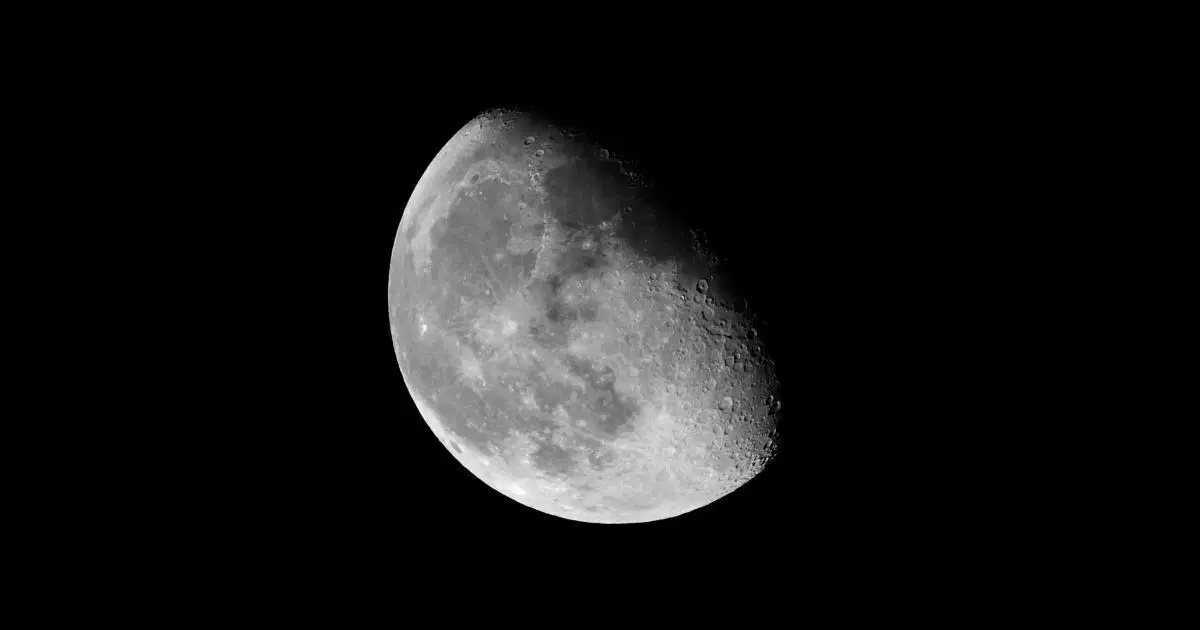
4.

The moon shown here is a..

a)

Waning gibbous

b)

Waxing gibbous

c)

Waning crescent

d)

Waxing crescent

5.

When the light is seen on the right side of the moon it is..

a)

Waxing

b)

Waning

c)

A crescent

d)

A gibbous

6.

During a solar eclipse..

a)

The moon is between the sun and the earth.

b)

The earth is between the sun and the moon.

c)

Mercury is between the sun and the earth.

d)

The moon is on the other side of the sun.

7.

What causes the changes in seasons?

a)

The sun is closer to earth in the summer months.

b)

When the earth's axis points towards the sun, it is summer for that hemisphere.

c)

Seasons are random and not predictable.

8.
____________________ is when small nuclei become more stable by joining together to form larger nuclei
a)
Fusion
b)
Fission
c)
Half Life
d)
Decay
9.
Each particular ____________________ has its own half-life.
a)
Isotope
b)
Proton
c)
Neutron
d)
Nucleon
10.
The disintegration of unstable nuclei occurs all at once.
a)
True
b)
False
11.
The breakup of a larger nucleus into two or more smaller nuclei is ____________________.
a)
Fission
b)
Fusion
c)
Half Life
d)
Conservation
12.
Why are alpha particles easier to stop by materials than beta particles?
a)
They are larger
b)
They are weaker
c)
They are negatively charged
d)
They are slower
13.
Because of electromagnetic force, particles with opposite charges _____ each other and particles with the same charge repel each other.
a)
Attract
b)
Repel
14.
The Weak Nuclear Force in an atom is transferred by the exchange of force-carrying fundamental particles called ______.
a)
Bosons
b)
Electromagnetism
c)
Photons
d)
Quarks
15.
An atom becomes radioactive when it's nucleus becomes unstable. This happens because:
a)
Too many protons in the nucleus cause them to repel rather than attract to the neutrons.
b)
Too many electrons orbiting the atom pull protons away from the neutrons in the center
c)
Too many neutrons in the nucleus cause the particles to repel each other
d)
All of the above
16.
Fill in the blank(s): ____________________ have an electric charge of -1, so ____________________ have an opposite but equal electric charge of +1.
a)
Electrons, Protons
b)
Protons, Electrons
c)
Neutrons, Protons
d)
Bosons, Electrons
17.
According to the standard model, all known matter consists of quarks and leptons that interact by exchanging bosons, which transmit fundamental forces.
a)
True
b)
False
18.
Why are White Dwarfs so dim even though they are so hot?
a)
Because of their small size.
b)
They are not dim, they are actually very bright.
c)
White dwarfs are not hot, they are much cooler than other stars.
d)
Anytime a star has left the main sequence, it becomes dimmer.
19.
Most of the stars on the HR Diagram are classified as what type of stars?
a)
white dwarf
b)
main sequence
c)
red giant
d)
supergiant