
 Worksheets
ACLS
Total questions: 30
Worksheet time: 30mins

จงแปลผลEKG ในภาพ
Atrial Fibrillation
Ventricular Tachycardia (Monomorphic)
Ventricular Tachycardia (Polymorphic)
Ventricular Fibrillation

จงแปลผลEKG ในภาพ
Normal Sinus Rhythm
Sinus Bradycardia
Sinus Tachycardia
Junctional Rhythm / Ventricular Rhythm

จงแปลผลEKG ในภาพ
Normalsinus rhythm
First degree AV block
Sinus bradycardia
Atrial fibrillation

จงแปลผลEKG ในภาพ
Normal sinus rhythm
First degree AV block
Sinus bradycardia
Junctional rhythm

จงแปลผลEKG ในภาพ
Supraventricular Tachycardia (SVT หรือ AVNRT)
Atrial Flutter
Atrial Fibrillation
Ventricular Tachycardia (Monomorphic)

จงแปลผลEKG ในภาพ
Atrial Flutter
Atrial Fibrillation
Ventricular Tachycardia (Monomorphic)
Asystole

จงแปลผลEKG ในภาพ
Atrial Flutter
Atrial Fibrillation
Ventricular Tachycardia (Monomorphic)
Ventricular Tachycardia (Polymorphic)

จงแปลผลEKG ในภาพ
Ventricular Tachycardia (Monomorphic)
Ventricular Tachycardia (Polymorphic)
Ventricular Fibrillation
First-degree AV block
ในการรักษาผู้ป่วย Cardiac arrest ที่มีภาพคลื่นไฟฟ้าหัวใจเป็น Asystole ข้อใดเหมาะสมที่สุด
Atropine
Defibrillation
Epinephrine
Transcutaneous pacing
ปัจจัยใดต่อไปนี้ในผู้ป่วยหัวใจเต้นช้า บ่งบอกว่าผู้ป่วยจำเป็นต้องได้รับการรักษาอย่างเร่งด่วน
12-lead ECG เป็น sinus bradycardia rate 42
มีความดันโลหิตต่ำกว่า 90/60 mmHg
12-lead ECG มี 1st-degree AV block
Systolic blood pressure มากกว่า 160 mmHg
ผู้ป่วย cardiac arrest มีภาพคลื่นไฟฟ้าหัวใจเป็น Ventricular Fibrillation ได้รับการทำ defibrillation สองครั้ง ให้ยา Epinephrine 1 mg IV และ Amiodarone 300 mg IV ไปแล้ว และกำลังเตรียมจะให้ Amiodarone dose ที่สอง ตามคำแนะนำ dose Amiodarone นี้ต้องให้อย่างไร
1 mg/kg IV push
1-2 mg/min IV infusion
150 mg IV push
300 mg IV push
ผู้ป่วยภาวะหัวใจเต้นช้า มีอาการไม่คงที่ อัตราการเต้นของหัวใจ 36 ครั้งต่อนาที ให้ยา atropine 0.6 mg IV สี่ครั้งแล้วไม่ตอบสนอง และติด percutaneous pacemaker แต่ไม่สำเร็จท่านจะให้การรักษาอะไรเป็นอันดับต่อไป
Atropine 1.2 mg IV push
Epinephrine 2-10 mcg/min IV infusion
Adenosine 6 mg IV push
Normal saline 500 ml IV load
ผู้ป่วยมีภาวะหัวใจเต้นเร็วแบบ Irregular wide-complex tachycardia 152 ครั้งต่อนาที ความดันโลหิต 110/70 mmHg มีอาการเจ็บแน่นหน้าอกมากท่านจะให้การรักษาอย่างไร
Adenosine 6 mg IV bolus
Lidocaine 1-1.5 mg/kg IV bolus
Immediately synchronized cardioversion
ปรึกษาผู้เชี่ยวชาญ
ผู้ป่วยหัวใจเต้นช้าอัตราการเต้นของหัวใจ 42 ครั้งต่อนาที ดูกระสับกระส่ายและมีเหงื่อแตก ความดันโลหิตต่ำ 80/50 mmHgตามคำแนะนำต้องให้Atropine IV dose เท่าใด
0.1 mg
0.3 mg
1 mg
12 mg
ผู้ป่วย Cardiac arrest นอกโรงพยาบาล ทำ High quality CPR ครบสองนาทีแล้ว เครื่อง AED ที่ติดบอกว่า “ไม่แนะนำให้ทำการช็อกไฟฟ้า”ก่อนที่ท่านจะทำhigh quality CPR ต่อ ท่านสามารถทำขั้นตอนใดต่อไปนี้ได้
คลำชีพจรและสังเกตการหายใจของผู้ป่วย
เปิดหลอดเลือดดำหรือ IO
ใส่ Laryngeal airway
ใส่ท่อช่วยหายใจ
ข้อใดต่อไปนี้เป็นข้อบ่งชี้ในการให้ Magnesium ในผู้ป่วย cardiac arrest
Monomorphic Ventricular Tachycardia with known long QT interval
Shock refractory Ventricular Fibrillation
Polymorphic Ventricular Tachycardia (ชนิด Torsades de pointes)
Shock refractory Ventricular Tachycardia
ผู้ป่วย Cardiac arrest ภาพคลื่นไฟฟ้าหัวใจเป็น Asystole ได้ทำ High quality CPR ใส่ท่อช่วยหายใจ และเปิดหลอดเลือดดำให้สารน้ำแล้วยาที่จะต้องให้ลำดับต่อไปคืออะไร
Atropine 0.6 mg IV/IO
Atropine 1.2 mg IV/IO
Dopamine 2-20 mcg/kg/min IV infusion
Epinephrine 1 mg IV/IO
ผู้ป่วย Cardiac arrest ภาพคลื่นไฟฟ้าหัวใจเป็น Ventricular Fibrillation ทำ defibrillation เป็นครั้งที่สองแล้วท่านจะพิจารณาให้การรักษาใดต่อ
Atropine 1 mg IV/IO
Epinephrine 1 mg IV/IO
Lidocaine 1.0-1.5 mg/kg IV/IO
Sodium bicarbonate 50 mEq IV/IO
ผู้ป่วยใน ICU มี monitor ECG เปลี่ยนเป็น regular narrow complex tachycardia rate 220/min ความดันโลหิต 128/58 ค่า pulse oximetry 98% มี IV อยู่แล้วที่แขนซ้าย ไม่มียากระตุ้นความดันใดให้อยู่ ไม่มีอาการแน่นหน้าอก ไม่มีอาการ heart failure และตรวจ capillary refill ปกติหลังทำvagal maneuver แล้วไม่ตอบสนอง ท่านจะให้การรักษาใดต่อไป
Adenosine 6 mg IV push
Amiodarone 300 mg IV push
Amiodarone 150 mg IV drip in 10 min
Synchronized cardioversion 50-100 J
ผู้ป่วย Cardiac arrest ภาพคลื่นไฟฟ้าหัวใจเป็น Ventricular Fibrillation ไม่ตอบสนองต่อการทำ defibrillation ครั้งที่สอง ท่านกำลังจะให้ยาตาม protocolตามGuideline ACLS แนะนำให้ใช้ช่องทางใดในการให้ยาแก่ผู้ป่วยรายนี้ (Recommended route of Administration)
Central IV line
via Endotracheal tube
External jugular vein หรือ large vein อื่นๆ
Peripheral IV lineหรือ IO
ผู้ป่วย Pulseless Ventricular Tachycardia ได้รับการทำ defibrillation ไปแล้ว 2 ครั้ง และได้ยา Epinephrine 1 mg IV ไปแล้วถ้าหากคลื่นไฟฟ้าหัวใจยังคงเป็นเช่นเดิม ยาตัวต่อไปที่จะให้ในผู้ป่วยรายนี้คือ
Adenosine 6 mg
Amiodarone 300 mg
Epinephrine 1 mg
Lidocaine 0.5-0.75 mg/kg
ผู้ป่วยหญิงอายุ 35 ปี มีอาการใจสั่น ภาพคลื่นไฟฟ้าหัวใจเป็น regular narrow QRS complex tachycardia rate 180/min วัดความดันโลหิตได้ 130/80 mmHg ไม่มีอาการอย่างอื่นอีกท่านจะให้การรักษาเป็นอันดับต่อไปอย่างไร
Adenosine 6 mg IV push
Adenosine 12 mg IV push
Amiodarone 150 mg IV drip in 10 min
ก. Lidocaine 1 mg/kg IV push
ข้อใดต่อไปนี้คือประโยชน์ของ complete chest recoil ในการทำ high quality CPR
ช่วยให้มีเลือดกลับไปเลี้ยงหัวใจ
ช่วยให้ผู้กดหน้าอกได้พัก
ลดโอกาสการเกิดกระดูกซี่โครงหัก
ทำให้กดหน้าอกได้เร็วขึ้น
ในการช่วยหายใจ bag-mask ventilation ในผุ้ป่วยหยุดหายใจ แต่ยังมีชีพจร แนะนำให้ทำอย่างไร
ช่วยหายใจทุก 6 วินาที
ช่วยหายใจทุก 10 วินาที
ช่วยหายใจทุก 12-14 วินาที
ช่วยหายใจทุก 17-18 วินาที

ผู้ป่วยหมดสติ ไม่ตองสนอง ไม่หายใจ ท่านไม่แน่ใจว่าคลำชีพจรได้หรือไม่ ภาพคลื่นไฟฟ้าจาก monitor เป็นดังภาพท่านจะให้การรักษาอย่างไร
Transcutaneous pacing
เริ่มทำ high quality CPR
Atropine 0.6 mg IV
Epinephrine 1 mg IV
ขณะทำ CPR แนะนำให้สับเปลี่ยนผู้กดหน้าอกเมื่อใด เพื่อหลีกเลี่ยงการอ่อนล้าของผู้ช่วยเหลือ
เปลี่ยนคนกดหน้าอกทุก 1 นาที
เปลี่ยนคนกดหน้าอกทุก 2 นาที
เปลี่ยนคนกดหน้าอกทุก 3 นาที
เปลี่ยนคนกดหน้าอกทุก 4 นาที
ตามคำแนะนำของ American heart associationปี ค.ศ. 2020 แนะนำให้กดหน้าอกลึกเท่าใด
กดลึกอย่างน้อย 1 นิ้ว
กดลึกอย่างน้อย 2 นิ้ว
กดลึกอย่างน้อย 3 นิ้ว
กดลึกอย่างน้อย 4 นิ้ว
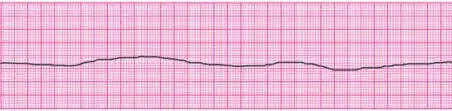
ท่านทำการ CPR ผู้ป่วย cardiac arrest ภาพคลื่นไฟฟ้าหัวใจตอนแรกเป็น Ventricular Fibrillation ทำการ defibrillation 3 ครั้งหลังทำ CPR ครบ 2 นาที ยังคลำชีพจรไม่ได้ พบคลื่นไฟฟ้าหัวใจเป็นดังภาพ ท่านจะทำการรักษาใดต่อจากนี้
คลำชีพจร carotid อีกครั้ง
ให้ amiodarone 300 mg IV
ให้ atropine 0.6 mg IV
ทำ high quality CPR ต่อ
ท่านทำการ CPR ผู้ป่วย cardiac arrest ภาพคลื่นไฟฟ้าหัวใจตอนแรกเป็น ventricular fibrillation ทำการ defibrillation ไปแล้ว 1 ครั้งหลังทำ CPR ครบ 2 นาทีพบคลื่นไฟฟ้าหัวใจเป็นดังภาพ ท่านจะให้การรักษาใดเป็นอันดับแรก
Defibrillation 200 J biphasic
Amiodarone 300 mg IV push
Epinephrine 1 mg IV push
ใส่ท่อช่วยหายใจ (Endotracheal tube) เพื่อให้ผู้ป่วยได้รับ 100% ออกซิเจน
ในการกดหน้าอกผู้ป่วย cardiac arrest เรายอมให้หยุดกดหน้าอก (interrupt chest compressions) ได้ไม่เกินระยะเวลาเท่าใด
5 วินาที
10 วินาที
15 วินาที
20 วินาที

