
 Worksheets
SS Eval 4 Class VII
Total questions: 180
Worksheet time: 2hrs 30mins
Many new dynasties emerged after which century?
15th Century
7th Century
12th Century
11th Century
Which people were expected to bring gifts for their king in the 17th century?
Traders
Samantha
Overlords
None of these
From whom the revenue was also collected?
Traders
Artisans
Merchants
Peasants
Who was considered as the most powerful chola ruler?
Babur
Rajendra
Rajaraja
Prithviraj Chauhan
Who destroyed the temple of Somnath?
Sultan Mahmud of Ghazni
Mohammed Ghori
Prithviraj Chauhan
All of the above
Who defeated Muhammed Ghori
Mahmud of Ghazni
Dantidurga
Prithviraj Chauhan
None of these
Land granted to Brahmanas was recorded on __________?
Silver plates
Betel leaves
Iron plates
Copper plates
Who is the founder of the Chola Empire?
Rajendra Chola
Raja Raja Chola
Vijayalaya Chola
Parantaka Chola
Rashtrakutas were subordinate to whom?
Cheras
Cholas
Chalukyas
None of these
settlements of peasents is called as
ur
nadu
shalabhoga
bhramadeya
in which year prithvi raj 3 was defeated by muhammad ghori
1132
1367
1156
1192
what was association of traders called
sabha
nagarams
nadu
vellanvagai
who found the pala dynasty
dharamapala
allaudin khilji
sikandar lodi
muhammad ghori
a group of urs is called as
nadu
tamil nadu
ur
ur village
Which dynasty ruled in the Deccan?
Gurjar-Pratiharas
Palas
Chahamans
Rashtrakutas
"Tripartite struggle" was a long-drawn conflict over the city of___________.
Ghazni
Delhi
Kanauj
Karnataka
The word ___________ means son of a king
kshatriya
Suryavanshi
Rajput
rashtra
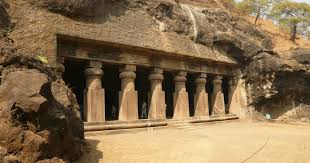
Rashtrakuta kings built temples in these caves near Mumbai:
Ellora
Ajanta
Elephanta
Karla
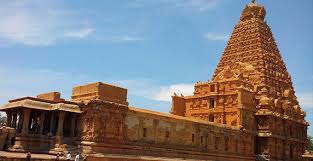
The Brihadeshwara temple was built by this ruler:
Karikala Chola
Rajendra Chola
Rajaraja I
Mahipala
whose death in 647CE led to a period of unrest in northern India
Prithviraj Chauhan
Naghabata 1
Harshavardhana
what were the three dynasties which were formed
Rajputs
mauryans
rashtrakutas
palas
the three kingdoms were later attacked by
ghaznavids
ghorids
alexander
chahamanas
who were the rajputs
clans (social groups)
valiant warriors
artists
singers
out of the many rajput dynasties, what were the two prominent ones.
chahamnas
guhilas
solankis
gurjara prathihara's
who were the three kings who ruled the gurjara prathiharas
Nagabhata 1
muhammad ghori
dhruva 1
mihir bhoja
mahendrapala 1
in what poem did chand bardai immortalise prithviraj chauhans reign
prithviraj raso
chand barsai
aja aja chand
the pala dynasty was founded by who and when
dantidurga
Gopala 750 CE
amogavarsha
which kingdoms fought for kannauj
rashtrakutas
rajputs
palas
all of the above
who was the father of mahmud ghazni
sabuktigin
chand bardai
qutubuddin aibak
Members of each tribal groups were united by __________ bonds.
Kingship
Kinship
Kinsheep
Pinship
Why did historians not write much about the tribes?
Because they didn't have enough information.
Because they were lazy.
Because they couldn't decode the tribes language.
Because they didn't want to find more about tribes.
The most important tribal group during the 13th and 14th centuries.
Langahs
Arghuns
Gakkars
Khokhars
Who was made a noble (mansabdar) by Emperor Akbar?
Sher Kan Gakkar
Amjad Khan Gakkhar
Kamal Khan Gakkhar
Kaml Khan Ghakkar
Where did the Ahoms migrate to?
Brahmaputra Valley
Ganga - Yamuna Doab
Kaveri Delta
Tapi Valley
Name of the Gond Kingdom.
Gondis
Garhita Shah
Garha Katanga
Garha Kangana
Son of Sangram Shah.
Gondri Shah
Dalpat
Chandra Shah
Dalipati
In 1662, Mughals attacked the Ahom kingdom under ________.
Allaudin Khalji
Mir Jumla
Bir Mirchi
Ram Singh I
During the time of Ahoms, historical works were called ______.
Prashashti
Buranjis
Brihala
Tawarikh
The four varnas in the varna system.
Kstryas, Vasiyes, Shoodras and Brahmines
Kshatriyas, Vaisyas, Brahmines and Daliths
Brahmanas, Kshatriyas, Vaishyas and Shudras
Identify the Gonds.


None of the above
Which is NOT TRUE for the tribals?
Lived in remote area
Unique culture and language
Developed society
Use primitive technology
Which is NOT properly matched
Ahom - Assam
Mundas - Orissa
Gond - North west India
Naga- North east India
Cheros were defeated by _________.
Raja Jaswant Singh
Aurangzeb
Raja Jay singh
Raja Man Singh
Which is NOT TRUE for Nomadic Pastoralists?
Keep animals
Move from one place to another
Exchange goods
Settled life at one place
The caravan of Banjaras was called
Khel
Clan
Tanda
Ox cart
"Country inhabited by Gonds" was called
Chaurasi
Barhot
Garh
Gondwana
Which is NOT CONNECTED with Gond-state?
Garh
Khel
Barhot
Chaurasi
Who was Durgavati?
Ahom queen
Gond queen
Chero queen
Mughal queen
Who were Paiks?
Ahom army commander
Forced labour
Clan leader
Ahom king
Cheros were defeated by .
Akbar
Raja Man Singh
Kunwar Singh
Bir Narain
Who was the son of Aman Das?
Bir Narain
Dalpat
Chandra Shah
Kamal Khan
Who was Durgavati?
Gond Queen
Chero Queen
Mughal Queen
Ahom Queen
The Akbar Nama, a history of Akbar's reign mentions the Gond kingdom of that had 70,000 villages.
Garha Katana
Bramhaputra valley
Sindh
Multan
In 1662, Mughals attacked the Ahom kingdom under .
Allaudin Khalji
Bir Mirchi
Mir Jumla
Mohammed Tuqlaq
Country Inhabitat by Gonds was called as .
Chaurasi
Barhot
Garh
Gondwana
During the time of Ahoms, historical workers were called as ..............
Paiks
Buranjis
Tawarikh
Brihala
What did the Gonds practice?
(a)
Chaurasi contained how many villages?
100
12
90
54
84
How did Garha Katanga a rich state?
By stealing wealth from the Mughals
By Mining for wealth
By Exporting elephants
By taking extra tax from the people
Nayanars were the devotee of
Lord Vishnu
Goddess Durga
Lord Shiva
Nrusimha
Alvars were the devotees of
Lord Shiva
Lord Vishnu
Lord Krishna
Lord Rama
Mirabai became the disciple of
Surdas
Thulsidas
Ravidas
Dadu Dayal
The songs of Alvars were compiled in _____
Tevaram
Tiruvacakam
Divya Prabandam
Hagiography
Who propounded the doctrine of vishistadvaita?
Shankara
Ramanuja
Basavanna
Nayanars
Who advocated intense training of mind and body through yogasanas, breathing exercises and meditation to achieve oneness with God?
Nathpanthis
Siddhacharas
Yogis
All the above
Great saint Shankara was born in which state ?
Kerala
Tamil Nadu
Karnataka
Telangana
The Sufi master held their assemblies in their
TEMPLE
COURTYARD
KHANQAHS
NONE OF THESE
Name the successor of Guru Nanak.
Guru Arjan
Guru Ramdas
GuruTegh Bahadur
Guru Angad
What does Hagiography mean ?
Writing of saints lives
Writing of poets lives
Writing of kings lives
Ramanujan was born in which state ?
Kerala
Tamil Nadu
Karnataka
Telangana
Thulasidas Ramacharitamanas is written in
Hindi
Awadhi
Malayalam
Tamil
Who were sufis?
Hindu mystics
Muslim mystics
Buddha mystics
None of these
What are the holy law developed by holy Islam Scholar?
Shariat
Jannat
Haj
Qayamat
Identify the composition of Surdas compiled?
Sursagara
Surasaravali
Sahitya Lahari
All the above
Vitthala is a form of
Vishnu
Shiva
Krishna
Ganesha
Great Sufi saints of Central Asia were Gazzali, Rumi and Sadi.
True
False
Who propounded the doctrine of vishistadvaita?
Shankara
Ramanuja
Basavanna
Nayanars
The holy book of Muslim is
Guru Granth Sahib
Bagavat Gita
Quran
Bible
Golden Temple is Located in
Amirstar
Lucknow
Agra
Delhi
The term langar refers to
common place of worship
Health center
Sacred place
common kitchen
Great saint Shankara was born in which state ?
Kerala
Tamil Nadu
Karnataka
Telangana
Basavanna's Virashaivism began in
Tamilnadu
Kerala
Karnataka
None of the above
Who said the following lines?
They are Vaishnavas who understand the pain of others.
Gujarati saint Narsi Mehta
Sakhubai
Eknath
Tukaram
The holy book of Sikh is
Guru Granth Sahib
Bagavat Gita
Quran
Bible
When was the 3rd battle of Panipat fought?
1707
1861
2003
1761

In which year did Aurangzeb die?
1947
1877
1707
1652

Aurangzeb fought a long war in the (a) region.
When was the 3rd battle of Panipat fought?
1707
1861
2003
1761

Who was the ruler of Iran and when did he invade Delhi?
Nadir Shah: 1739
Ijaradar Singh: 1645
Alivardi Khan: 1743
Abdul Ravi: 1748
The states which did not break formal ties with the Mughals:
Rajput Watan Jagirs
Mughal Provinces
Sikhs
Marathas

The revenue farmers were called as (a) .
(a) was the founder of the Awadh state.

What was the title of the ruler of Hyderabad?
Burhan-ul-Mulk
Shahanshah
Diwan-ul-Mulk
Nizam-ul-Mulk
The Telugu independent warrior chiefs were known as (a) .
Which system of revenue collection did the old Mughal provinces introduce?
(a)

Nizam-ul-Mulk Asaf Jah was the most powerful member in the court of :
Shah Alam
Ahmad Shah
Murshid Quli Khan
Farrukh Siyar
How many times was North india invaded by Abdul Shah and in what time frame?
1, 1680-81
5, 1748-61
3, 1783-90
5, 1693-1703

Asaf Jah tried to control the rich regions of ______ coast.
Orissa
Bombay
Coromandel
Andhra
Sa'adat Khan held a zat rank of :
6000
7000
8000
9000
Murshid Quli Khan transferred the Mughal jagirdars to (a) .
Peasant and Zamindari (a) added to the problems of the Mughals.
Burhan-ul-Mulk held the combined offices of ______, _____ and _____.
Ijaradari
Subadari
Diwani
Faujdari
Which option is correct?
Sa‘adat Khan- Awadh
Murshid Quli Khan- Bengal
Asaf Jah- Hyderabad
Murshid Quli Khan-
Awadh
Sa‘adat Khan- Bengal
Asaf Jah- Hyderabad
Murshid Quli Khan-
Hyderabad
Sa‘adat Khan- Bengal
Asaf Jah-
Awadh
What was the capital of Marathas in eighteenth century?
Poona
Bengal
Rohilkhand
Rajput
_______ the peasant pastoralists was the backbone of Maratha army.
Kunbis
Jathas
Deshmuks
Khalsa
With the decline of Mughal Emperors the governors of large provinces and _____ consolidated their authority in different part of the subcontinent.
Zamindars
Faujdari
Turks
Chieftains
Asaf Jah and Murshid Quli Khan held a zat rank of 7,000 each, while Sa’adat Khan’s zat was 6,000.
True
False
Guru Gobind Singh is (a) Guru of Sikh
Which of the following is one of the reasons for the decline of the Mughal Empire? (Select all the options that are applicable)
Nadir Shah
Peasant and zamindari rebellions
Banda Bahadur
None of these
What is Sardeshmukhi?
9-10% extra of the Chauth's land revenue of the land revenue
25% of the land revenue claimed by the zamindars. In the Deccan, this was collected by the Marathas.
None of the above
Sikhs' combined forces were known as the grand army or
Dal Khalsa
Deshmukhs
Peshwa
None of these
In which battle did Aurangzeb die?
First battle of Panipat
Third battle of Panipat
Third battle of Sonipat
The Sikhs organized themselves into a number of bands called jathas which were later called as __________
Misls
Turanis
Peshwas
None of the above
The thinnest layer of the Earth is the __________
crust
mantle
outer core
inner core
The average radius of the mantle is about
2300 km
2900 km
3500 km
3900 m
What is the other name of the core?
Lithosphere
Biosphere
Barysphere
Hydrosphere
Granite, Chalk, clay and salt are examples of ___________
rocks
minerals
fossils
metals
The rocks which are formed from molten magma are called ____________ rocks
igneous
sedimentary
metamorphic
metallic
The fossil fuels are found in ____________ rocks
igneous
sedimentary
metamorphic
volcanic
The solid outermost layer of the earth is called (a)
Geography is the study of Earth's interior
True
False
The change of one type of rock into another is know as (a)
Marble is a type of ___________ rock
metamorphic
igneous
expensive
sedimentary
Just like a/an (a) ,the earth is made up of several concentric layers with one inside another.
Ocean crust mainly consists of_________
silica and magnesium
silica and alumina
nickel and iron
all of the above

When molten Magma comes on earth's surface and coolen down rapidly it becomes
Sedimentary rocks
Metamorphic rock
Intrusive igneous rock
Extrusive igneous rock

Tajmahal is made of
Sandstone
Marble
Granite
Basalt

Red fort is made by
Limestone
Sandstone
Granite
Basalt
Any natural mass of mineral matter that makes up the earth's crust is called (a)

The rocks made by compression and harden of sediments are called (a) Rocks

Sandstone is a type of .....
Igneous rock
Metamorphic rock
Sedimentary rock

Granite is a type of .....
Intrusive Igneous rock
Metamorphic rock
Sedimentary rock
Extrusive igneous rock

Basalt is a type of .....
Intrusive Igneous rock
Metamorphic rock
Sedimentary rock
Extrusive igneous rock
What kind of agriculture do the people of the Amazon Basin use to cultivate?
Horticulture
Monoculture
Terrace farming
Slash and burn agriculture
What is the shape of thatched houses in Amazon Basin?
Square
Spherical
Beehive
Triangular
Toucans are a type of?
Birds
Mammals
Animals
Trees
What are the characteristics of the Amazon Basin climate?
Dry and cold
Hot and dry
Hot and wet
None of the above
Select the cash crop grown in the Amazon Basin
Wheat
Maize
Rice
Cotton
What are the large apartment like houses in the Amazon basin called?
Kutcha
Pucca
Villa
Maloca

What is the name of the bird shown below?
Toucan
Eagle
Red-eyed parrot
Hoatzin
What is the length of the Anaconda?
15 m
5 m
10 m
12 m
What is the other name of Slash and Burn Agriculture?
Mediterranean Agriculture
Pastoral Farming
Subsistence Farming
Shifting Agriculture
Amazon basin lies in which region.
Equatorial region(10 degrees north and 10 degrees south)
Subtropical region( 10 degrees north and 30 degrees north)
Which of these fish is a flesh-eating fish found in the Amazon basin?
Rohu
Red Lionfish
Pirhana
Stonefish

Name the following animal.
Koala
Tapir
Wild-Buffalo
None of the above
The Sahara desert is what type of desert?
Cold
Hot
Cold and hot
None of these
What was the highest temperature recorded in Al Azizia?
57.7°C
56.7
52.8
59.6
Which is the biggest country the Sahara desert touches?
Algeria
Egypt
Chad
Libya
What is the area of the Sahara desert?
8.54
8.21
8.33
3.25
Which of the following countries does the Sahara desert touch?
Chad
Brazil
Somalia
None of the above
Which of the following animals are found in the Sahara?
Lions
Scorpions
Tigers
None of the above
Of which animal did scientists find bones of in the Sahara desert?
Fish
Camels
Sheep
Goats
What is the famous cloth made in egypt?
Egyptian cotton
Wool
Jute
None of the above
What is the height of the highest point in Karakoram?
7000m
8000m
9000m
2500m
.............................. are important, normadic tribe
Bedouins
Antelopes
Both (A) and (B)
None of these
Sahara desert lies on
Africa
Australia
mexico
India
Sahara desert is also rich in minerals like ........................
Iron-ore
Copper
Uranium
All of these
Tuaregs and Bedouins are important normadic tribe of
Kalahari Desert
Sahara desert
Gulf
None of these
Annual rainfall in the ladakh is
below 10 cm
below 25 cm
no rainfall
heavy rainfall
Ladakh is situated in the state of
Jammu and Kashmir
Himachal pradesh
Arunachal Pradesh
Himalyas
Ladakh is a ....................... desert
Hot desert
Cold desert
...................... river flows through Ladakh
River Indus
River Ganga
River Yamuna
None of these
SAHARA DESERT COVERS LARGE PART OF
EAST AFRICA
WEST AFRICA
NORTH AFRICA
SOUTH AFRICA
DESERT IS AN HUMID REGION CHARACTERIZED BY EXTREMELY HIGH OR LOW TEMPERATURES AND HAS SCARCE VEGETATION
TRUE
FALSE
GREEN ISLANDS WITH DATE PALMS SURROUNDING THEM ARE CALLED
KHAPA-CHAN
DESERT
OASIS
GANGRI

____________________ is the most saline water body on Earth.
Mediterranean Sea
Caspian Sea
Arabian Sea
Dead Sea

World Water Day is celebrated on _______________.
5 June
March 22
13 September
17 August

Waves are formed when (a)

Tsunami is a Japanese word, which means _____________.
High waves
Tidal Waves
Harbour Waves
Destruction

______________ are formed by the gravitational pull of the Moon and the Sun.
Ocean Currents
Tides
Waves
Tsunami

(a) is a warm current.

_____________ are formed on Full Moon and New Moon days.
Spring Tides
Neap Tides
Ocean Currents
Waves

_________ currents originate near the Equator and move towards the Polar regions.
Cold
Warm
Hot
None of these

Most of the water present on the Earth is found in large water bodies called (a) .

Ocean water is (a) , and thus we cannot consume it.

The continuous and rhythmic rise and fall of ocean water is called (a) .

The salt present in ocean water is _____________.
Potassium Chloride
Sodium Chloride
Sodium Nitrate
Potassium Permanganate

The process of change of water from one form to another is called (a) .

Warm currents flow from _________________.
Low latitudes to high latitudes
high latitudes to low latitudes
high latitudes to high latitudes
low latitudes to low latitudes