
 Worksheets
6.1 Types of Bonds Work
Total questions: 38
Worksheet time: 1hrs 6mins
Label the following parts of a chemical formula & the type of compound at the top
Represents the oxidation number or how many electrons are lost or gained.
Subscript
Superscript
Ionic
Covalent
You should do what with the coefficient and the subscript of an atom
Ex: 2H2O
Add
Subtract
Multiply
Divide
An Ionic Bond is which of the following
Loses or gains electrons
Shares electrons
Between metal & Non-metals
Forms multiple bonds
Forms between opposite charges
A covalent Bond is which of the following
Between non-metal & non-metal
Shares electrons
Between metal & Non-metals
Forms multiple bonds
Forms between opposite charges
Why do elements bond?
To gain new properties
To create a new element
To become stable
To get bigger
What kind of bond forms when atoms exchange electrons?
(a)
If an atom gains a negative electron it becomes more
(a)
If an atom losses a negative electron it becomes more
(a)
Which of the following describes covalent bonds?
Bonds form because of opposite charges
electrons are shared to fill outer electron shells
Electrons are transferred between atoms
Covalent bonds are magical
Label the parts of the chemical formula and the type of compound at the top
Label the chemical formula and the type of bond at the top
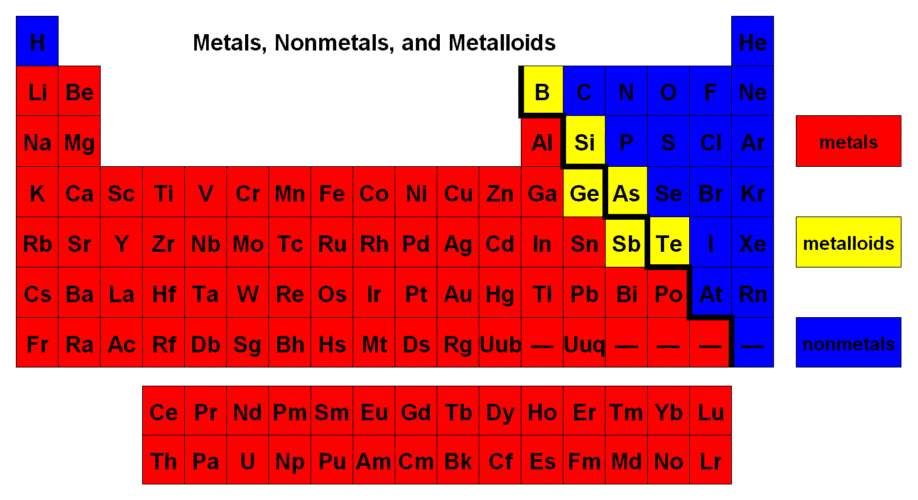
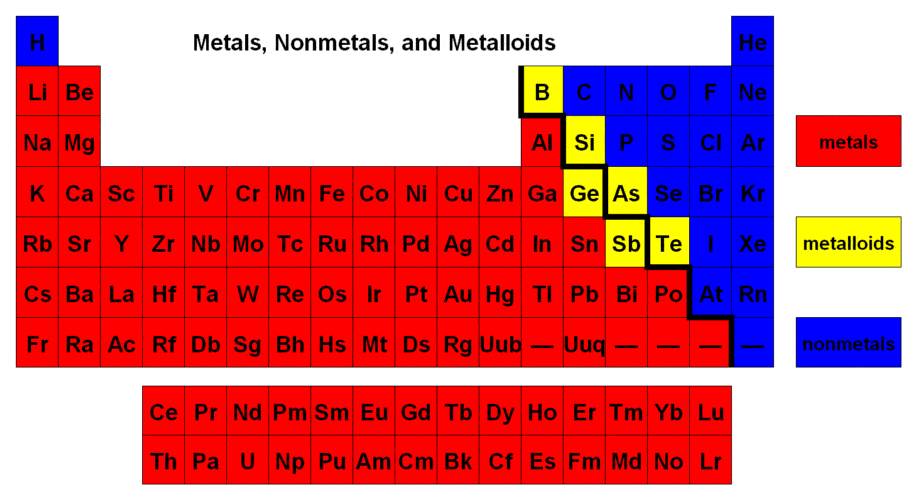
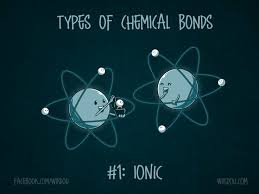

What type of chemical bond is found in Water?
Covalent
Ionic
Metallic
Both Covalent and Metallic
Is this compound Ionic or Covalent: Ca3(PO4)2
ionic
covalent
A chemical bond is ___
A force that keep atoms together.
A transfer of an electron from one atom to another atom
A force of attraction between the negative charge of electrons and the positive charge of the nucleus.
An force of attraction exerted by outer shell valance shell electrons.
In ionic bonding ___
Valance electrons are shared between two or more atoms
Valance electrons are free floating causing the compound to be electrically neutral
Metals atoms transfer their valance electrons to nonmetal atoms
Are insoluble and conduct electricity
Calcium Bromide (CaBr2) bond type is _____
An ionic bond
A molecular covalent bond
A network covalent bond
A metallic bond
All are properties of network covalent bonds, except for ___
Does not conduct electricity
Does not dissolve in water
Extremely hard and solid
Made of two or more nonmetals
Made of two or more metals
The type of bond of ethanol (C2H5OH) is ___.
Ionic
covalent
metallic
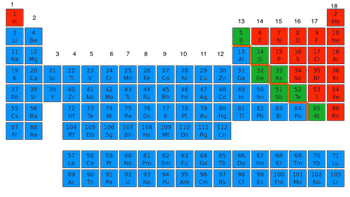
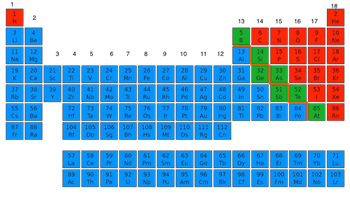

Sodium and chloride ions are strongly attracted to each other due to their ___
like charges
opposite charges
charisma
small electronegativity difference
Calcium Bromide (CaBr2) bond type is _____
An ionic bond
A molecular covalent bond
A network covalent bond
A metallic bond


Classify the following bond:
CO2
What are the atom types?
What is the type of bond?
Ionic
Covalent
Metallic
Metal
Non-Metal
Classify the following bond:
NaCl
What are the atom types?
What is the type of bond?
Ionic
Covalent
Metallic
Metal
Non-Metal
Classify the following bond:
AgN
What are the atom types?
What is the type of bond?
Ionic
Covalent
Metallic
Metal
Non-Metal
Classify the following bond:
P2O5
What are the atom types?
What is the type of bond?
Ionic
Covalent
Metallic
Metal
Non-Metal
Classify the following bond:
K2SO4
What are the atom types?
What is the type of bond?
Ionic
Covalent
Metallic
Metal
Non-Metal

