
 Worksheets
4-0 Prolene 2023
Total questions: 20
Worksheet time: 7mins
What is the ideal dressing for a venous ulcer?
Vac dressing
Hydrocolloid dressing
Four layer dressing
Alginate dressing
If a wound is exudating more than an average wound, which component would you use in increased amounts?
Cotton pads
Gauze pieces
Antibiotic ointment
Surgical tape
Which of the following is never an objective of dressings?
Decrease edema by application of pressure
Prevent contamination
Immobilisation of the injured area
Provide scaffold for growth of epidermis
A dressing done for a surgical incision should be opened after how many days post-op?
1
2
4
7
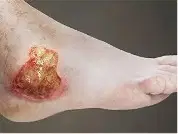
The given image depicts which type of wound?
healthy
unhealthy
granulating
gangrenous
What is the technique used while tying a surgeon's knot to prevent its slippage?
Squaring
Encircling
Criss-crossing
Piling
In which of these situations would you NOT like to tie a surgeon's knot?
Fixing a chest tube
Ligating a bleeder
Closing a small corneal incision
Fixing an IV line
Which of these knots is not used in surgery?
Sliding half-hitch
Surgeons knot
Square knot
Clove hitch
Among the given combinations of throws which one best represents a surgeons knot?
2-1-2
2-1-1
2-2-1
1-2-1
Which of these correctly represents a surgeons knot?


What is the primary purpose of urinary catheterization?
To collect a urine sample for laboratory analysis
To empty the bladder of urine
To relieve urinary tract infection
To diagnose bladder cancer
What is the most common type of urinary catheter used?
Straight catheter
Indwelling catheter
Suprapubic catheter
Foley catheter
What are the potential complications of urinary catheterization?
Infection, trauma, and bleeding
Headache, dizziness, and nausea
Muscle weakness, tremors, and seizures
Chest pain, shortness of breath, and palpitations
Which of the following is NOT a contraindication for urinary catheterization?
Active urinary tract infection
Urinary retention
Urethral stricture
Severe coagulopathy
What is the correct position for a patient during insertion of a urinary catheter?
Supine position
Prone position
Sitting position
Trendelenburg position
What is the primary purpose of subcuticular sutures?
To close deep tissue layers
To provide hemostasis
To close skin edges
To reinforce wound strength
Which type of suture material is commonly used for subcuticular sutures?
silk
nylon
Polyglycolic acid (PGA)
Stainless steel
What is the advantage of subcuticular sutures over interrupted sutures for skin closure?
They provide better hemostasis
They are quicker to place
They reduce the risk of scarring
They are stronger and more durable
How are subcuticular sutures typically removed?
By cutting the suture material close to the skin surface
By pulling the suture material through the skin
By loosening the knot and gently pulling the suture material out
By dissolving the suture material with an enzyme solution
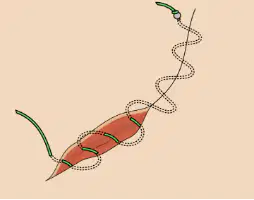
Which of the following suture is shown in the diagram below?
Subcuticular Suture
A mattress suture
simple suture
continuous suture

