
 Worksheets
Evolution & Natural Selection
Total questions: 15
Worksheet time: 4hrs 33mins
Name
Class
Date
1.
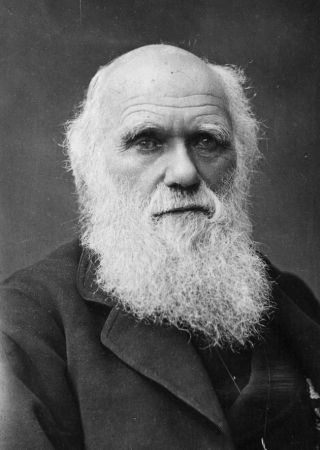
Who developed the theory of evolution?
a)
Charles Darwin
b)
Gregor Mendel
c)
Elon Musk
d)
Watson & Crick
2.
When organisms are better adapted to their environment they will survive and reproduce more successfully than organisms less adapted. This process is called what?
a)
Selective breeding
b)
Natural Selection
c)
Cloning
d)
Evolution of all species
3.
Charles Darwin called the ability of an organism to survive and reproduce in its specific environment
a)
diversity.
b)
evolution
c)
adaptation.
d)
fitness.
4.
What do we call a change in a species over time?
a)
Adaptation
b)
Evolution
c)
Extinction
d)
Environmental influences
5.
The differences among a species, like different bird beaks, are called
a)
genes.
b)
variations.
c)
traits.
d)
theories.
6.
Behavioral changes of individuals of a species that allow for better survival. (Acquired traits)
a)
Variation
b)
Adaptation
c)
Behavior
d)
Environment
7.

Study of embryos of various organisms to show a common ancestor because of similarities in development
a)
natural selection
b)
embryology
c)
speciation
d)
evolution
8.

What type of structures are these?
a)
homologous
b)
vestigial
c)
analogous
d)
fossil
9.
An error in DNA copying that results in a new trait
a)
Homeostasis
b)
Mutation
c)
Natural Selection
d)
Selective Breeding
10.
When an organism completely dies out, it is called.....
a)
Adaption
b)
Extinction
c)
Fossilization
d)
Mutation
11.
The preserved remains or physical evidence of an organism that lived in the past are called...
a)
evolutionary features
b)
fossils
c)
mutations
d)
variations
12.
Humans, birds, whales, and lizards all have similar arm bones. What is the reason for this?
a)
The function of these bones is the same in all animals
b)
They live in similar environments
c)
They have a common ancestor
d)
All organisms resemble humans
13.
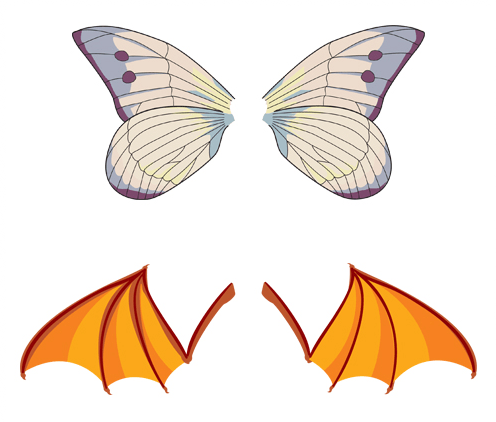
What is this an example of?
a)
Homologous structure
b)
Analogous structure
c)
Vestigial organs
d)
Functional adaption
14.
An anatomical feature that no longer seams to have a purpose in the current form of an organism
a)
Homologous structure
b)
Analogous structure
c)
Vestigial structure
d)
None of the above
15.
Ostrich wings are examples of
a)
homologous structures
b)
vestigial structures
c)
adaptations
d)
traits
100 %

