
Font size
 Worksheets
Innatism
Total questions: 23
Worksheet time: 12mins
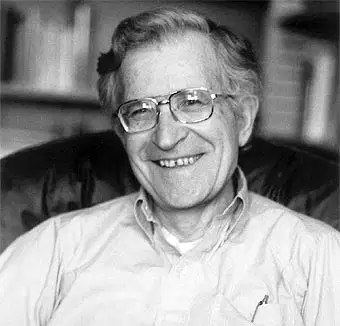
Who is Chomsky?
An American linguist who triggered behaiviourism
An American linguist who triggered innatism
An American linguist who triggered natural approach
What is innatism?
A doctrine that holds that adult L2 learners could achieve proficiency level of a language from their environment
A philosophy that holds that a language can be learned purely based on imitating and practicing sentences available in the input.
A doctrine that holds that children are biologically programmed for language, in the same way that other biological functions develop
The principles of UG are:
that children's minds are blank slates to be filled by the imitation of language they hear in the environment.
That all children to acquire the language of their environment during a critical period of their development.
that language develops in the child in the same way that other biological functions develop
What is the critical period hypothesis?
A premise that states that affirms that a language can be acquired at an early stage in life by repetition drills
A premise that states that L2 acquisitions can be affected by the L1
A premise that states that a language cannot be acquired without the environment interaction
ASL in an acronym for:
Acquisitions of a second language
American sign language
Advantage of sign language
B.F. Skinner
Sociocultural Theory
Innatism
Behaviourism
Chaos
Imitation, Practice to form correct habits
Behaviourism
Innatism
Chaos
Interactionist

II. Choose True or False
11. Critical Period refers to the phase when learners do not actively produce language. They just look and listen to information.
True
False

15. Physical status, environment, culture, motivation, and other factors affect the process of acquiring a language.
True
False
Which of this arose from the study of classical languages.
Structural Grammar
Traditional Grammar
Generative Grammar
Functional Grammar
Who was famous for having a drooling dog?
B. F. Skinner
Ivan Pavlov
Jerome Bruner
Lev Vygotsky

According to the theory of innatism, people learn by …
analysing language and experimenting.
repeating sentences and getting feedback.
talking with a more skilled language user.
getting lots of exposure to the target language.
What is the difference between acquisition and learning?
Acquisition is a conscious process and learning is an unconscious process.
Acquisition is an unconscious process and learning is a conscious process.
Chomsky and Khrashen developed important hypotheses about learning and language acquisition
False
True
On the first stage, babies do not go through the same stages of language development because of their race and environment.
TRUE
FALSE
Which of the following statements is correct?
Kids only acquire language at the age of 5.
Kids who have above average IQ acquires language compared to average ones.
Kids acquires language and knows about how it works at a really early age.
None of the above
Babbling of babies is universal.
TRUE
FALSE
"______ is the system of principles, conditions, and rules that are elements or properties of all human languages..." [Chomsky, 1976]
Global grammar
Universal grammar
Theory of grammar
Linguistics
The learned system acts as a "monitor", making minor changes and polishing what the acquired system has produced.
True
False
According to Krashen, learners use the "monitor" only when they are more focused on being correct, when they have sufficient time to search their memory for the relevant rules, and when they know those rules.
True
False
In his natural order hypothesis, Krashen observes that the natural order is the same as the order in which rules have been learned in classes.
True
False
Natural hypothesis states that language learners acquire the target language in a (a) order.
The “affective filter” is an imaginary (a) which prevents learners from acquiring language from the available input.

