
 Worksheets
Unit 6A: First Five Presidents
Total questions: 63
Worksheet time: 54mins
George Washington was the
first President of Great Britain
first king of the United States.
first President of the United States.
first President of Cuba.
George Washington is known for leading the Continental Army in victory over the British in the
French and Indian War
Civil War
Spanish American War
American Revolution.
George grew up in Colonial ____.
New York
Pennsylvania
Virginia
South Carolina
How many terms did Washington serve as President?
2
3
4
8

The Purpose of the Farewell Address was to....
leave advice for the country and next president
help Congress create a new constitution
decide how representation would be decided
decide how many votes each state would get
What was George Washington’s advice in the Farewell Address (1796)?
Stay neutral in foreign affairs
Always choose a side in foreign affairs
Policies and decisions that are made regarding issues inside a country’s borders
Foreign policy
Domestic policy
Democratic-Republican
Alliance
Policies and decisions that are made regarding issues outside a country’s borders
Foreign policy
Domestic policy
Democratic-Republican
Alliance
What was George Washington's advice on Foreign Policy?
The Nation should remain neutral and avoid permanent alliances
The Nation should end slavery
The Nation should expand from East to West
The Nation should colonize Latin America
What is a political party?
a group of individuals who work together to win elections, operate the government, and shape people’s opinions.
a group of individuals who do not work together to win elections, operate the government, and shape people’s opinions.
George Washington believed that Political Parties were....
Dangerous to the country
Improve the Nation
Overpower State Governments
Create a National Bank
What was George Washington's Advice on Political Parties?
Political Parties are necessary to run a government
Political Parties could divide and weaken the Nation
Political Parties should create jobs and businesses
Political Parties should only exist in State Governments
George Washington believed Political Parties were beneficial to the nation
True
False
What type of Government did the Democratic- Republicans / Anti-Federalist believe in?
Weak National Government
Strong National Government
President is the Supreme Ruler
What type of Government did the Federalist believe in?
Strong National Government
Weak National Government
States control the Government
James Madison, Alexander Hamilton and John Jay were....
Federalists
Anti-Federalists
Samuel Adams, Patrick Henry and Thomas Jefferson were...
Federalist
Anti-Federalists
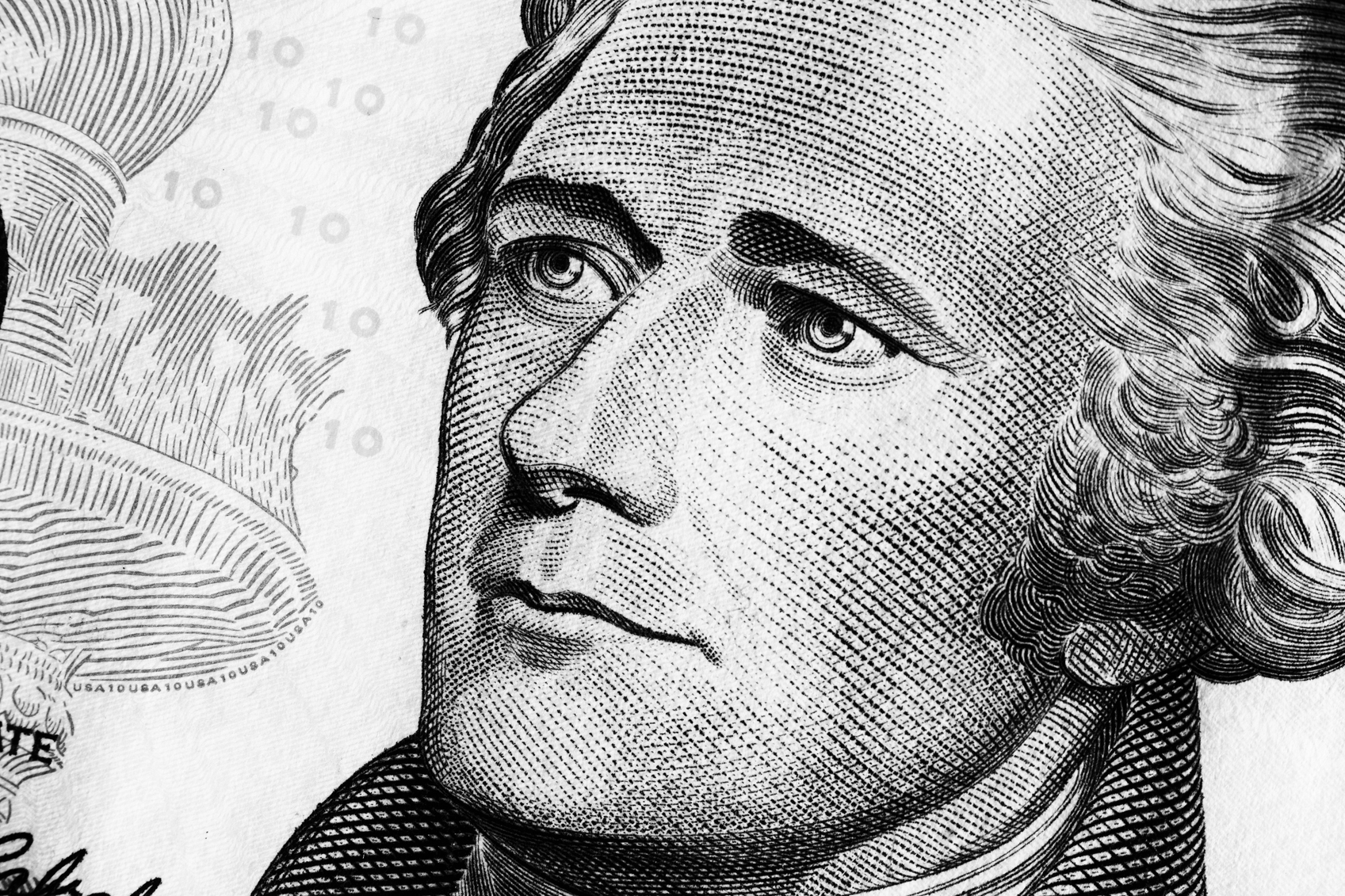
Who is known as the leader of the Federalists?
Alexander Hamilton
John Adams
Patrick Henry
Benjamin Franklin
What was Alexander Hamilton's biggest challenge as the first Secretary of the Treasury?
Writing the Federalist Papers
Paying off the national debt
Starting his rap career
creating national currency
Who opposed Alexander Hamilton’s idea to create a National Bank?
George Washington
John Adams
Thomas Jefferson
James Madison
The Anti-Federalists (Democratic-Republicans) agreed to establish a national bank IF
The nation's capital was moved North to New York City
The nation's capital was moved South to Washington Dc
They only contributed to 50% of the debt
They received a tax cut
a 1797 attempt by the French to bribe the United States by demanding money before discussing the French seizure of neutral American ships
XYZ Affair
Frigate
Alien and Sedition Act
ABC Affair
The Federalist-supported laws created in 1798 that permitted the President to expel foreigners, made it harder for immigrants to become citizens, and allowed for citizens to be fined or jailed if they criticized the government or its officials
Alien and Sedition Acts
XYZ Affair
Nullify
Kentucky and Virginia resolutions
This law made it possible for the President to deport immigrants out of the country.
Alien Act
Sedition Act
Neutrality Act
Jay's Treaty
Which Amendment does the Alien & Sedition Act violate?
2nd Amendment
3rd Amendment
1st Amendment
10th Amendment
Thomas Jefferson was the _________ President of the United States.
2nd
4th
3rd
1st


What impact did the Louisiana Purchase have on the United States?
It decreased international tensions.
It doubled the size of the nation's territory.
It gave the United States control of all of North America.
It created an alliance between the United States and France.
Which president was James Madison?
James Madison was the 3rd president of the US
James Madison was the 4th president of the US
James Madison was the 1st president of the US


What nickname was James Madison given and why?
Father of Preamble because he was smart.
Father of the Constitution because he was the one that wrote the plan for the new government.
Father of the Bill of Rights because he wanted the government to be confusing.
Father of the army because he wanted to fight all people who were not loyal to Great Britain.
What is impressment?
The British would take sailors from American ships and force them to serve as soldiers in the British army.
The French would steal goods from American ships and use them to supply their war against England.
The British would kindly ask any sailors on American ships if they wanted to help them out.
Which of the following were causes of the War of 1812? (choose 3)
Impressment of American soldiers by the British
The British blocking the Americans from trading
Slavery
Native American attacks
The period in which American felt a sense of unity was known as the
Mr. Madison's War
Era of Good Feelings
Protectionism
The War Hawks
The Monroe Doctrine stated
Tariffs would be added to American products to make them more expensive.
The United States would not take sides in the war.
The United States would not allow European powers to establish new colonies in the Americas
Jackson would invade Florida.

The Era of Good Feelings was marked by
a strong sense of national unity.
a rapid increase in immigration.
an end to warfare with France.
an expansion of states' rights.
In simple terms, what does the Monroe Doctrine give as a warning to the European countries?
don't try to re-colonize the Americas
stop raiding on our ships
don't try to upset the leaders who are in place in the Americas
if you attack our trading partners, England and France, we will attack you.

