
 Worksheets
Unit 5 Ecosystems Review
Total questions: 51
Worksheet time: 1hrs 11mins


Temperature, light, air, water, and soil are all _____ parts of the environment
alive
biotic
abiotic
living
What is an example of a biotic factor?
skunk
rocks
soil
water

An animal that eats only plants.
scavenger
omnivore
herbivore
carnivore

An animal that eats both plants and animals.
carnivore
omnivore
herbivore
scavenger

An animal that eats only meat.
herbivore
omnivore
carnivore
scavenger

Organisms that breakdown all the dead plants and animals and their waste and are converted into nutrients for plants.
carnivores
consumers
producers
decomposers

All the green plants that provide the energy for consumers.
consumers
producers
decomposers
herbivores

A diagram that shows the transfer of energy from one organism to another (who is eaten by what).
ecosystem
environment
food chain
food web

A diagram that shows the transfer of energy in an ecosystem by using several food chains.
ecosystem
food web
environment
food chain
Without decomposers, what would build up on the ground and not return to the soil?
large rocks
rain water
bacteria and other microorganisms
dead plant and animal matter
In any community, which group includes the largest number of animals?
herbivores
prey
predators
consumers
All the living and nonliving things in an area make up a/an
community.
ecosystem.
population.
environment.
An organism that makes its own food is a/an
producer.
consumer.
predator.
prey.
An _____ is everything that surrounds and affects a living thing.
ecosystem
environment
population
community
All the living things in an ecosystem make up a ________.
ecosystem
environment
population
community
Two or more overlapping food chains form a/an
food chain
food web
community
population
To avoid being eaten, a rabbit will run away from
carnivores.
scavengers.
herbivores.
producers.
Without the Sun, which of Earth's organisms could no longer survive?
producers only
producers and consumers
scavengers only
nearly all organisms
What is the best choice for studying decomposers at work?
a rotting log on the forest floor
a live, healthy tree
a robin that builds a nest in a tree
cut wood at a lumber yard
Which of the following would be at the end of a food chain?
grass
fungi
sheep
coyote
In a diagram of a food web, the arrows show the flow of
soil
sunlight
oxygen
energy
Describes a group of living things that are no longer living.
fossil
extinct
endangered
dinosaur
The hardened remains of a living thing that died long ago.
fossil
extinct
endangered
minerals
Which type of rock are most fossils found?
sedimentary rock
metamorphic rock
igneous rock
fossils

An animal has sharp, pointy teeth, what can we infer about this animal?
The animal lived in the water
The animal lived near the beach.
The animal is a carnivore.
The animal only ate plants.
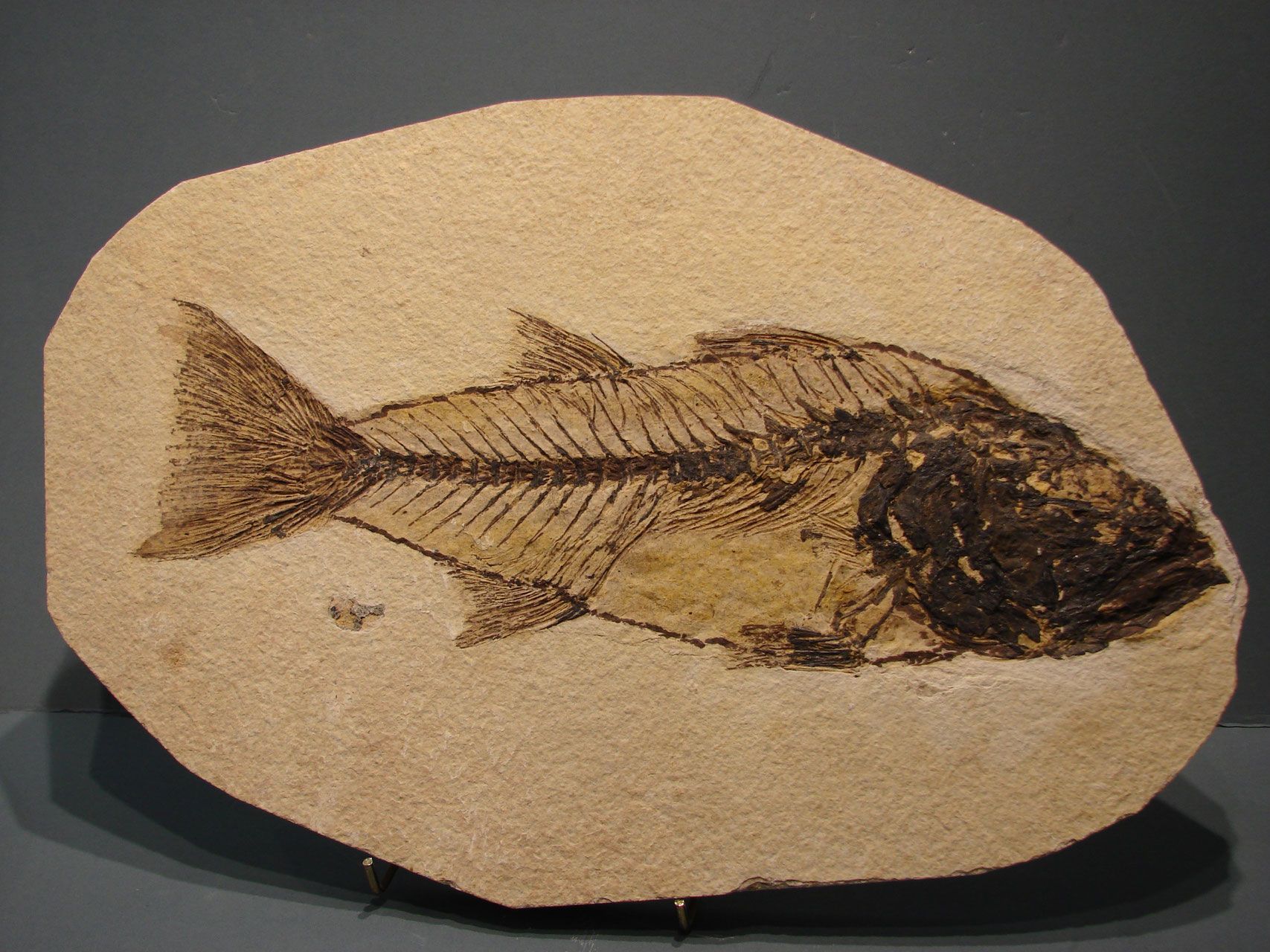
If a scientist found a fish fossil in the desert, what can they infer?
An animal ate the fish.
The water covered the area long ago.
Today's fish looks the same
The fish is endangered.
How are an elephant and a mammoth alike?
They are both endangered.
They are both extinct.
They both have tusks.
They both live in a warm climate.
What statement is true about fossils?
All living organisms leave behind fossils.
Fossils show that camels never change.
Some living things have not really changed in millions of years.
Plant fossils have never changed.
What needs to happen FIRST for a fossil to form?
A plant or animal must be covered by sediment.
A plant or animal must die and decompose.
Sediments fill a a mold to form a cast.
An earthquake shifts the land up.
Turtles look much like they did millions of years ago. What can we infer about turtle fossils?
They did not change over time.
The turtle survived the ice age.
Turtles went extinct.
Turtles were never endangered.

What can we infer about animals with dull teeth?
They ate other animals.
They ate only plants.
They ate nothing.
They only ate fish.
What non-living factor is the most important for an ecosystem to work?
Rock
Sun
Plants
Animals
Living and nonliving things interacting in an environment is called:
Organism
Producer
Consumer
Ecosystem
Plants make their own food
True
False
Some organisms use dead things as food matter
True
False
All the energy that organisms get from food matter originally comes from sunlight
True
False
Click on ALL the resources living things need to survive.
Water
Food
Space
Humans
Which diagram can show us the AMOUNT OF ENERGY that flows from producers to consumers?
Food chain
Web chain
Food pyramid
Algae makes its own food
True
False
Select the RIGHT food chain in a shortgrass prairie
grasshopper → bird → mouse → buffalo
hawk → snake → mouse → grasshopper
grasshopper → mouse → snake → hawk

