
 Worksheets
Short-term Long-term Environmental Changes
Total questions: 20
Worksheet time: 34mins
What is an example of how organisms respond to short term changes in the environment?
Animals tend to eat a lot more.
Animals will hibernate.
Animals must be able to adapt to a new environment.
Animals will go extinct or die due to the short term change.
Natural Disasters such as, earthquakes, flooding, and volcanic eruptions can cause ...
short term changes
long term changes
The transition from fall to winter could be considered an environmental change. Which kind of change is winter?
short-term, because it lasts less than a year
long-term, because it lasts more than a year
long-term, because it lasts more than a year
long-term, because it does not cause changes to the DNA of a species
An environmental change is occurring due to continents shifting and moving to different parts of Earth’s surface. What kind of change is this?
a short-term change due to tectonic plate movement
a long-term change due to tectonic plate movement
a short-term change due to increasing levels of solar energy
a long-term change due to increasing levels of solar energy

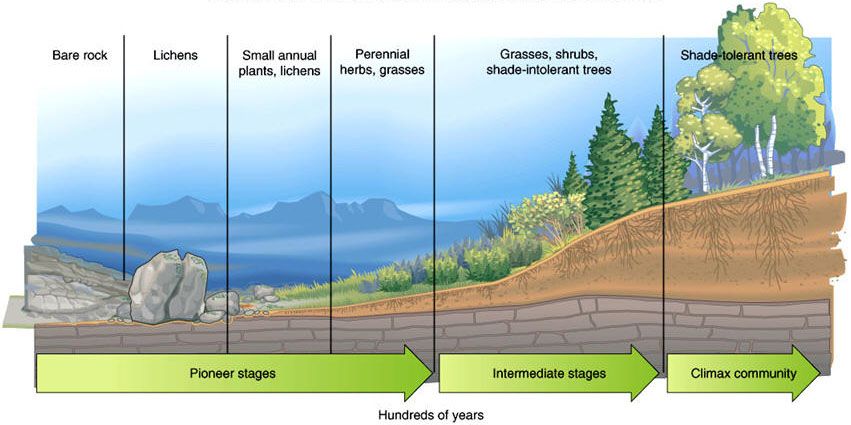
The first organisms to reappear after an ecosystem is damaged.
Abiotic Community
Pioneer species
Succession
Biomass

The progression of life in an area that starts with bare rock or sand but no soil. Example: a volcanic island.
Climax Community
Pioneer Species
Secondary Succession
Primary Succession

Which of the following human activities will have the greatest negative impact on the balance of organisms within ocean ecosystem?
monitoring of major, global ocean currents
recreational boating
commercial fishing to provide food for humans
mapping of the ocean floor by marine scientists

Overflow during a heavy rainstorm from a wastewater treatment plant would result in...
weakened housing foundations
polluted runoff into nearby ponds
flooding in the local aquifer
over-treated drinking water

What is one way humans are trying to positively impact (help restore) the ocean?
Over fishing
Drilling for oil and natural gas
Creating artificial reefs
Dumping plastics in the ocean
The Venus Fly Trap (Dionaea muscipula) is a plant, and like all other green plants, gets its energy from the Sun through photosynthesis. This plant, however, catches flies and breaks down their bodies using chemicals to meet its needs. Which environmental condition has led to this adaptation?
Excessive insect populations
Soil with few nutrients
Low atmospheric oxygen
Increased average daily temperatures
A glacier in Alaska sweeps through leaving bare rock in its path. Which of the following will most likely be the pioneer species?
grass
lichen
insects
birds
Which of the following is the best definition for Short Term Environmental changes?
Short-term environmental changes tend to not affect the environment and the organisms living in it since it happens rather quickly.
Short-term environmental changes do not have a significant effect on the environment.
Short-term environmental changes, like droughts, floods, and fires DO NOT give populations time to adapt to the change and force them to move or become extinct. The changes happen rather quickly and there is no time for adaptations to occur which can lead to massive die-off.
Which of the following is the best definition for Long-term environmental changes?
Long-term environmental changes tend to not affect the environment and the organisms living in it since it happens rather quickly.
Long-term environmental changes do not have a significant effect on the environment.
Long-term environmental changes, like pollution and deforestation are more gradual and allow populations to adapt. Overtime, organisms that are affected by these changes have a chance to survive as they can develop adaptations that will help them cope with the change.

An illustration of a water lily is provided. If annual rainfall increased and caused ponds in this habitat to become deeper, how, after many generations, might the traits of these water lilies change?
Brighter flowers
Wider leaves
Thicker roots
Longer stems

