
 Worksheets
Industrial Revolution
Total questions: 10
Worksheet time: 5mins
In the early days of the Industrial Revolution, many factories were built along rivers because...
water was a major source of irrigation
water power was used to power factory machines
ships could easily deliver goods to factories
ships could bring in supplies
Which of the following was NOT associated with early factory working conditions?
Dangerous working conditions
Safe working conditions
Low wages
Poor air quality/pollution
Child Labor
Which statement is TRUE about the Industrial Revolution?
Child were not allowed to work
There were no labor laws that prevented children from working
Work conditions were closely regulated
Children only had to work an 8 hour day
New agricultural innovations during the Industrial Revolution led to Britain's industrialization because...
It created universal male suffrage
It greatly increased the number of people working in agricultural fields
It encouraged the fair an equal treatment of workers on farms and in factories
It destroyed the cottage industry and made people look for work in factories
Which term refers to the "money to invest in labor, machines and raw materials" necessary to start a factory and industrialize?
Capital
Industrialization
Entrepreneur
Factory system
Effect: Many people migrate to cities in search of jobs.
Effect: The middle class gains political and economic power.
Effect: People become dependent on natural resources and alter the land forever.
What was the cause of these effects?
The Agricultural Revolution
The Capitalist Revolution
The Enclosure Movement
The Industrial Revolution
Why was England the site of the beginnings of the Industrial Revolution?
England was the most powerful nation in the world.
It wasn't; history has unfairly given England credit for the Industrial Revolution.
England had an abundance of natural resources such as coal, iron ore, and waterways where water wheels and steam engines could be built.
England was centrally located to many areas like France, Germany, Spain, and Ireland, giving them an advantage to bring in resources and talent from many places.
How did industrialization impact women?
Many women entered the paid workforce
Many women practiced traditional activities such as making their families clothing
It had no impact on the lives of women
Women moved from cities to rural areas.
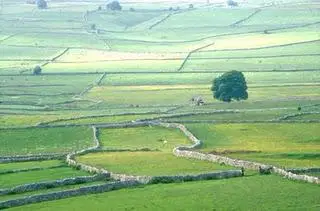
The series of laws passed by the British parliament that made large, factory style farms possible by selling public land was known as...
Public Works Administration
Enclosure Movement
The Incorporation of Common Areas
Parliamentary Redistricting
What is Jacob Riis describing in the quote below?
“Bedrooms in tenements [run down apartments] were dark closets, utterly [completely] without ventilation [windows]. There couldn’t be any. The houses were built like huge square boxes, covering nearly the whole lot. Some light came in at the ends, but the middle was always black.”—Jacob Riis, The Battle with the Slum, 1902
Why governments should build parks in cities
The poor ventilation and lack of light in tenements
The homes immigrants had before arriving in the United States
The poor ventilation and lack of light in factories

