
 Worksheets
5th Grade Science Review
Total questions: 139
Worksheet time: 2hrs 31mins
What is the closest planet to the sun?
Mars
Mercury
Earth
Jupiter
During the process of condensation...
water vapor turns into liquid water
plants release water vapor into the air
animals release water vapor into the air
rain falls to Earth's surface
Natural resources are
any material that is found on earth
any materials or substances that occur in nature and can be used
materials found on earth that produce no byproducts
materials found in the universe that can be used as building materials
What acronym helps me with types of energy?
WEDCC
MELTS
MVEMJSUN
ENWAP
What is an herbivore?
produces its own food
an animal that eats plants and animals
an animal that eats only plants
The Earth's rotation causes us to have...
Day and Night
Seasons
Day and Night and Seasons
Moon Phases
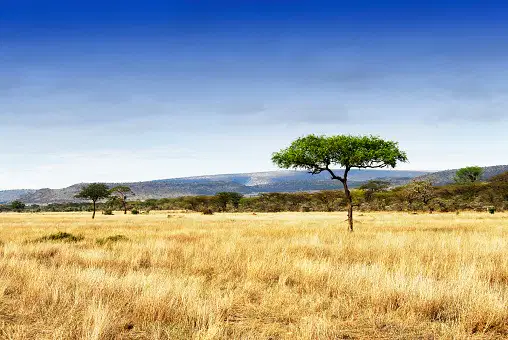
This ecosystem is a
forest
tundra
grassland
savannah
My Very Excellent Mother Just Served Us Nachos
Stands for
The order of the moons
The order of landforms
The order of the planets
I don't know
Fossil Fuels are
Inexhaustible resources
Renewable resources
non-renewable resources
unnatural resources
Pluto is a planet.
True
False

This ecosystem is...
Swamp
grassland
wetland
tundra
The M in MELTS stands for
Mechanical energy
More dense
Magnetic
Major
The Earth Revolves around the sun this creates the
Seasons
day and night
moon phases
temperature
We say revoluuuuuuuuuution because
Earth's revolution takes a full day.
Earth's rotation takes a long time.
Earth's revolution takes a long time (365 days)
Mrs. Maki can't spell
We Say Ro-DAY-tion, because
makes the seasons
It takes 24hrs/ 1 day for the Earth to Rotate
This cycle causes tides
Earth goes around the sun
It takes _________ for the moon to go through all of its phases.
30 hours
60 days
24hours
30 hours
What energy form is being used for us to hear the bird?
light
thermal
sound
electrical
The E in MELTS stands for
Easy
Electrical
Earth
What type of energy is used for the boy to eat?
Mechanical
Thermal
Light
Sound
Power lines transport what type of energy?
Mechanical
Light
Sound
Electrical
Fire is what types of energy
light, thermal, sound
Light & mechanical
Light & Sound
Thermal & Sound
What type of energy does someone use to run?
Sound
Electrical
Light
Mechanical
The L in MELTS stands for
Loud
Light
Long
Landforms
What type of energy does a violin produce?
Mechanical
light
sound
thermal
Thermometer tests...
Volume
Temperature
Weather
Trees
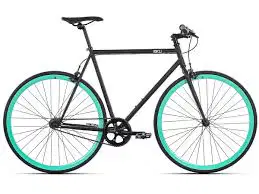
What energy form is being used?
Sound
thermal
light
Mechanical
Tempertaure is measured in
Celsius
F
Fahrenheit
mm
The T in MELTS means
Table
Thirsty
Thermal
Technology
What energy do you cook with?
Sound
electrical
thermal
mechanical
Speakers produce _____ energy
mechanical
Sound
thermal
electrical
What type of energy is needed talk to a friend?
light and mechanical
Sound and thermal
mechanical and sound
mechanical and thermal
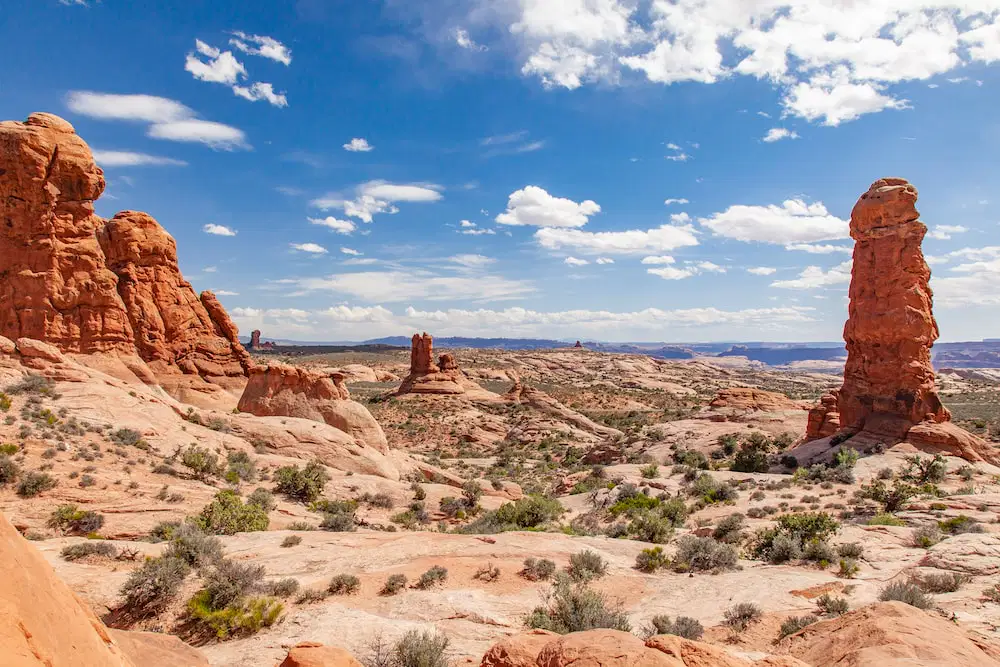
What type of ecosystem is this?
Tundra
desert
wetland
Rainforest
The S in MELTS stands for
Soft
Space
Sheer
Sound
What is a carnivore?
an animal that eats plants
an animal that eats plants and animals
an animal that only eats animals
Producers...
make their own food
decompose animals
eat plants
are plants
How Many stars in our solar system?
five
three
Two
One
A flower is a
Consumer
producer
What separates the inner and outer planets?
Kuiper Belt
Gas giants
Distance
Asteroid belt
What type of energy does a violin use?
Mechanical
light
sound
thermal
A lion is a
herbivore
carnivore
omnivore
decomposer
What acronym helps me with formation of sedimentary rock?
WEDCC
MELTS
MVEMJSUN
ENWAP
What acronym helps me with order of the planets?
WEDCC
MELTS
MVEMJSUN
ENWAP
What acronym helps me with apparent motion of the sun?
WEDCC
MELTS
MVEMJSUN
ENWAP
Lumber is a
inexhaustible resource
unnatural resource
nonrenewable resource
renewable resource
Weather...
changes every day
is a long-term pattern
Climate....
changes every day
is a long-term pattern

This image shows
reflection
refraction

The cat looks funny through the glass because of
reflection
refraction
Which uses mechanical energy?


Which produces light energy?
Which does NOT use sound energy?
Magnets are attracted to...
Nickel, Iron, Cobalt, and Steel
Noodles, Ichabod, Cobras, and Snakes
Quarters, Nickels, Dimes, and Pennies
Less dense...
floats
sinks
More dense...
floats
sinks
Conductors
let energy flow
stop energy
Insulators
let energy flow
stop energy
Which is a solution?


Dissolved means...
changes every day
mixed in so you can't see it anymore
easily separated

In order to find out which towel brand holds the most water, we should do an ____________________.
hypothesis
investigation
science project
conclusion

You need to collect ____________ in your experiment that supports your hypothesis.
graphs
plants
microscopes
data
The _______________ during an experiment is what changes or is different.
hypothesis
conclusion
variable
conclusion
_________________ is what stays the same during an experiment.
data
control
variable
research
If you want to make tiny objects look bigger in the science lab you will use a _______________.
rain gauge
microscope
telescope
timer
You need an ___________ in order to keep that water animal.
terrarium
aquarium
collecting net
notebook
All the following are used for protection in a lab except _________________.
lab coat
thermal mitt
safety goggles
sieve
You use this instrument to measure mass - ____________________.
triple beam balance
timer
graduated cylinder
metric ruler
Which object has the main function of reflecting light.
mirror
window
eyeglasses
camera
Which statement about gases is NOT true?
Gas particles move freely.
Gases have definite shape.
Gases fill all available space in a container.
Water evaporates into gas.

Four small metal cylinders were filled with boiling water and placed into different containers. Which container was the best insulator?
Container 1
Container 2
Container 3
Container 4

The circuit has three lightbulbs and a bell. Which procedure will result in the green bulb operating, the bell producing a sound, and only one blue lightbulb operating?
Close Switch 1 and leave Switches 2 and 3 open
Close Switches 2 and 3, and leave Switch 1 open
Close Switches 1, 2, and 3
Leave Switches 1, 2, and 3 open

An old-fashioned metal toy is shown below. When the candle is lit, the carousel of horses begins to turn. Which of these is the source of energy that makes the carousel turn?
Thermal energy
Electrical energy
Mechanical energy
Sound energy

The picture below shows a spoon in a glass of water. Why does the spoon appear bent?
the light waves are refracted as they change speed when they pass from the water to the air
the light waves are reflected as they change speed when they pass from the water to the air
the light waves are absorbed when they pass from the water to the air
the light waves bounce off of the water

A student designed the circuit below. Which switches should the student close to produce ight energy only?
Switch 1 and Switch 3
Switch 1, Switch 2, and Switch 3
Switch 1 and Switch 4
Switch 2, Switch 3, and Switch 4

A student made a list of activities that involve energy. Which activities on the list are examples of the use of electrical energy?
Activities 1, 4, and 6
Activities 2, 5, and 6
Activities 2 and 3
Activities 3 and 5

The diagram represents four liquids that each has a different density. Which statement best describes the density of Layer C?
Layer C is more dense than Layer A and Less dense than Layer B.
Layer C is more dense than Layer B and less dense than Layer D.
Layer C is more dense than Layer B and less dense than Layer A.
Layer C is more dense than Layer D and less dense than Layer B.

The picture below shows the sun over the ocean. What does this picture demonstrate about the behavior of light?
the water reflected the light from the Sun
the water absorbed the light from the Sun
The water refracted the light from the Sun
light does not travel in straight lines

A student is investigating how mixtures can be separated. Which of the following combinations will be easiest to separate with a magnet?
Salt and sand
Sand and iron nails
Aluminum cans and sand
Salt and aluminum cans

Students constructed a circuit using different-colored lightbulbs. What will happen if Switch 2 is closed and the other switches are left open?
Only the white bulb will operate.
None of the bulbs will operate.
Only the white and blue bulbs will operate
Only the red and yellow bulbs will operate.

Students were asked to list observations of the uses of energy in the classroom. One student's list is provided below. Which observations listed above used sound energy to perform its main functions?
Observations 1 and 5
Observations 2 and 6
Observations 3 and 4
Observations 5 and 6
Which object requires electrical and thermal energy to perform its main function?


the diagram below shows a lamp system. Which type of energy will travel through the wire in the lamp cord after the lamp is plugged in and the light is turned on?
Electrical energy
Light energy
Mechanical energy
Sound energy

What should the student do next?
Tell her friends that investigations at school work better than at home?
Repeat her investigation to see if her results are the same.
Change her results to match her original hypothesis.
Conclude that investigations can only be performed on water.


The breakdown of rock into smaller particles from the effects of wind, water and ice
erosion
cementation
pressure
weathering

Wind, water, ice and gravity carry sediments away
weathering
deposition
erosion
cementation

What are landforms?
Landforms are how the land changes.
Landforms are natural features of the Earth's surface.
Landforms are cool!

What landform?
Delta
Valley
Mountain
Hills

What landform?
Island
Dune
Hills
Lake

What Landform?
Volcano
Mountain
Canyon
Hill


Which process best describes the formation of a delta.
Weathering
Erosion
Deposition

What agent of change causes a sand dune?
Water
Wind
Ice

What agent of change causes a U-shaped Valley?
Water
Wind
Ice

Which process best describes the formation of a sand dune.
Weathering
Erosion
Deposition

What agent of change caused the SEA arch?
Water
Mud
Glacier

Which process best describes the formation of a U-shape valley?
Weathering & Erosion
Erosion & Deposition

What agent of change causes a canyon?
Water
Wind
Ice

What agent of change causes a DELTA?
Water
Wind
Ice

A glacier is a large piece of ICE that moves down hill.
True
False

Which process best describes the formation of a canyon.
Weathering & Erosion
Erosion & Deposition
Waves dropping sand on the beach is an example of what?
Weathering
Erosion
Deposition
Compaction
Deltas forming at the mouths of rivers are examples of what?
Weathering
Erosion
Deposition
Compaction

Many animals in an ecosystem depend on other animals for —
shelter
water and air
energy
support
Many birds, such as Eagles and hawks, have sharp claws, called talons, on their feet. Sharp talons help these birds interact with which part of its environment?
diseases that make them sick
the species they catch and eat
provides other spieces for company
the oxygen carbon dioxide gas exchange
water they drink from streams

Plants are interacting directly with another living component of their environment when they are–
attracting insects.
absorbing sunlight.
soaking up water.
taking in carbon dioxide.

Many plants depend on insects for pollination. Without pollination, these plants cannot produce seeds. Plants depend on insects to —
grow new leaves
strengthen roots
make more food
produce offspring

Frogs in a pond interact with both living and nonliving components in their ecosystem. Frogs interact with nonliving components when they–
eat swimming insects for energy.
lay their eggs in bodies of water.
become food for another animal.
hide beneath plants in the pond.

All of the following are examples of living things interacting with each other EXCEPT —
birds preying on insects living in the grass
squirrels spreading the seeds of trees by burying them
fish eating plants and other smaller fish
frogs sleeping in the mud at the bottom of the pond

Pacman frogs live in South America. Some of their traits are listed here. What habitat change might be harmful for a Pacman frog?
Heavy rains in the afternoons over a period of days
An increase in population of several kinds of birds
A change in weather, leading to cooler temperatures
The introduction of a new species that eats rodents

Plants interact with living and nonliving components in their environment. Which is an interaction with a nonliving component?
Small insects eating the stems of plants
Humans breathing oxygen released by plants
Sandy soil holding the roots of plants
Bees gathering pollen from flowers of plants

Which adaptation of a cactus is related to its interactions with living organisms in its environment?
roots that grow deep underground to reach water
spines to protect it from animals that want its water
a waxy, outer coating to prevent the loss of the water
large, expendable stem that allows it to store water

Which of the following is a question that could be asked in a scientific investigation of how organisms depend on their environment?
What is the effect of rainfall on the growth of grasses?
How does temperature affect the formation of soil?
What time of day produces the most precipitation?
How fast does water erode different types of rock?

What is an example of a fish interacting with a non-living thing?
The fish eating a smaller fish.
The fish swimming in between a plant's leaves.
The fish hiding under a rock.
The fish laying it's eggs on plant leaves.
What is an organism?
An organism is a non-living thing like air, water, and the sun.
An organism is a living thing that can live on its own.
An organisms is a living thing such as rocks and plants.
An organism is a non-living thing like people, plants, and animals.
What are some characteristics of living things? Select all that apply.
eat
grow
breathe
move
Not reproduce

What non living things do plants interact with for survival?
insects, water, carbon dioxide
insects, water, sunlight
other plants, water, carbon dioxide
water, sunlight, carbon dioxide

Which of the sentences shows interaction between two living organisms?
Number 1
Number 2
Number 3
Number 4

Josie likes to visit the park in her neighborhood to watch hummingbirds. Based on the beak of the hummingbird, what does it most likely eat?
Fish
Nuts
Insects
Flower Nectar

The picture shows flowers with an unusual shape. Which beak shape would best allow a bird to reach the nectar inside the flower?
Long and thin
Short and thick
Short and thin
Long and thick
Bullfrogs are Florida’s largest frog. Frogs spend part of their life cycles in water and part on land. Which physical characteristic is most useful for a water environment?
Thin skin
Large eyes
Webbed feet
Long, strong legs

Water lilies live in lakes and ponds. The lilies have very long stems. The picture shows a water lily in a pond. How do long stems help water lilies live in ponds?
They absorb food for the plant.
They absorb water from the pond.
They enable the pads and flower to reach sunlight.
They prevent the plant from floating away.

Pelicans are birds that live in many water environments. They can live in large lakes, in marshy wetlands, and along beaches near the ocean. The picture shows a pelican. What does the pouch on its bill most likely help the pelican do?
Catch fish
Store water
Attack other animals
Balance when it walks
Rivers are home to many kinds of birds. Which foot is most likely the adaptation of a bird that swims in water to find food?


In the fall, a ground squirrel will store the energy from food as a thick layer of fat. What is most likely the reason for this adaptation?
It keeps the animal from being exposed to diseases in winter.
It keeps the animal from being eaten by predators that hunt during winter.
It helps the animal get exercise during winter when it is snowing.
It helps the animal survive a cold winter when there is very little food.

Tom sketched this picture of an epiphyte from a book about tropical forests. How is this plant adapted to the ecosystem in which it lives?
It has a trunk tall enough to reach above nearby trees and compete for sunlight.
It has long roots that reach deep enough into the dry soil to reach underground water.
It has roots that attach to trees so that it can reach sunlight that is scarce on the forest floor.
It has leaves that capture and digest insects, which it needs for nutrients missing from soil.
It is estimated that fewer than 100 Florida panthers are still living. Florida now has a protected habitat for the panther. How will the protected habitat affect the panthers?
The panthers will probably become extinct.
Panthers will no longer be adapted to living in Florida.
The Florida panther population will decrease in the near future.
The panther population may increase now that they are being conserved in a protected habitat.
The state reptile of Florida is the American alligator. Reptiles rely on the environment to maintain their body temperature. Which behavioral adaptation below allows the alligator to control its body temperature?
Alligators mate in April and May.
The alligator basks in the sunlight.
Alligators lay between 20 and 50 eggs at one time.
The alligator eats turtles, small mammals, and birds.
Plants have various adaptations for survival. Some adaptations protect plants by discouraging animals from eating the flowers. Which of these is an adaptation that protects a rose from animals?
Tall stems
Sharp thorns
Large leaves
Soft flower petals
Physical characteristics that help an organism survive are called:
Habitats
Extinction.
Adaptations.
Learned behaviors.

The apple snail lives in ponds, lakes, and rivers. The apple snail is the largest snail found in the freshwaters of North America. The illustration shows an apple snail. How is the structure labeled X an adaptation for the apple snail?
The apple snail uses this structure to find food.
The apple snail uses this structure to reproduce.
The apple snail uses this structure to digest its prey.
The apple snail uses this structure to protect itself from predators.
Some animals have special flaps that cover nostrils and ears. These flaps would be most helpful to help animals survive in what types of environments?
Snowy
Terrestrial
Windy
Aquatic

Which adaptation gives the Bony Fish the best advantage of changing directions quickly when being chased by a predator?
Fin with 2 lobes
Flexible fin
Thin bony spine
Control of fin by muscles

