
 Worksheets
Astronomy Test Review
Total questions: 10
Worksheet time: 5mins

What is Kepler's 1st law
All the planets revolve around the sun in elliptical orbits having the sun at one of the foci
A radius vector joining any planet to the Sun sweeps out equal areas in equal lengths of time.
A planet's orbital period is proportional to the size of its orbit (its semi-major axis).
Any particle of matter in the universe attracts any other with a force varying directly as the product of the masses and inversely as the square of the distance between them.
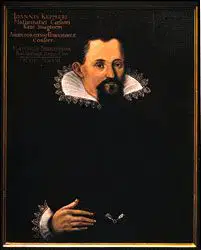
What's Kepler's 3rd law.
All the planets revolve around the sun in elliptical orbits having the sun at one of the foci.
A planet's orbital period is proportional to the size of its orbit (its semi-major axis).
A radius vector joining any planet to the Sun sweeps out equal areas in equal lengths of time.
Stored energy that depends upon the relative position of various parts of a system.
What's Kepler's 3rd law?
All the planets revolve around the sun in elliptical orbits having the sun at one of the foci.
A planet's orbital period is proportional to the size of its orbit (its semi-major axis).
A radius vector joining any planet to the Sun sweeps out equal areas in equal lengths of time
E=MC2
What keeps the planets orbit?
Planets buoyancy
Planet's gravity
Sun's gravity
Sun's inertia

What's this Observatory
Big Horn Medicine Wheel
Stonehenge
Machu Picchu
Stonehedge
Stars stay in one place
True
False
Who are some ancient astronomers we discussed in class
Ptolemy Aristotle George Bush Aristarchus Eratosthenes
Ptolemy Aristarchus Pythagorus Eratosthenes
Aristotle Apollo Ptolemy
Ptolemy Aristotle Aristarchus Eratosthenes
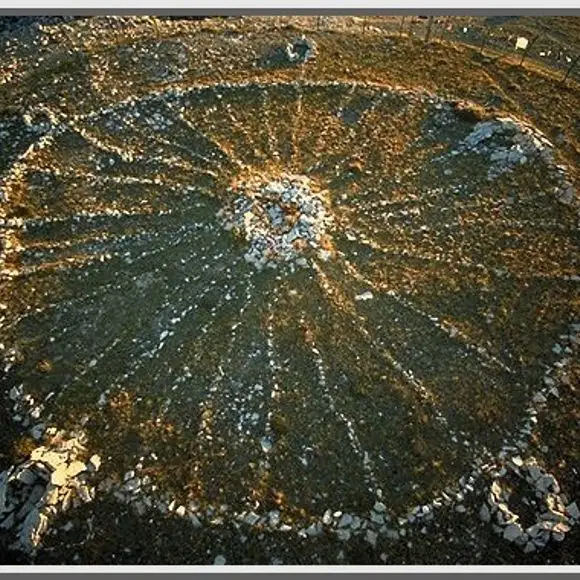
What Ancient observatory is this?
Bighorn Medicine Wheel
Gaocheng
Stonehedge
Bighorn Medicine Dial
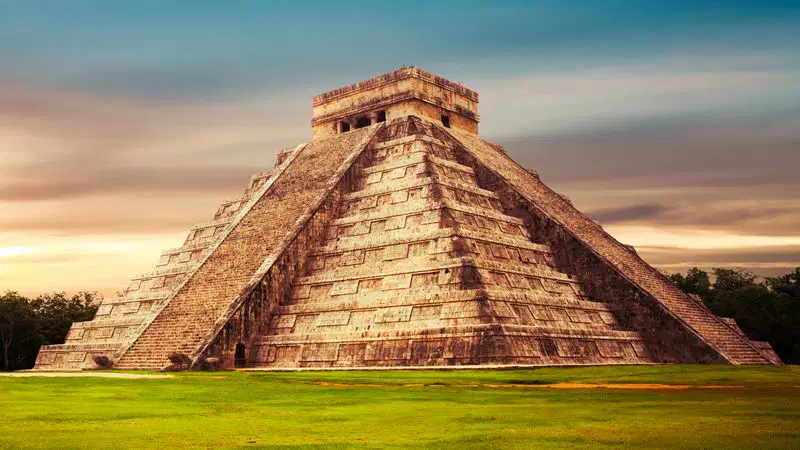
What's this ancient observatory?
Stonehenge
Machu Picchu
Gaocheng
Chichén Itzá
What did Newton invent/discover?
The 4 moons on Jupiter
Reflecting telescope
Modern thermometer
Gravitational waves

