
Font size
 Worksheets
Organic Chemistry Review
Total questions: 60
Worksheet time: 2hrs 0mins


What chemical is this? (C5H10)
Pentene
Pentane
Hexane
Heptene
C3H8
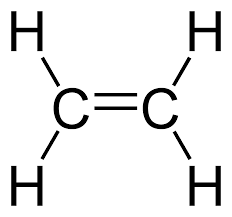
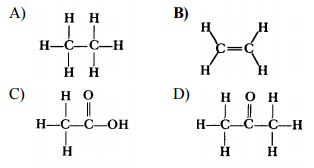
Which of the following shows the structure of propene?


C5H12 + Br2 --> C5H11Br + HBr
This reaction is called____________________.
Substitution
Addition
Cracking
Combustion

What is the name of this compound?
ethanol
ethanal
ethanone
methanal
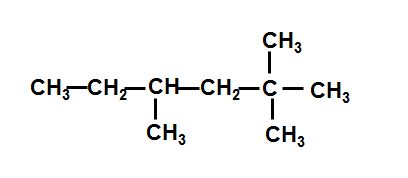
Which is the structures with IUPAC nomenclature
2,2,4-trimethylpentane


Consider carbon compounds X to Z. Which of the following statements about these compounds are correct?
(1) They belong to the same homologous series.
(2) They have the same boiling point.
(3) All of them can decolourize acidified potassium permanganate solution.
A. (1) and (2) only
B. (1) and (3) only
C. (2) and (3) only
D. (1), (2) and (3)

Alkene based polymers form through a process called _____ because an initiator causes a change in the DOUBLE BOND leaving a FREE RADICAL to react with the next monomer.
condensation polymerization
radical chain reaction
substitution polymerization
addition polymerization
Which one of them 2,3-dimethyl-1-pentene


In one of the reaction in alkanes brown color disappear when they react with .....
chlorine
bromine
KMnO4
Alcohols

increases
decreases
stays the same

What is the correct name for the following compound?
3,4-dimethylheptane
4-methyl-5-ethylhexane
3-methyl-4-propylpentane
4,5-dimethylheptane

How many carbons are in the longest chain?
7
8
9
10
What is the functional group for the carboxylic acids?
Hydroxyl (-OH)
Carbonyl (-CO)
Carboxyl (-COOH)
(C=C)
What is the functional group for the alcohols?
Hydroxyl (-OH)
Carbonyl (-CO)
Carboxyl (-COOH)
(C=C)
Molecules with the same molecular formula but different structural formula are known as
A homologous series
Isomers
Isotopes
Hydrocarbons
What acid is vinegar made of?
Hydrochloric Acid
Ethanoic Acid
Butanoic Acid
Sulfuric Acid
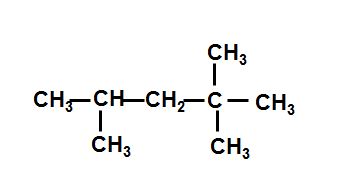
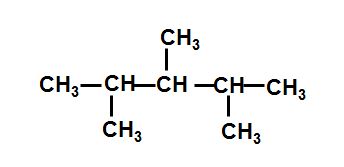
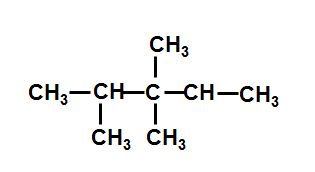
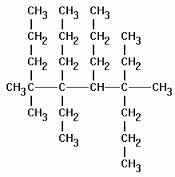
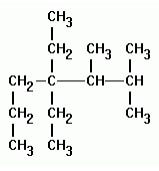
Which is the structures with IUPAC nomenclature
2,2,4-trimethylpentane
Alkanes undergo substitution by chlorine only in the presence of
UV light
oxygen
water
aqueous bromine
What is the condition for hydration of butene ?
phosphoric acid, 60 atm, 300 0C
Nickel or platinum, 180 oC
1000atm, 200 oC
room temperature
Which of these statements are true about alkenes?
They are unsaturated
They have the general formula CnH2n
They have a C=C
They decolourise bromine water
What are the products of incomplete combustion?
Water
Carbon dioxide
Carbon monoxide
Carbon


hydration
addition
polymerization
fermentation


Carboxylic acids are produced by the oxidation of....
Alcohols
Alkenes
Alkanes
Ketones
Esterification is an example of a...
A condensation reaction
An addition reaction
A subtraction reaction
An evaporation reaction

The following equation represents the preparation of ethanol in industry.
What is the process?
Oxidation
Hydration
Fermentation
Hydrogenation
Select all of these following that are methods to make ethanol.
Dehydration of ethene
Addition of water to ethene
Fermentation of sugars with yeast
Distillation of sugars
Ethanol is produced by fermentation.
Which of the following conditions is not required to produce ethanol by fermentation?
Temperature between 30-35 C
Yeast
Presence of Oxygen
Sugar or starch dissolved in water
In the fractional distillation of crude oil, where is the hottest part of the fractionating column?
top of the tower
middle of the tower
bottom of the tower
C5H10 + Br2 --> C5H10Br
This reaction is called____________________.
Halogenation
Addition
Cracking
Combustion
What is the process of breaking down a long hydrocarbon into smaller hydrocarbons?
Cracking
Fracking
Combustion
Distillation
What is the colour change when an alkene reacts with bromine water?
Turns clear
Turns orange
From colorless to orange
From orange to colorless
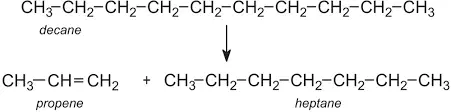
A petrochemical molecule undergoes the chemical change shown. What is the chemical change?
cracking
polymerisation
fractional distillation
reduction
What conditions are needed for cracking?
high temperature
high pressure
catalyst
low temperature
Why is CRACKING useful?
It produces short chain alkanes and alkenes, which are more useful than long alkanes
It produces longer alkanes which are the most useful hydrocarbons
It uses up the alkenes for which there is only a low demand
There is a greater demand for long chain alkanes than can be met by crude oil only
Consider carbon compounds X to Z. Which of the following statements about these compounds are correct?
(1) They belong to the same homologous series.
(2) They have the same boiling point.
(3) All of them can decolourize acidified potassium permanganate solution.
A. (1) and (2) only
B. (1) and (3) only
C. (2) and (3) only
D. (1), (2) and (3)

What is the name of the addition polymer?
poly(ethene)
poly(propene)
poly(butene)

What is the name of the addition polymer?
poly(phenylethene)
poly(phenylamine)
poly(benzene)

What is the name of the addition polymer?
poly(fluoroethene)
poly(difluoroethene)
poly(tetrafluoroethene)

Identify the polymer made from these monomer(s)


Identify the polymer made from these monomer(s)


True of false - this is the repeat unit for poly(propene)?
True
False

