
 Worksheets
Studio Art 2- T2Q1 Proficiency 2023
Total questions: 55
Worksheet time: 3hrs 23mins


What is this tool called?
Baren
Brayer
Bench Hook
Gouge
What is monoprinting?
Form of printmaking where the raised areas are inked and printed.
Form of printmaking where only 1 original can be made.
Form of printmaking where the carved in areas get inked.

What is this printmaking tool called?
baren
lino
brayer
lino cut
What does the term relief include?
A surface thats not raised
A cut surface
A raised surface.
A surface that is process
Plates and blocks are used in which art form.
Drawing
Painting
Ceramics
Printmaking
In printmaking an impression that is made when a print is done is referred to as a/an___________
Drawing
Block
Edition
Monoprint
This is done when you print through a screen of a very fine silk stretched tightly over a silver wooden frame.
A. Stencil Process
B. Relief
C. Silk Screen
It is done when you cut design out of a special paper, cardboard or metal sheet.
A. Relief
B. Intaglio
C. Stencil Process
Which material is not included in Stencil Process printmaking?
A. Linoleum
B. Cardboard
C. special Paper
True or False : Relief printmaking can be done either on wood and linoleum.
A. True
B. False
C. Maybe


A set of identical prints, that are numbered and signed.
Collection
Edition
Group
Set
A piece of thick, flat material, with a design on its surface, used to print repeated impressions of that design.
Brayer
Block
Burin
Lithograph
Prints made at various stages during the creative process to act as guidelines for further stages to change, correct or improve the image.
Edition
Monoprint
Etching
Proofs
Adjustment of separate plates, blocks, screens or paper in color printing to ensure correct alignment of colors.
Relief
Registration
Screen Print
Stencil
What is the most important art principle to consider in printmaking?
Harmony
Colour
Hierarchy
Contrast
Which of these is not a type of surface you can carve/ create a print on?
Paper
Block
Screen
Plate
Which of these is not a type of printmaking?
Lithography
Etch a Sketch
Woodcut
Screen printing
A photo to look at while drawing so that your work is more accurate
masterpiece
blocking out
reference photo
ratio

a sharp division of things or ideas into two contradictory parts. An example of this is grouping mammals by those that live on land and those that live in water.
Misgivings
Ironic
Contradiction
Dichotomy
"Beauty versus brains" is a false ______. You can be both.
Dichotomy
Quintessential
Juxtaposition
Antithesis
Digress

This refers to the way things feel, or look as they might feel if touched.
Line
Texture
Value
Form

This is the element of art that is sometimes called shape in three dimensions.
Form
Line
Shape
Texture

This is the element of art that is the area between, around, above, below or
within things.
Space
Line
Form
Value

This element of art refers to the lightness and darkness of an object.
Shade
Color
Line
Value

This is concerned with the size relationships of one part to another.
Emphasis
Variety
Proportion
Balance

This term refers to the quality of wholeness or oneness that is achieved through the effective use of the elements and principles of art.
Unity
Balance
Proportion
Rhythm

Uses lots of different shapes, colors, forms, textures, etc. might be used to make the work more interesting.
Emphasis
Balance
Variety
Rhythm

This indicates movement by the repetition of elements.
Rhythm
Variety
Unity
Proportion

Where was Jean-Michel Basquiat born?
Port-au-Prince, Haiti
Brooklyn, New York
Los Angeles, California
Philadelphia, Pennsylvania

Basquiat got his start as a street artist under a pseudonym (a fictitious name). What was his pseudonym?
JMB-3000
SAMO
JEAN
None of the above

Which of the following were source material for Jean-Michel Basquiat?
Paintings by other artists.
Comic books.
Gray’s Anatomy
All of the above

Which of the following did Basquiat use to make his canvases?
Old t-shirts
Discarded scraps of wood
Corrugated metal
None of the above

Jean-Michel Basquiat once said, “I am not a (a) artist, I am an artist.”
When studying Basquiat, we learned about two styles of art...
Modern & Abstract
Classical & Modern
Abstract & Pop
Neo-Expressionism & Street Art
Jean Michel Basquiat focused on this subject for many of his pieces...
Fish
Nature
Heads
Architecture
We used the following materials to complete this project...
Oil Pastels
Oil Paint
Watercolor
Gesso
Where is Jean-Michel placing his art?
everywhere he goes
in an album
in his home
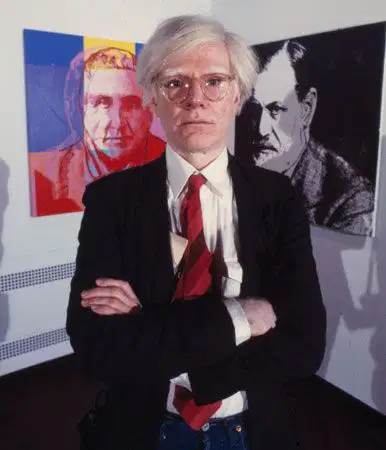
Who is this?
Warhol
Haring
Basquiat

Who is this?
Warhol
Haring
Basquiat
Jean-Michel Basquiat grew up speaking three languages. Which three languages did he speak?
Spanish
German
Italian
Spanish
English
French
French
Arabic
Spanish
English
Italian
French
Basquiat’s signature artistic motif, both acknowledged and challenged the history of Western art, was a ..........
Dinosaur
Flag
Red circle
Crown
What was the racial impact of Basquiat using crowns in his artwork?
Basquiat caused America to elect its first black President.
Basquiat lowered the morale of Black individuals.
Basquiat gave Black figures importance during a time period when racism was rampant.
Basquiat’s art caused a steep increase in the number of Black athletes.
Jean-Michel Basquiat said that his earliest, most vivid memory was getting hit by a car. What is the meaning of the word vivid?
Producing powerful feelings or strong, clear images in the mind.
Able to withstand great force or pressure.
Standing still.
Learning a new language.

In this photo, artist Frida Kahlo is creating a ....
Portrait
Landscape
Self portrait
Photo

