
 Worksheets
Civil War Review
Total questions: 67
Worksheet time: 4hrs 49mins
Reorder the following Civil War Battles
Fort Sumter
Antietam
Vicksburg
Gettysburg
Appomattox
The Confederate surrender arrangement occurred in (a)
(a) was not a part of the North´s advantages over the South
Confederates
Americans
Military
Union
Confederates
Union
Americans
Military
Match the following images with it's Civil War Battle

Fort Sumter

Antietam

Vicksburge

Gettyesburg

Appomattox
(a) was president of the Confederate States of America.
While the general for the Confederacy was (b)
(c) was president of the Union.
While the general for the Union was (d)
Match the following images with the correct event that will lead to the Civil War

Missouri Compromise

Compromise of 1850

Kansas-Nebraska Act

Dred Scott Decision

1860
Label the chart to which side had the advantage in the Civil War. North or South
Compromise of 1850:
Checking for understanding - How would the issue of slavery be determined in other territories gained in the Mexican-American War?
Slavery would be legal
Popular Sovereignty
Slavery would be illegal
The states would be divided between slave state and free state
The Fugitive Slave Act was part of the
(a) and caused many Northerners to (b) .
Why did westward expansion increase tension between the North and the South?
They had different opinions on if war was necessary with other countries
They had different opinions on treatment of Native Americans
As new states were added representation would change and each region wanted to maintain their power in Congress

Which part of the Compromise of 1850 probably created the most controversy?
the admission of California as a free state
the organization of New Mexico and Utah as territories open to slavery
the ending of the slave trade in Washington, D.C.
the passage of a strong fugitive slave law to return runaway slaves to their owners
What was the purpose of the Kansas-Nebraska Act?
to admit Kansas as a free state and Nebraska as a slave state
to allow the citizens to decide if a state would be a free state or a slave state
to allow border ruffians to vote in Kansas elections to promote slavery
to negotiate a deal for territory with Native Americans in Oklahoma

In the 1850s, the phrase "Bleeding Kansas" was used to describe clashes between
pro-slavery and anti-slavery groups in Kansas Territory
Native Americans and new American settlers
Chinese and Irish railroad workers clashing over wages
freed slaves and white settlers out west fighting over slavery
What does the term sectionalism mean?
Loyalty to a particular region instead of the nation as a whole.
Loyalty to the nation instead of a particular region.
Loyalty to the section of the nation instead of the region.
Loyalty to the foreign countries that buy exports instead of the U.S.
What was the Southern point of view about the expansion of slavery?
They feared the expansion of slavery.
They feared that if slavery could not expand then eventually slaves would leave plantations.
They feared that if slavery expanded into the territories that the slave trade would increase.
They feared that if slavery could not expand then eventually slavery would be outlawed.
All of these attributes describe the South EXCEPT?
Established manufacturing.
Depended on slavery.
Against Abolitionist
Tended to be Democratic-Republican.
All of these attributes describe the North EXCEPT?
Typically Federalists.
Freed their slaves.
Established trade and small farms.
Established plantations.
Missouri Compromise
Peace Agreement of 1820
Clay Compromise Agreement
Secession
Supreme Court case which ruled that slaves are not citizens but are property, slaves do not become free if they travel to free territories or states, which fueled the abolitionist movement and seemed like a victory for the south.
Brown vs Board of Education
Dred Scott Decision
John Brown Court Case
Confederate Convict Clause

What type of transportation was common in the north but uncommon in the south?
Roads for vehicles
Wagon paths
Railroads
Steamboats for river travel
Which of the following best describe the South's economy? Choose all that apply.
Agrarian
Wage Labor
Slave Labor
Industrial
Weak
Match the following image that best describes the economy of the the following regions

The North

The West

The South
Which of the following best describe the North's economy? Select all that apply.
Wage Labor
Industrial
Agrarian
Dependent
Self-Sufficient
What year did the Civil War begin?
1961
1681
1861
1761
Where did the Civil War begin?
Fort Summer
Appomattox Courthouse
Lexington
Fort Sumter
In the beginning of the war, what was the main aim of the North?
to save the slaves
to save the Confederacy
to save its way of life
to save the Union
In the beginning of the war, what was the main aim of the South?
to save the slaves
to save the Confederacy
to save its way of life
to save the Union
What advantages did the North have? (Choose all that apply.)
stronger economy
bigger army
bigger navy
wise president
excellent military leaders
What advantages did the South have? (Choose all that apply.)
stronger economy
bigger army
bigger navy
fought on familiar land
excellent military leaders
Why is the Battle of Antietam famous?
It was the turning point of the war.
It was the biggest battle of the war.
It had the most soldiers fight in the war.
It was the bloodiest day of fighting in the war.
What did the Emancipation Proclamation do?
It freed the slaves in the United States.
It changed the Constitution.
It freed the slaves in the Confederacy.
It saved the Union.

Explain in One sentence the MAIN reason the North went to war with the South in the Civil War.
When did the war end?
1776
1861
1868
1865
2023
Who won the Civil War?
the Union
the Onion
the Confederacy
the British
Harriet Tubman
A conductor for the Underground Railroad
Harriet Beecher Stowe
Author of Uncle Tom´s Cabin
Ulysses S. Grant
General of the Union
Abraham Lincoln
16th President of the United States
Jefferson Davis
President of the Confederacy
The Confederate surrender arrangement occurred in (a)

Explain the Historical Significance of Bleeding Kansas in One sentence.

The Emancipation Proclamation
made slavery legal
began slavery
ended slavery in the Confederate states
ended slavery only in the North
This is where Lee surrendered to Grant on April 9, 1865..
Washington, D.C.
Appomattox
Dallas
New York
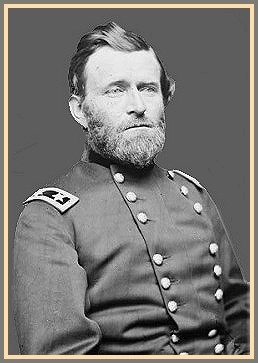
Who was the President of the US during the Civil War?
Ulysses S. Grant
Abraham Lincoln
Thomas Jefferson
Alexander Hamilton

Why did the South have more property damage than the North?
more battles were fought in the South than the North
the South lacked great leadership during the war
more battles were fought in the North than the South
When was the Civil War?
1861-176
1861-1865
1870-1876
2015-2019

What was the Emancipation Proclamation?
A speech by Lincoln in 1863 in memory of the soldiers that died there
An order issued by President Lincoln declared slaves to be set free
The right of an accused person to appear in court so a judge can determine whether they were imprisoned lawfully
The 11 states that seceded from the Union

What was the Gettysburg Address?
An order issued by President Lincoln declared slaves to be set free
The right of an accused person to appear in court so a judge can determine whether they were imprisoned lawfully
The 11 states that seceded from the Union
A speech by Lincoln in 1863 in memory of the soldiers that died there

