

wayground logo

Free Printable Worksheets

NEW

Font size

S
M
L
XL
Worksheets

Chemistry Honors Periodic Table/Waves

Total questions: 28

Worksheet time: 16mins
Name
Class
Date
1.

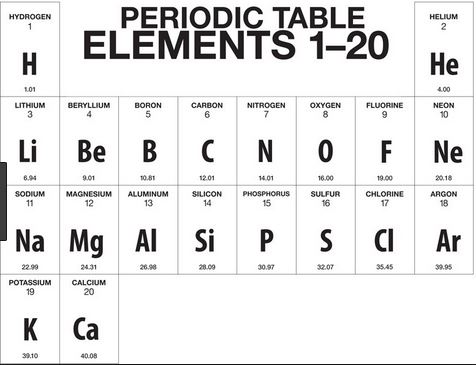
How many valence electrons does Hydrogen Have?

a)

1 Valence electron

b)

2 Valence electron

c)

3 Valence electron

d)

4 Valence electron

e)

5 Valence electron

2.

How many valence electrons does Helium Have?

a)

1 Valence electron

b)

2 Valence electron

c)

3 Valence electron

d)

4 Valence electron

e)

5 Valence electron

3.

How many valence electrons does Magnesium Have?

a)

1 Valence electron

b)

2 Valence electron

c)

3 Valence electron

d)

4 Valence electron

e)

5 Valence electron

4.

How many valence electrons does Phosphorus Have?

a)

1 Valence electron

b)

2 Valence electron

c)

3 Valence electron

d)

4 Valence electron

e)

5 Valence electron

5.

How many valence electrons does Silicon Have?

a)

1 Valence electron

b)

2 Valence electron

c)

3 Valence electron

d)

4 Valence electron

e)

5 Valence electron

6.
How are electrons arranged in an atom?
a)
In groups of five
b)
In energy levels
c)
By color
d)
By shape
7.
An element with five valence electrons is
a)
phosphorus
b)
oxygen
c)
beryllium
d)
rubidium
8.
Rows on the period table are called _____ while columns are called _____.
a)
groups, families
b)
groups, periods
c)
periods, groups
d)
families, groups
9.
What is this element? 
1s22s22p63s23p6
4s23d104p6
a)
Argon
b)
Krypton
c)
Selenium
d)
Bromide
10.

A wave with a large wavelength will have a ______ frequency and _____ energy

a)

high, low

b)

high, high

c)

low, high

d)

low, low

11.

The frequency of violet light is 7.5x10¹⁴ Hz. What is its wavelength?

a)

4.0x10⁻⁷ m

b)

4.0x10⁷ m

c)

2.25x10²³m

d)

2.25x10²³ Hz

12.
High frequency waves have _________ wavelength.
a)
varying
b)
high
c)
the same
d)
low
13.

Calculate the wavelength of the yellow light emitted by the street light, if the frequency of the radiation is 5.10x10¹⁴Hz.

a)

5.12 x 10⁻⁷m

b)

5.88 x 10⁻⁷ m

c)

4.20 x 10¹⁴m

d)

3.0 x 10⁸m

14.
As you move down a group, atomic radius increases because - 
a)
you add more and more neutrons
b)
you add more and more protons
c)
you add more and more shells (energy levels)
d)
you add more atomic mass
15.
The atom with the largest atomic radius in Group 18 is - 
a)
Ar
b)
He
c)
Kr
d)
Rn
16.
As you move across the periodic table from left to right, the atomic radius decreases.  This is because - 
a)
the number of protons increases, so attraction to electrons increases
b)
the number of energy levels increases
c)
the number of electrons increases
d)
the atomic mass increases
17.
Francium (Fr) has the lowest ionization energy in Group 1 because - 
a)
it has the smallest number of valence electrons
b)
it has the greatest atomic mass
c)
it has the greatest number of protons, so it attracts its electrons the strongest
d)
its 1 valence electron is very far from the nucleus, so little energy is needed to remove it
18.
The atom with the largest atomic radius in Period 4 (row 4) is - 
a)
K
b)
Kr
c)
Fe
d)
Fe
19.
The element with the smallest ionization energy in Period 6 is - 
a)
Rn
b)
Cs
c)
Os
d)
Tm
20.
As you move across the periodic table atoms tend to get smaller because, ______________.
a)
the atoms have more mass.
b)
the atoms have less mass
c)
the atoms have more protons.
d)
the atoms have less electrons.
21.
Which has the greater Electronegativity: 
N or C?
a)
C
b)
N
22.
Electronegativity __________ from left to right within a period and __________ from top to bottom within a group.
a)
decreases, increases 
b)
increases, increases
c)
increases, decreases 
d)
stays the same, increases
23.
Put the following in order of increasing ionization energy:Strontium, Aluminum, Indium
a)
Strontium, Indium, Aluminum
b)
Strontium, Aluminum, Indium
c)
Indium, Aluminum, Strontium
d)
Aluminum, Indium, Strontium
24.
Put these in increasing order of atomic radii:
F, N, B
a)
B < N < F
b)
B < F < N
c)
N < F < B
d)
F < N < B
25.
The element with the lowest electronegativity in Period 3 is - 
a)
Na
b)
Cl
c)
Ar
d)
Mg
26.
Rank the following elements by increasing atomic radius:
carbon, aluminum, oxygen, phosphorus.
Not sure? check out page 151 in your textbook

a)
O, C, P, Al
b)
Al, P, C, O
c)
O,P, C, Al
d)
O, P, Al, C
27.
What element is the MOST reactive metal on the PT?
a)
Cu
b)
Mn
c)
F
d)
Fr
28.
Which element is a metalloid?
a)
S
b)
Br
c)
As
d)
Au